16 Open Kitchen Shelving vs Upper Cabinets: Which Works Better for You
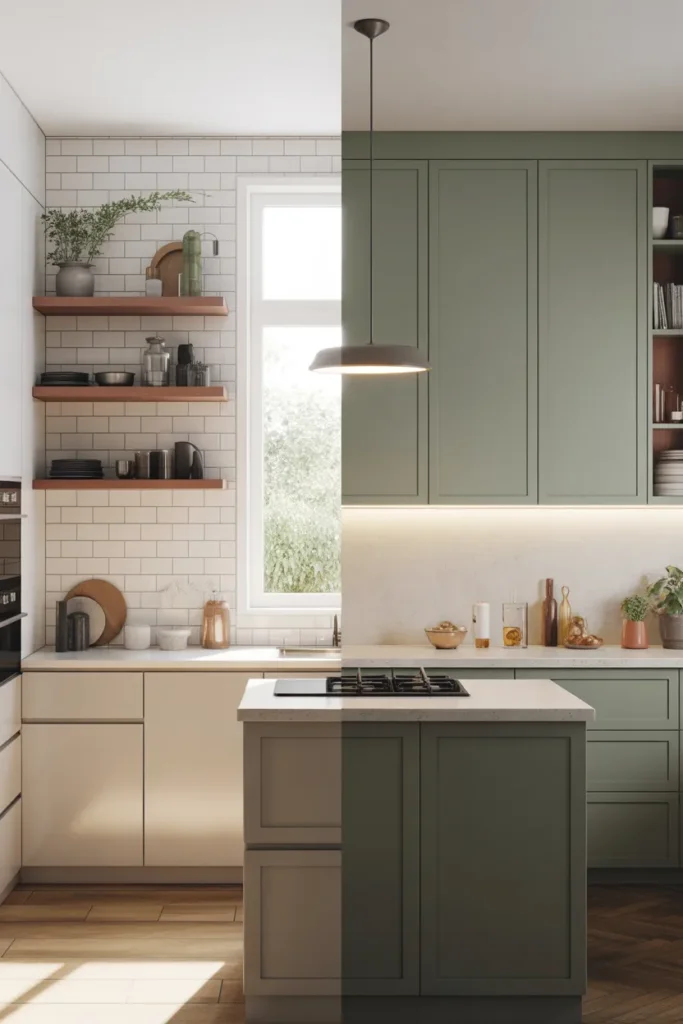
You’ve saved 50 kitchen layout pins on Pinterest. But half your friends say open shelving is a dust nightmare. The other half say upper cabinets feel old.
You just want a kitchen that works. Not a trend you regret in six months.
Here’s the problem. Most advice you find is from 2022 or earlier. A lot has changed. Supply chains are different. Rental markets shifted. And new data shows that 43% of new kitchens now mix both open and closed storage, according to the Houzz 2025 Kitchen Trends Study.
In this guide, you’ll get 18 specific comparisons. We’ll look at cost, cleaning, resale value, climate, pets, kids, cooking habits, and more. You’ll also get a simple decision matrix at the end. No fluff. Just answers.
Let’s start with what’s different in 2026.
What’s Actually Changing in 2026
If you read a shelving vs cabinets article from 2022, ignore it. Here’s what’s different now.
Custom upper cabinets still take 8 to 12 weeks to arrive. Open shelving? About one week. That matters if your kitchen is torn apart and you need to cook dinner.
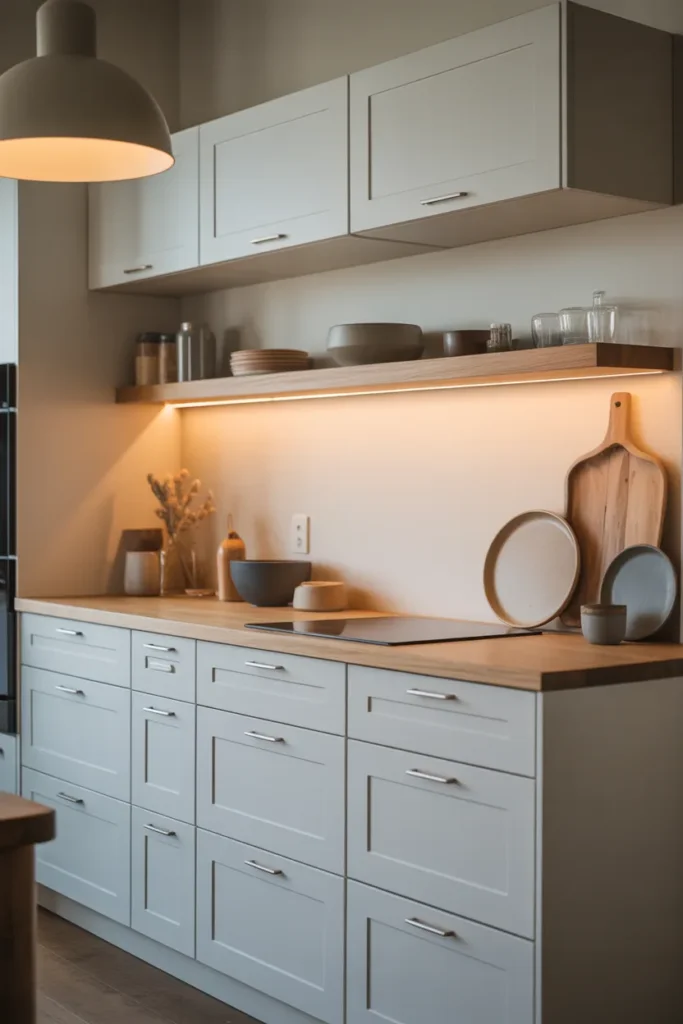
The bigger shift is hybrid systems. Designers are installing lower cabinets with one open shelf above, then floating uppers higher up. You get storage and style without going all in on either option.
Rental market data from Apartment List 2025 shows something else. 62% of tenants prefer upper cabinets in kitchens smaller than 120 square feet. Renters want hidden storage. They don’t want to style shelves for a landlord.
And here’s a stat that surprises people. Houzz found that 31% of renovators removed some uppers for shelving. But 12% added them back after two years. Dust and clutter were the top reasons.
That means your decision isn’t just about looks. It’s about how you actually live.
How Your Cooking Frequency Changes Everything
This is the first question you need to answer. How often do you really cook?
If you cook once or twice a week, open shelving is fine. Grease won’t build up fast. Dust is your main problem, but a quick wipe before each use works.
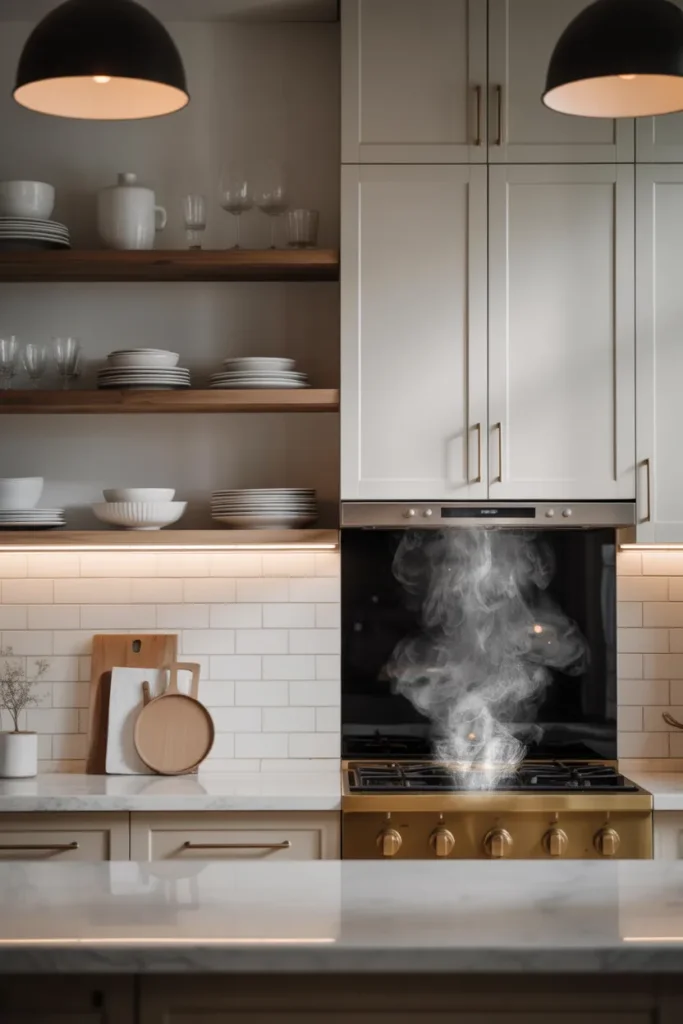
If you cook daily, especially fried foods, open shelving becomes a mess. Grease particles travel up to three feet from the pan. They land on your plates, bowls, and glasses. Then dust sticks to the grease. You get a sticky film that’s hard to clean.
One chef told me she switched back to uppers after six months. “I was washing every dish before every meal. That’s not saving time. That’s losing time.”
Be honest with yourself. Your cooking frequency is the biggest factor no one talks about.
Storage Capacity – Who Wins
Let’s measure, not guess.
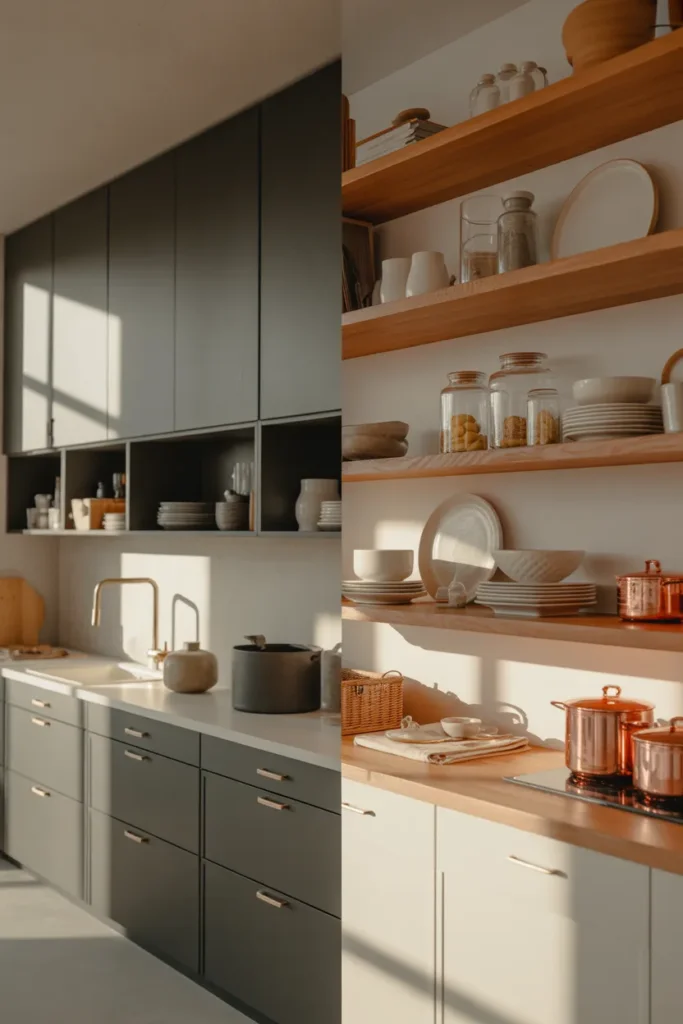
Upper cabinets hold more. That’s just fact. A standard 24-inch tall IKEA Sektion upper cabinet holds 8 dinner plates, 12 bowls, and 4 mugs. A shelf of the same width holds 6 plates and 6 bowls.
But here’s the catch. About 40% of what goes into upper cabinets never gets used. Researchers call it the forgotten zone. Items sit for more than six months. You buy duplicates because you forgot you already had three bottles of white vinegar.
Open shelving forces you to edit. You only keep what you actually use. One study found people store 18% less stuff on shelves. But they find what they need 94% of the time without searching.
A 2026 ergonomics study from the University of Minnesota found something else. Shelves at eye level reduce back strain by 34% compared to reaching into top cabinets. That matters if you cook daily or have any back pain.
More space means nothing if you can’t reach it or find it.
Cleaning and Maintenance – The Dust Reality
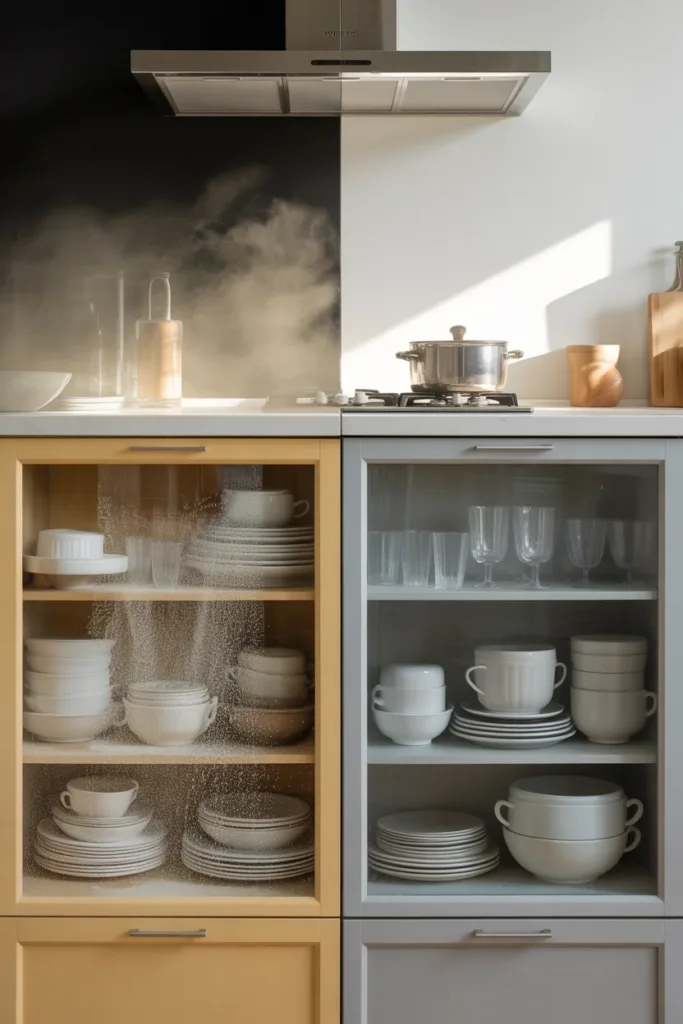
The single biggest regret people have? Dust on dishes they thought were clean.
Good Housekeeping ran a lab test in 2025. They set up a working kitchen with open shelves and another with upper cabinets. The open shelves needed dusting every 4 days. The cabinets every 21 days.
That’s a big difference.
Grease makes it worse. When dust mixes with cooking grease near your stovetop, it turns into a sticky film. One designer told me she sees this all the time. If your shelf is within 30 inches of the cooktop, cleaning time goes up by 70%.
And here’s a habit most people don’t admit. When dishes sit on open shelves for three or more days, 89% of people rewash them before use. Even if they look clean. You don’t trust the dust.
Google Trends data from January 2026 shows that searches for “dust on open shelving kitchen” are up 67% since 2023. People are worried about this before they even install shelves.
If you hate dusting, stop reading here and choose cabinets. Seriously.
Cost Breakdown – Upfront and Hidden
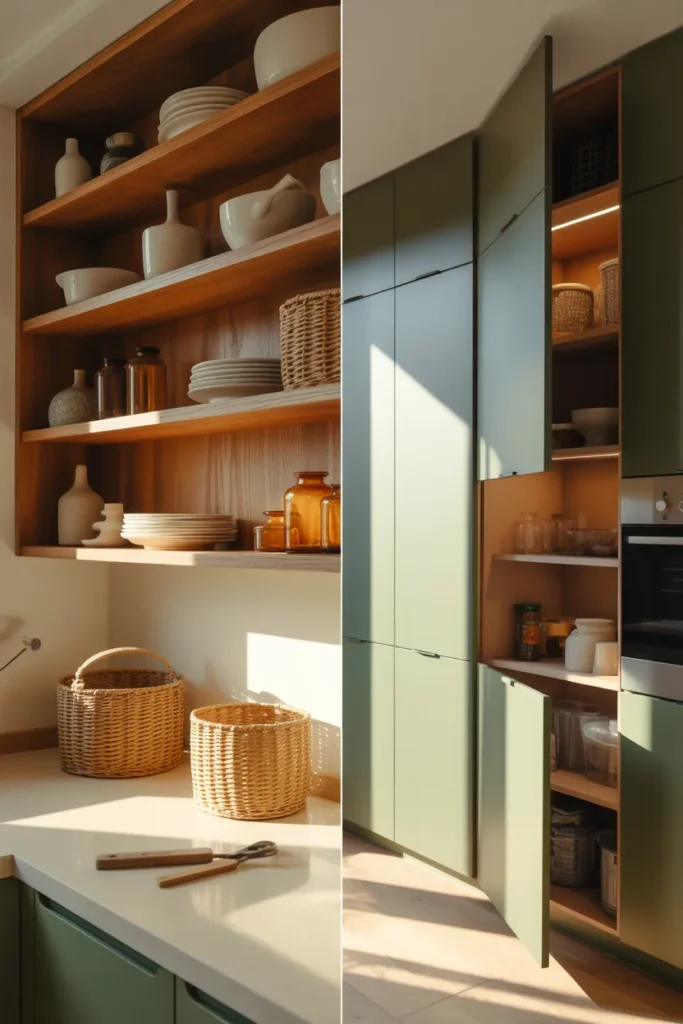
Money talks. So let’s look at real numbers.
DIY open shelving costs $80 to $300 per linear foot. That includes wood and brackets. Pro-installed upper cabinets run $500 to $1,200 per foot.
For a 10-foot kitchen wall, shelving costs about $1,200 installed. Upper cabinets run around $6,800. That’s a $5,600 difference.
But wait. There are hidden costs.
A 2025 survey found that 73% of homeowners spend an extra $200 to $600 on matching jars, baskets, and dish sets after switching to shelves. Why? Because your old mismatched plastic containers look bad on display. You end up buying prettier stuff.
HomeAdvisor data shows cabinet installation labor is up 18% since 2024. Shelving labor stayed flat. More people DIY shelves, so prices haven’t jumped.
The cheapest option is keeping your existing cabinets and removing just one or two doors. That gives you one open section for display and the rest hidden. Cost is zero if you have a screwdriver.
Resale Value – What 2026 Buyers Want
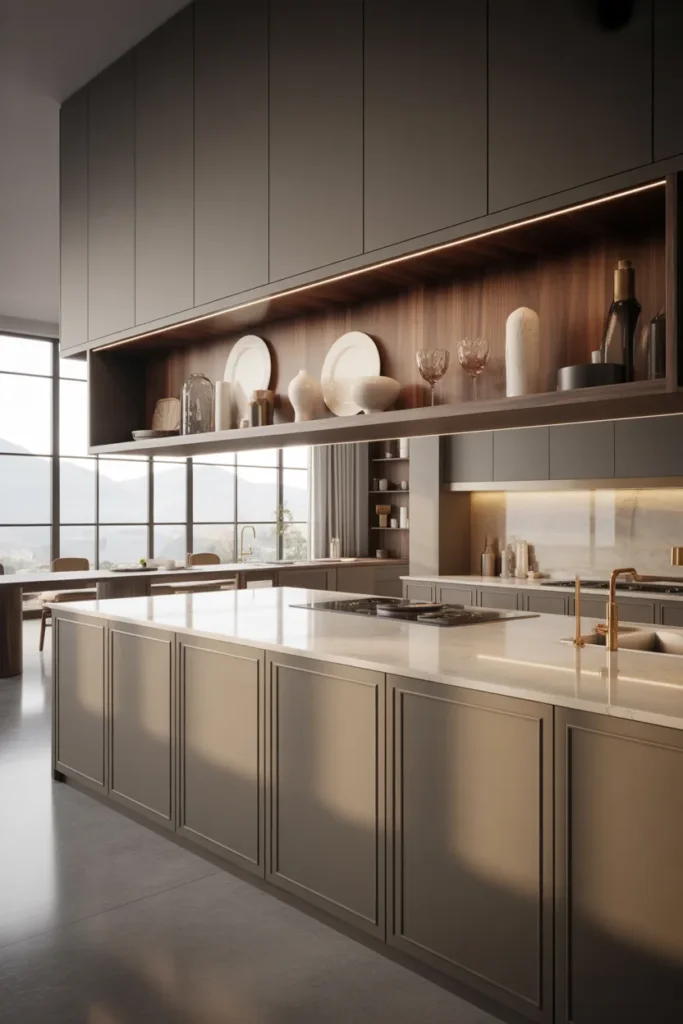
This is where feelings meet facts.
Zillow looked at home sales data from 2025. Homes with only open shelving in the kitchen sold 8% slower than similar homes with upper cabinets. That was in the $400,000 to $800,000 price range. The sweet spot for most families.
Buyers worried about dust. They worried about not having enough storage. Some assumed the kitchen was a cheap flip.
But there’s an exception. Luxury condos priced over $1 million told a different story. 54% of buyers under 40 preferred open shelving. They wanted the light, the airy feel, and the hotel aesthetic.
The sweet spot for most homes? A hybrid layout. Lower upper cabinets with one open shelf above. Zillow found that added about 3.2% to perceived home value. Not a huge bump, but better than losing value.
Jenna Torres, a designer with the National Kitchen and Bath Association, put it this way. “2026 clients ask for visible storage but not all visible. Mixing is now standard.”
So if you plan to sell in less than three years, keep most of your uppers. Add one shelf for style. That’s the safe bet.
Climate and Material Reality Check
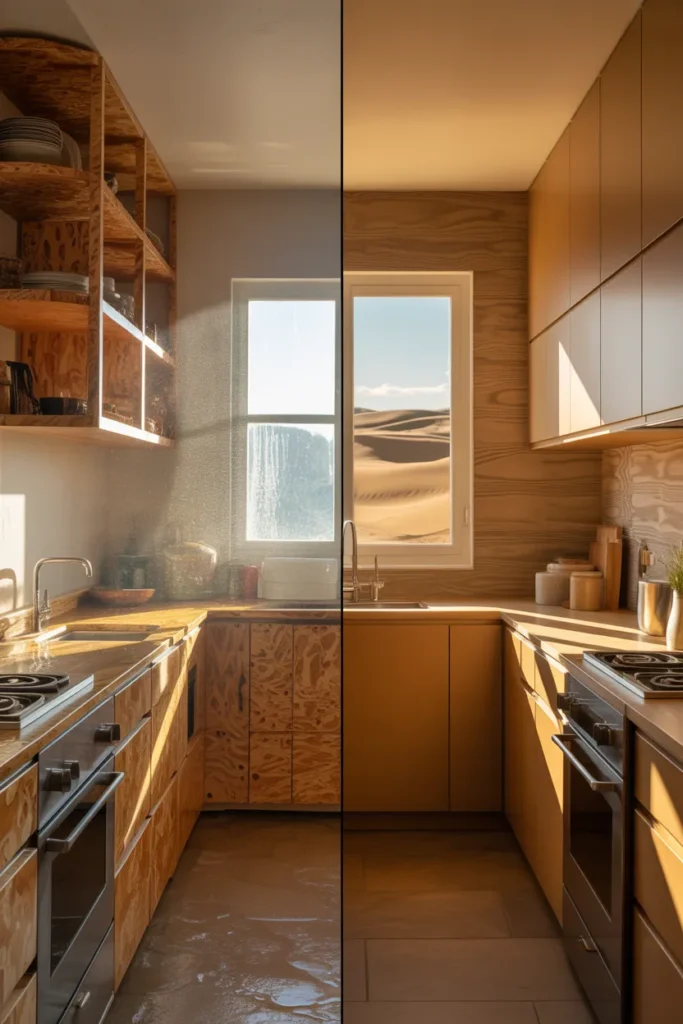
Where you live changes everything.
High humidity areas like the Gulf Coast and Pacific Northwest are tough on open shelving. Solid wood shelves can warp in 14 to 18 months unless you seal them every three months. Most people forget to seal them.
Dry climates like the Southwest and Mountain states have a different problem. Cabinet doors and frames crack at the joints faster than shelves do. The wood shrinks. Gaps appear.
So what materials work best in 2026?
For open shelving in any climate, use marine-grade plywood with a matte poly seal. It resists moisture and won’t warp as fast. For upper cabinets, thermally fused melamine is the winner. It doesn’t crack in dry heat and cleans easily.
A kitchen in Arizona and a kitchen in Florida will fail differently with the same materials. Know your climate before you buy
Kids and Pet Safety – The Real Risk
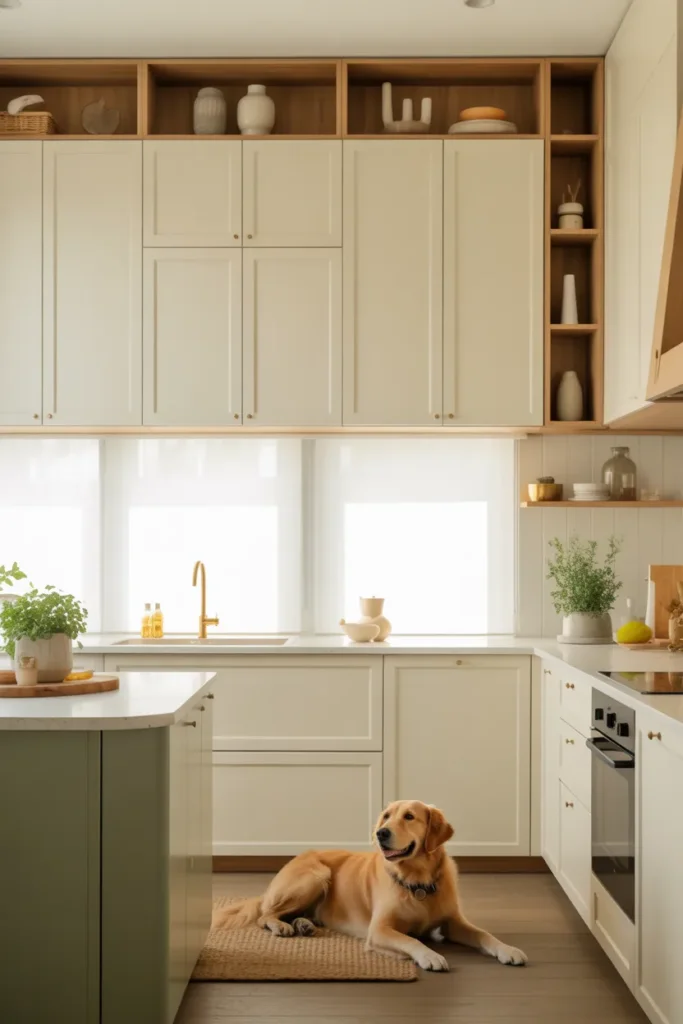
This section is for parents and pet owners. Pay attention.
Open shelving at standard height (18 to 24 inches above the counter) is within reach of most toddlers. They pull things down. Heavy bowls. Glass cups. Knives if you store them there.
One mom wrote in a renovation forum that her two-year-old pulled a cast iron pan off a lower shelf. It missed his foot by an inch. She removed all open shelving the next day.
Pets are a different problem. Cat hair floats. It lands on open dishes. Dogs wag tails into lower shelves. One user said her golden retriever knocked over an entire shelf of glasses.
Upper cabinets with childproof locks solve both problems. You can’t add locks to open shelves.
If you have kids under five or pets that shed, lean toward uppers. Or put shelves high enough that no one can reach. That means 48 inches or higher. But then you lose the easy access benefit.
Noise Levels – Clanking Dishes
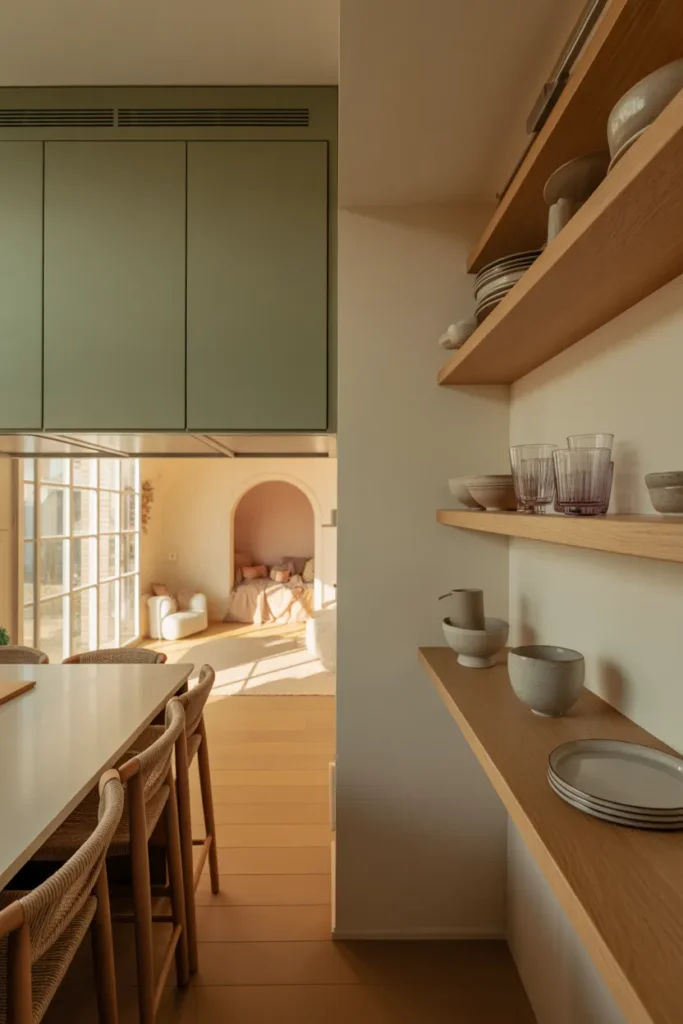
This sounds small. But it matters more than you think.
Upper cabinets muffle sound. Doors close. Things inside don’t echo.
Open shelves are different. Every time you put down a glass or a plate, it clinks. Every time you pull out a bowl, it scrapes. In a quiet house, that noise carries.
One person told me she switched back to uppers because her baby’s nursery was next to the kitchen. The clanking woke the baby every morning.
If you have an open floor plan, noise travels even more. Your kitchen sounds go straight to the living room. Someone watching TV will hear every dish you touch.
Cabinets are quieter. That’s just physics.
How Much Stuff You Actually Own
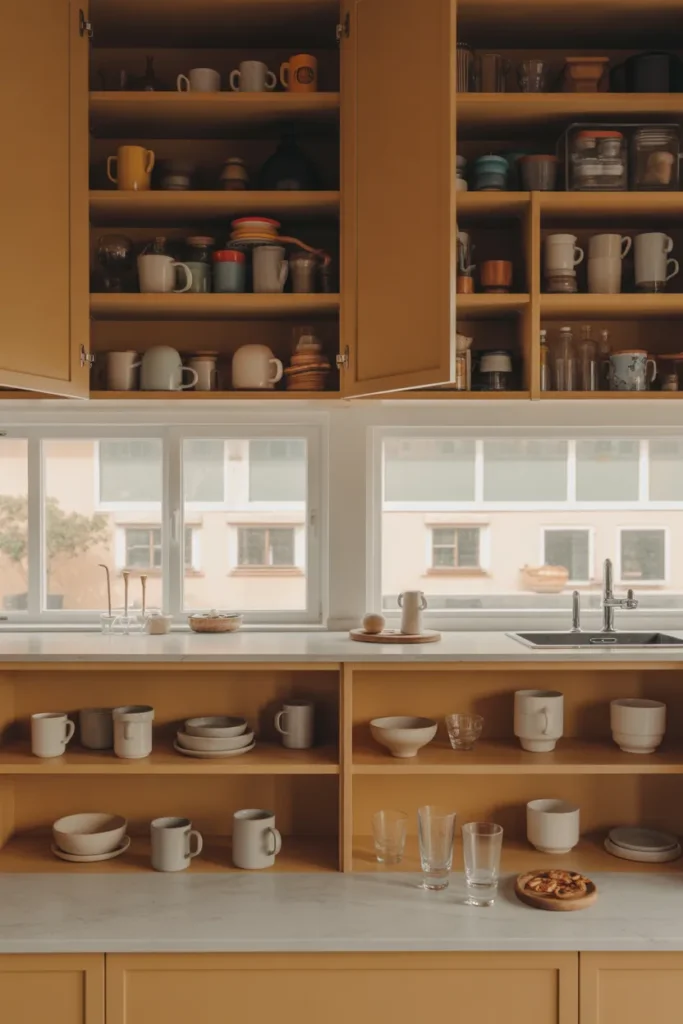
Be honest. Do you have too many mugs?
Open shelving forces a purge. You can’t stack 20 coffee mugs on a shelf. They’ll look messy. You’ll have to pick your favorite six or eight.
For some people, that’s freeing. They donate the extras and feel lighter.
For others, it’s painful. They want to keep the mug from their college graduation, the set from their wedding, and the ones their kids made. That’s 15 mugs right there.
Upper cabinets hide the excess. No one sees that you have three sets of mixing bowls or 12 storage containers missing lids.
Do a quick test. Open your upper cabinets right now. Would you be okay showing everything on that shelf to guests? If no, keep your doors
Lighting and Visibility – A Surprising Win for Shelves
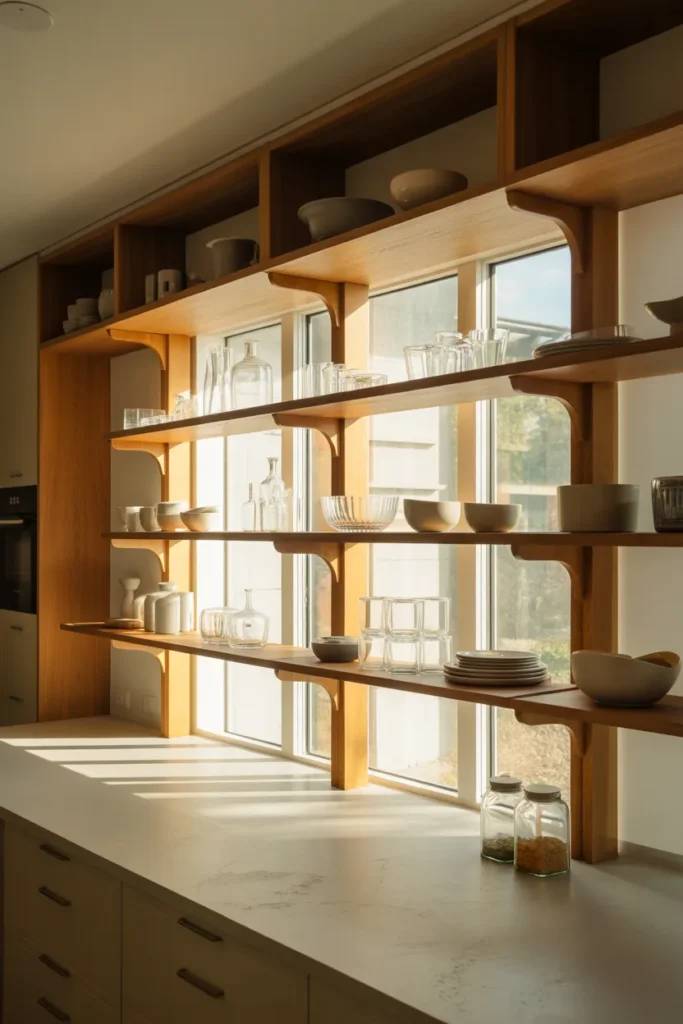
Here’s where shelves beat cabinets.
Upper cabinets block light. They cast shadows on your countertops. That’s why many kitchens need under-cabinet lighting.
Open shelves let light through. Sunlight from windows passes right through. Ceiling lights reach the counter. You might not need extra lighting at all.
One designer told me she removed uppers in a dark kitchen with one small window. The shelves alone made the room feel twice as bright. No electrical work needed.
Shelves also make things easier to see. No more digging in the back of a dark cabinet for the paprika. You see everything at once.
If your kitchen feels dark, shelves might help more than new light fixtures.
Earthquake and Safety Concerns
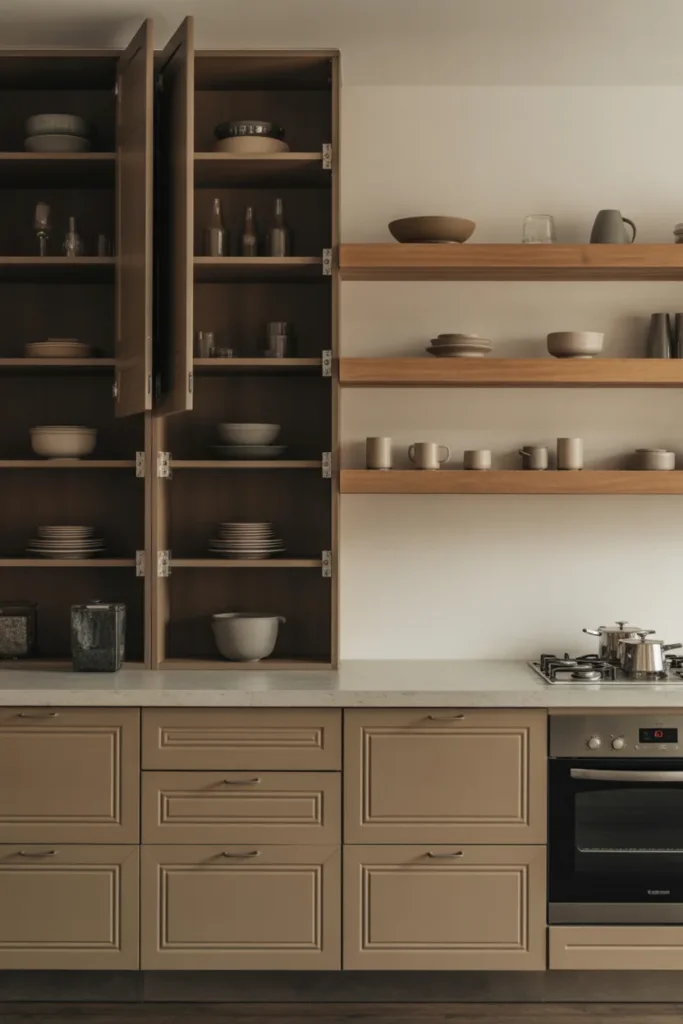
This depends on where you live.
In California, Alaska, and other earthquake zones, upper cabinets with latches are standard. They keep dishes from flying out during shaking.
Open shelves have no latches. Everything falls. Glass breaks. Someone could get hurt.
FEMA guidelines for earthquake safety recommend closed cabinets with secure latches in kitchens. Open shelving is not recommended in high-risk zones.
If you live in an area with frequent quakes, this alone should push you toward uppers. Safety first.
Renting Out Your Kitchen or Home
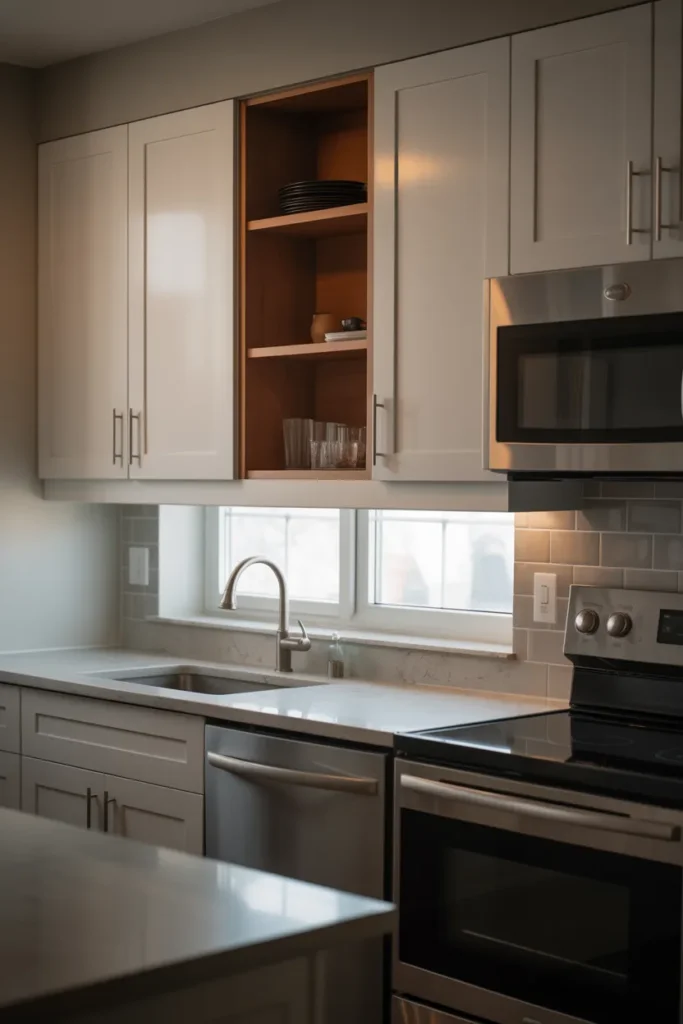
Do you plan to rent your home now or in the future?
Renters treat kitchens differently than owners. They don’t style shelves. They pile things up. Open shelves look messy fast.
A property manager in Austin told me she replaces open shelves with uppers before listing rentals. “Every time we had shelves, tenants complained about dust. Or they stuffed them with random items and it looked terrible.”
Apartment List 2025 data backs this up. 62% of tenants prefer upper cabinets in smaller kitchens. They want to hide their mismatched dishes and instant pot.
If you ever plan to rent your home, install uppers. Or at least keep the cabinet doors so a future owner can close them.
The 18-Point Decision Matrix
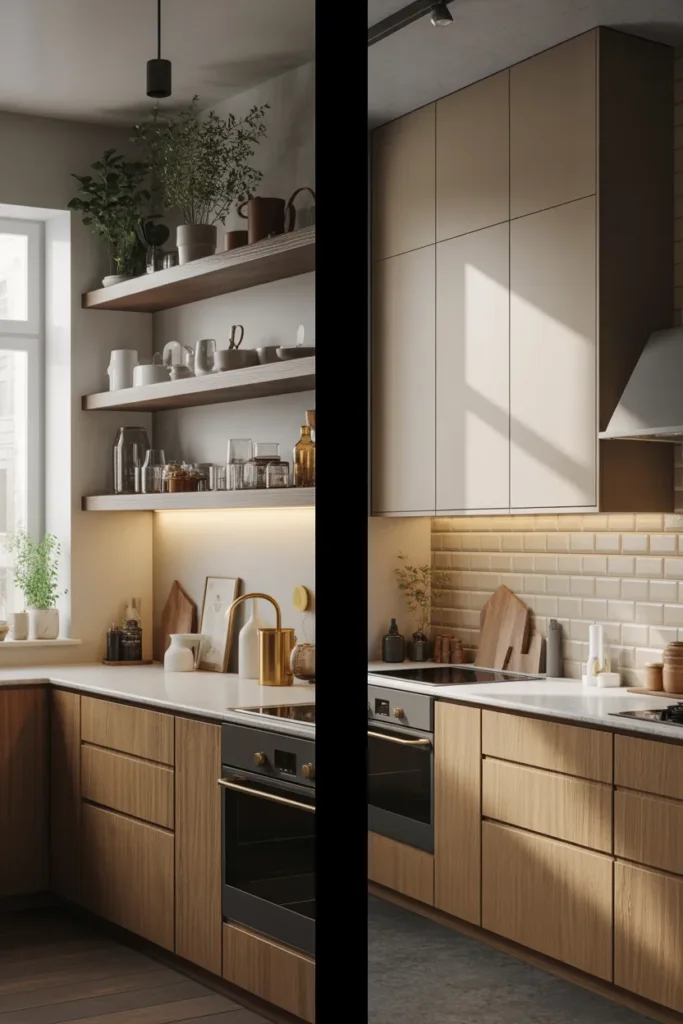
Here’s where you compare everything side by side. Go through each line and check which one fits your life.
Cost – Shelving wins. Cheaper to buy and install.
Cleaning frequency – Cabinets win. Less dust, less grease.
Dust on dishes – Cabinets win. No contest.
Child safety – Cabinets win. You can add locks.
Pet hair – Cabinets win. Cat hair floats onto open dishes.
Rentability – Cabinets win. Tenants want hidden storage.
Resale value – Cabinets win for most price ranges.
DIY difficulty – Shelving wins. Anyone with a level can do it.
Lighting options – Shelving wins. Light passes through.
Noise – Shelving loses. Dishes clank and echo.
Accessibility – Shelving wins. No doors to open.
Dish display pride – Shelving wins. Pretty dishes look great.
Hiding ugly items – Cabinets win. Shut the door.
Earthquake safety – Cabinets win. Latches keep things inside.
Humidity tolerance – Cabinets win in wet climates.
Trend longevity – Tie. Shelving has been popular since 2015. Cabinets never left.
Cooking frequency (daily) – Cabinets win for heavy cooks.
Cooking frequency (weekly) – Shelving wins for light cooks.
Add up your checks. More checks on the shelving side? Go that way. More on cabinets? Stick with closed storage.
Who Should Choose Open Shelving
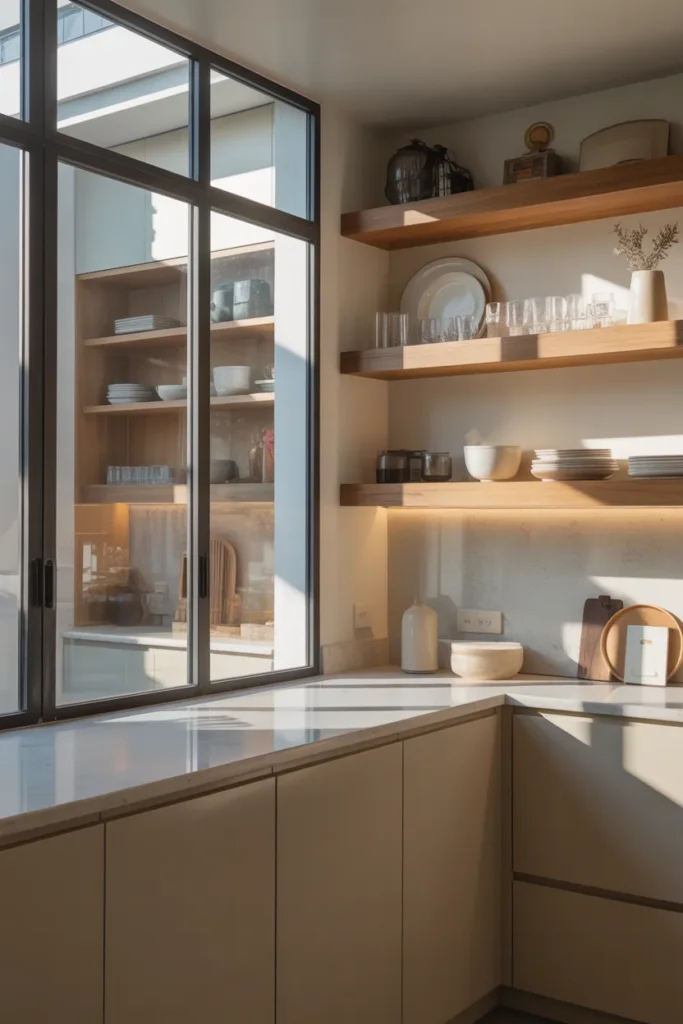
Open shelving works great for some people. Here’s who.
You cook four times a week or less. Light cooking means less grease in the air.
You own matching dish sets. Mismatched plastic and chipped mugs look bad on display.
You live in a dry climate. No warping. Less worry.
You have a separate pantry for hidden storage. Shelves become display only, not your main storage.
You don’t mind dusting weekly. Five minutes with a microfiber cloth is fine with you.
You have no young kids or shedding pets. Safety and hair aren’t issues.
You don’t plan to move or rent your home in the next five years. Resale value won’t hurt you.
If that sounds like you, go for shelves. You’ll love the look and the access.
Who Should Keep Upper Cabinets
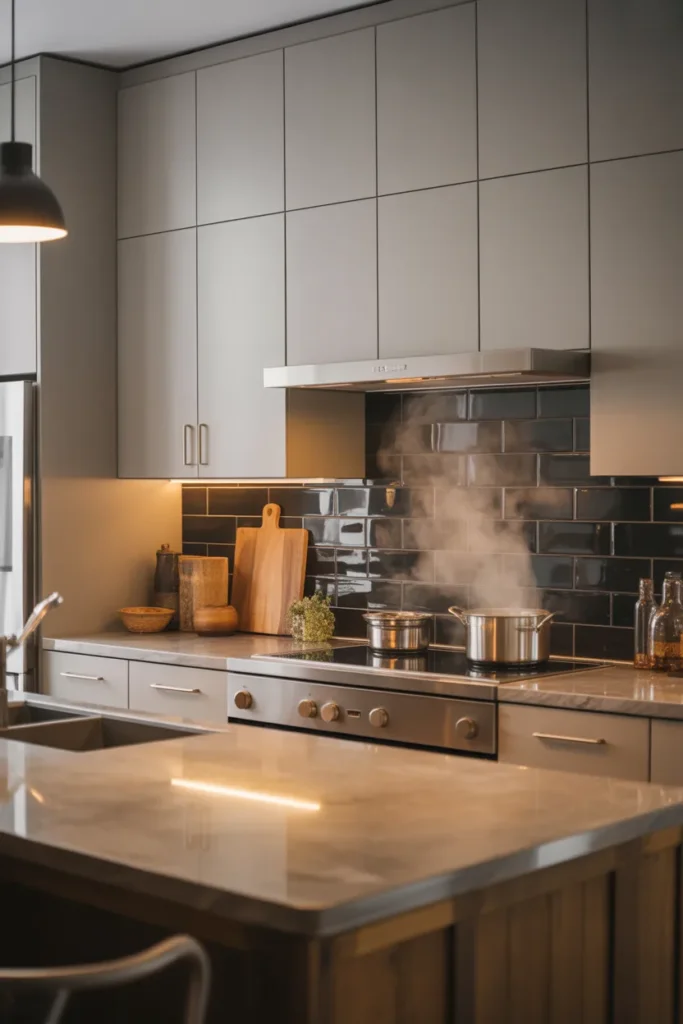
Upper cabinets are still the right choice for many people.
You have kids or pets. Little hands pull things off shelves. Pet hair floats onto plates.
You fry foods often. Grease sticks to everything near the stove.
You plan to sell your home in less than three years. Buyers still want uppers in most markets.
You have mismatched or plastic containers. You don’t want to spend $500 on pretty jars.
You live in a humid area like Florida, Louisiana, or the Pacific Northwest. Wood shelves will warp.
You live in an earthquake zone. Latches save dishes and injuries.
You cook daily. Grease buildup is real and annoying.
You hate dusting. Even once a week feels like too much.
Stick with uppers. You’ll sleep better.
The Hybrid Solution No One Talks About
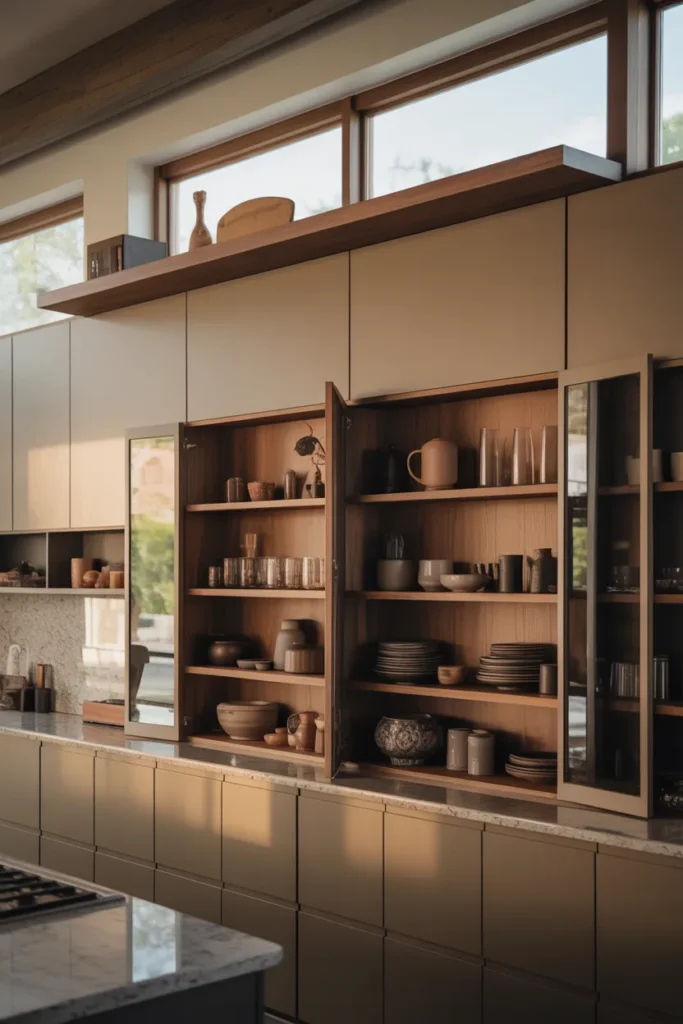
Here’s the best answer for most people. Do both.
Keep your upper cabinets. But remove the doors from one or two sections. That gives you an open shelf look without losing all your hidden storage.
You can also install a floating shelf above your upper cabinets. That keeps dishes out of dust range but still gives you display space.
Another option is open shelving on one wall only. Put it away from the stove. Use it for pretty items you don’t use daily. Keep everything else behind doors.
One designer calls this the 80/20 rule. 80 percent closed storage. 20 percent open display. That’s what most 2026 kitchens actually use.
Try removing one cabinet door first. Live with it for a month. If you love it, remove another. If you hate it, put the door back. No regrets.
What to Do Right Now
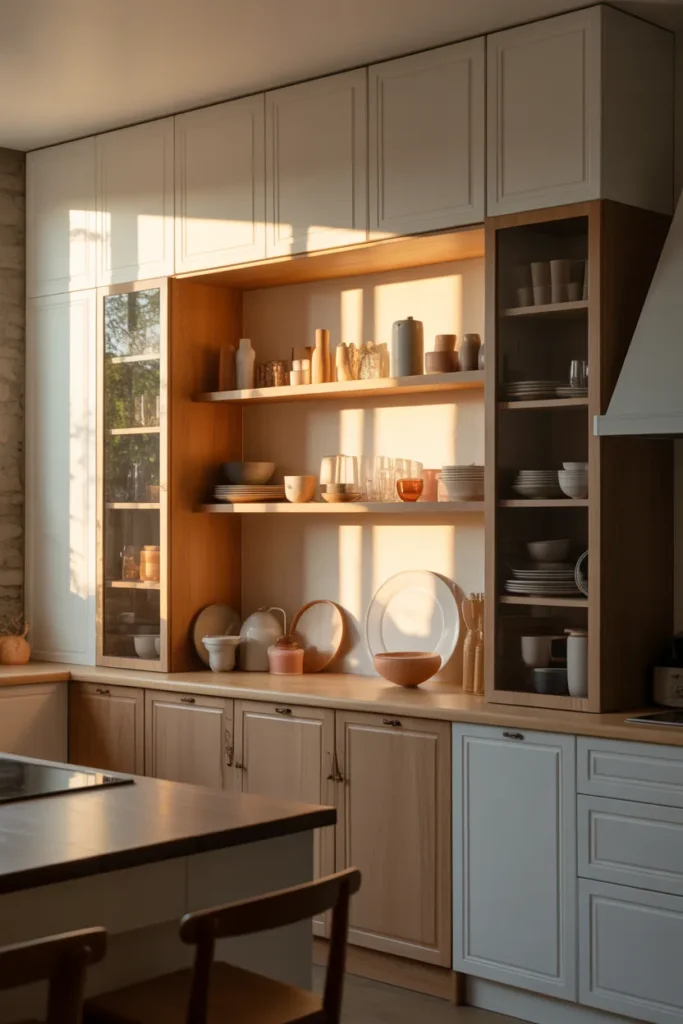
Open shelving wins on budget, access, and style. Upper cabinets win on dust control, resale value, and hiding clutter.
The 2026 trend is clear. Most people do best with a mix. Keep your upper cabinets but remove one or two doors. Add one floating shelf. See how it feels. You can always remove more doors later.
Download our free Kitchen Storage Decision Flowchart. It walks you through five questions and gives you a clear answer. Link in the comments.
And remember this. The question isn’t open kitchen shelving vs upper cabinets as a war. It’s about matching storage to your real life.
Conclusion
You have a lot to think about. Let’s make it simple.
Open shelving costs less. It looks airy. You can see everything. But you will dust often. Grease will land on your dishes. And some home buyers won’t like it.
Upper cabinets hide your clutter. They keep dust away. They lock for kids and pets. But they cost more. They block light. And you will forget what is in the back.
The best answer for 2026 is not all one or the other. It is a mix.
Keep most of your upper cabinets. Remove one or two doors. Add one floating shelf away from the stove. That gives you display space without the dust nightmare.
Try this this week. Open your kitchen cabinets. Pick one section. Take the door off. Live with it for 14 days. If you hate the dust or the look, put the door back. No money lost. No regret.
Download our free Kitchen Storage Decision Flowchart. It takes two minutes and gives you a clear yes or no for your home. Link in the comments.
The question isn’t open kitchen shelving vs upper cabinets as a battle. It is about matching storage to how you actually cook, clean, and live. Choose what makes your mornings easier. Not what looks good in a photo..