15 Boho Home Plants (Low Maintenance)
Introduction
Boho Home Plants you don’t need a green thumb to master the 2026 “Earthy Eclectic” trend. You just need the right plants.
Many people think the boho look requires rare, high-maintenance greenery. You know the type. Plants that die if you miss one day of misting or don’t have a perfect south-facing window.
That’s not true anymore.
In 2026, the trend has shifted. People are moving away from fussy divas like the Fiddle Leaf Fig. Instead, they want structural, forgiving plants that actually survive real life.
This guide covers 15 boho home plants that look gorgeous and handle a little neglect. You’ll learn which ones thrive in low light, which ones trail beautifully from shelves, and how to keep them alive without stress.
Let’s fix your plant problem.
Why These 15 Plants Define 2026 Boho Style
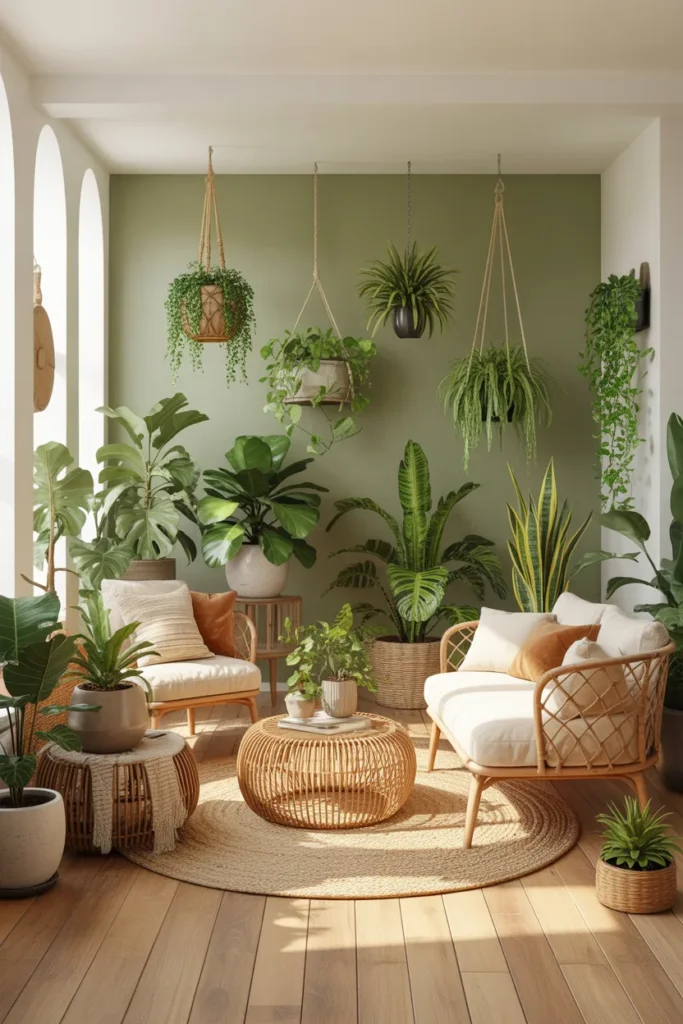
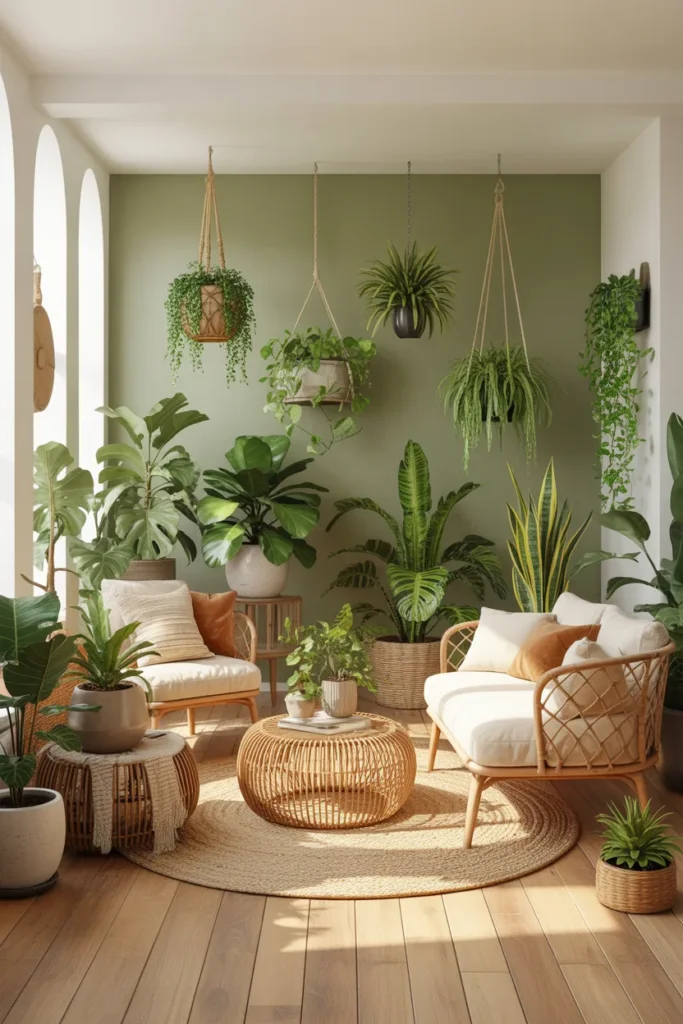
Here’s what changed. The old boho look was about piling plants everywhere. More was more. But that got messy and hard to maintain.
The 2026 version is different. Designers call it “Earthy Eclectic”. It focuses on curated storytelling instead of random maximalism.
That means fewer plants, but smarter choices. You want texture over quantity. Think macrame hangers against rattan furniture. Deep terracotta pots next to sage green walls.
Another shift is “Back to Green.” People now prioritize plant health over rare variegated leaves. A healthy common plant looks better than a dying rare one.
This matters because boho style should feel free, not stressful. Your plants should add calm, not chores.
The 15 plants below fit this new approach. They’re resilient. They’re stylish. And they won’t punish you for having a busy life.
Plant 1: Golden Pothos
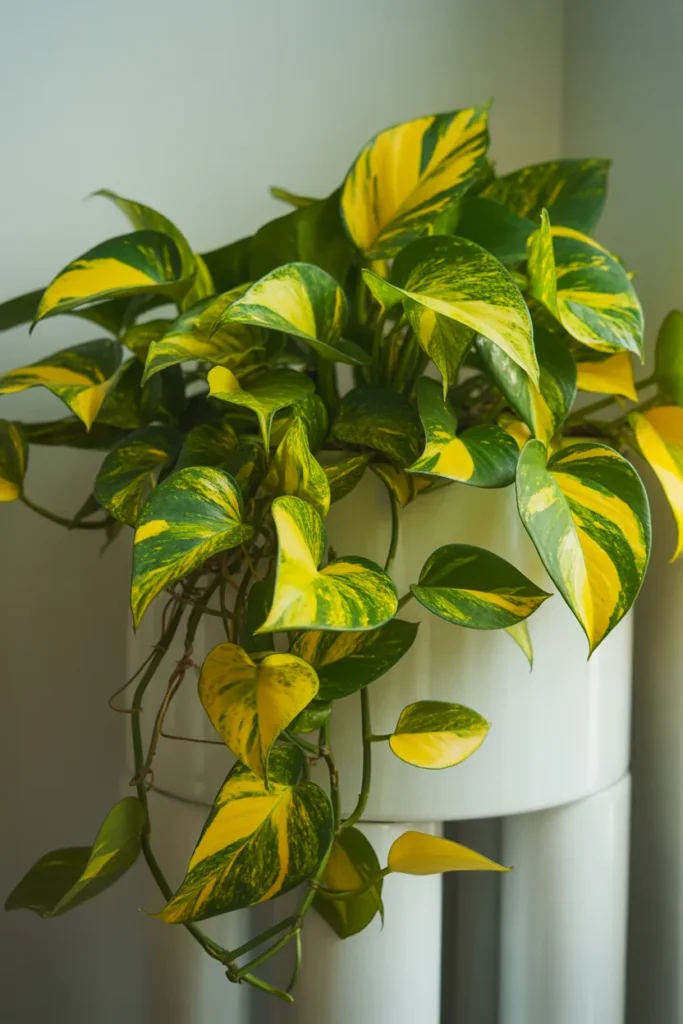
This is the “it” plant for 2026. And for good reason. It grows fast, trails beautifully, and tolerates almost anything.
You can grow it in soil or water. It handles low light and irregular watering. The variegated leaves stay bright even in shade.
The leaves have yellow and green marbling. That pattern looks expensive, but the plant costs very little.
Here’s a fun fact. NASA found that Pothos removes benzene and formaldehyde from the air. That’s a nice bonus.
Care hack: Water once a week. If you forget for two weeks, it won’t hold a grudge. Yellow leaves mean too much water.
Plant 2: String of Pearls
This one looks delicate. It’s not. The bead-like leaves create a stunning curtain effect from high shelves.
Each “pearl” stores water. That’s why it handles dry periods so well. The plant spills out of pots like a green waterfall.
Put it in a macrame hanger near a window. The light hits the beads and makes them glow.
Care hack: Give it bright indirect light. Let the soil dry completely between waterings. Overwatering kills this plant faster than neglect.
Plant 3: Philodendron Brasil
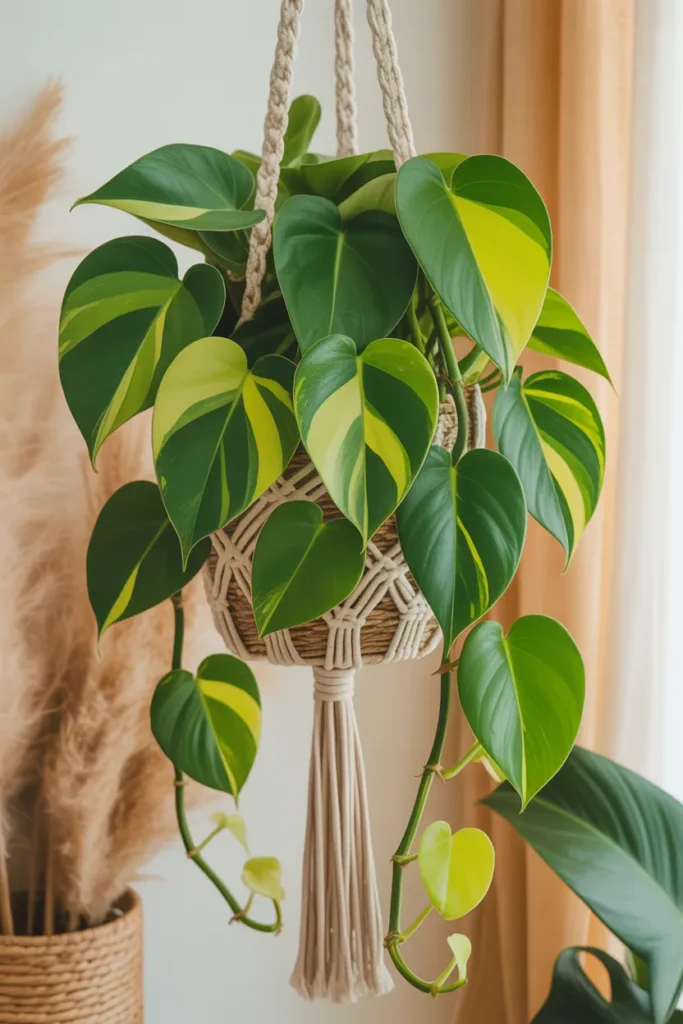
Similar to Pothos but with heart-shaped leaves. The green and lime variegation pops against neutral boho tones.
This plant grows fast. Really fast. You’ll see new leaves every week during summer.
It trails just as well as Pothos. Swap this in if you want a softer, rounder leaf shape. The two plants look great hanging next to each other.
Care hack: Same as Pothos. Let the top inch of soil dry out before watering. Trim the vines to keep them full.
Plant 4: Snake Plant
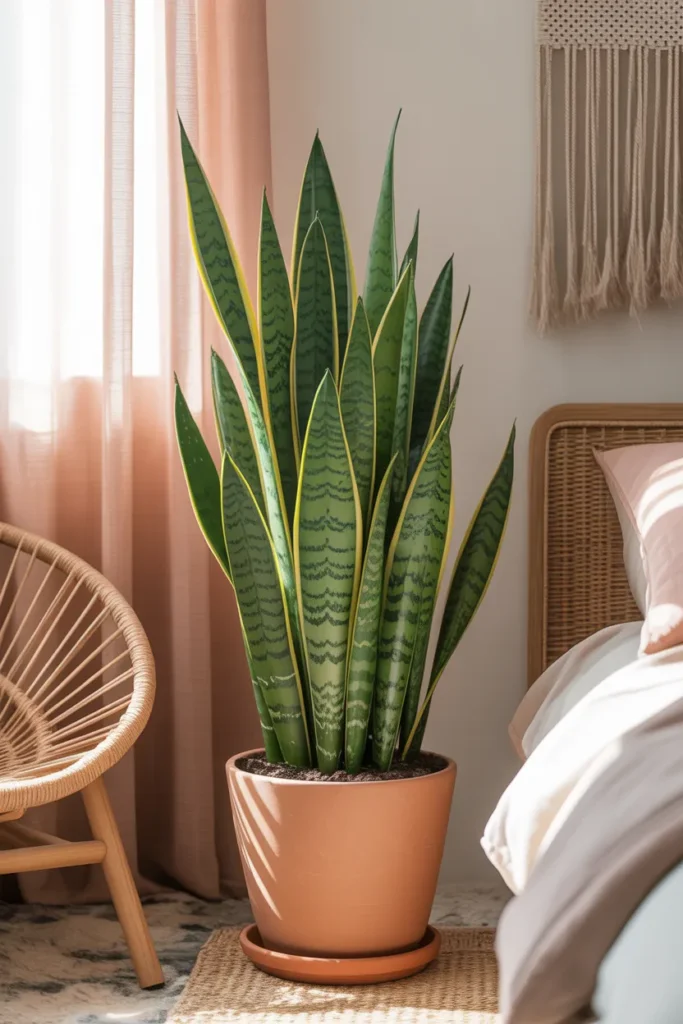
This is the survival champion of houseplants. The tall, spiky leaves create strong vertical lines. That’s perfect for balancing low boho furniture.
It tolerates low light and irregular watering. It also handles temperature swings. The only real risk is overwatering.
Here’s a cool fact. Snake plants release oxygen at night instead of during the day. Most plants do the opposite. That makes them ideal for bedrooms.
You can find many varieties. Some have yellow edges. Some grow in a rosette shape. All are easy.
Care hack: Water once every two to three weeks. Let the soil dry completely. Wipe the leaves monthly so they can breathe.
Plant 5: Monstera Deliciosa
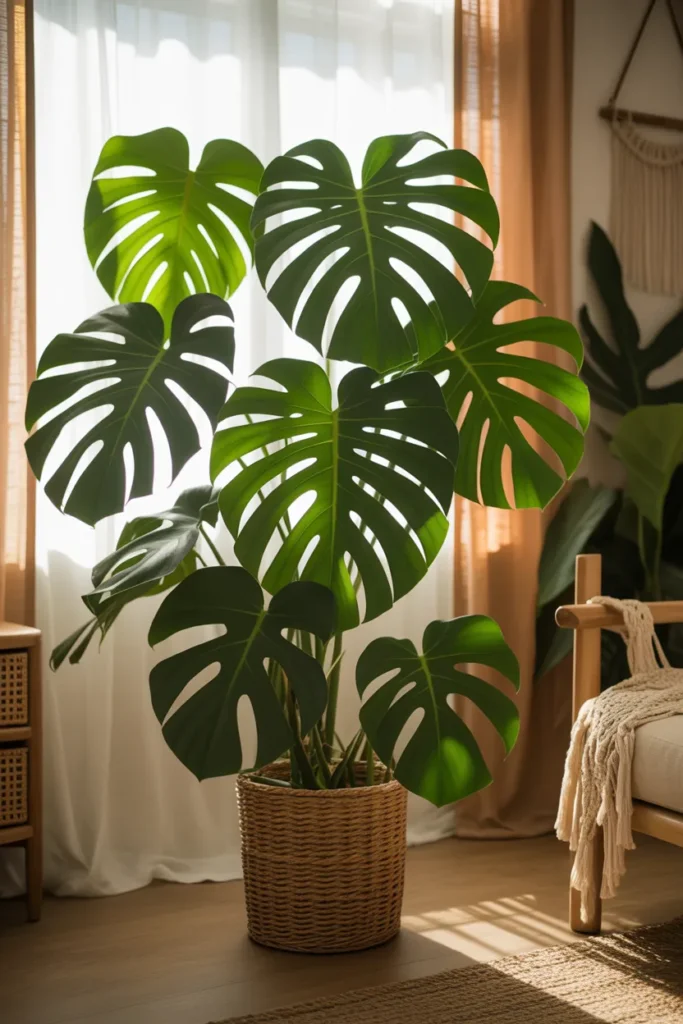
Those big, split leaves are pure boho. The plant grows tall and wide, creating that jungle feel without needing 50 different species.
Young Monsteras have solid heart-shaped leaves. As the plant matures, the famous holes and splits appear. That process is called fenestration.
In 2026, collectors are hunting variegated Monsteras. But the classic green version is cheaper, easier, and still gorgeous.
Care hack: Give it bright indirect light. Water when the top two inches of soil feel dry. Wipe the large leaves with a damp cloth monthly to keep them shiny.
Plant 6: Rubber Plant
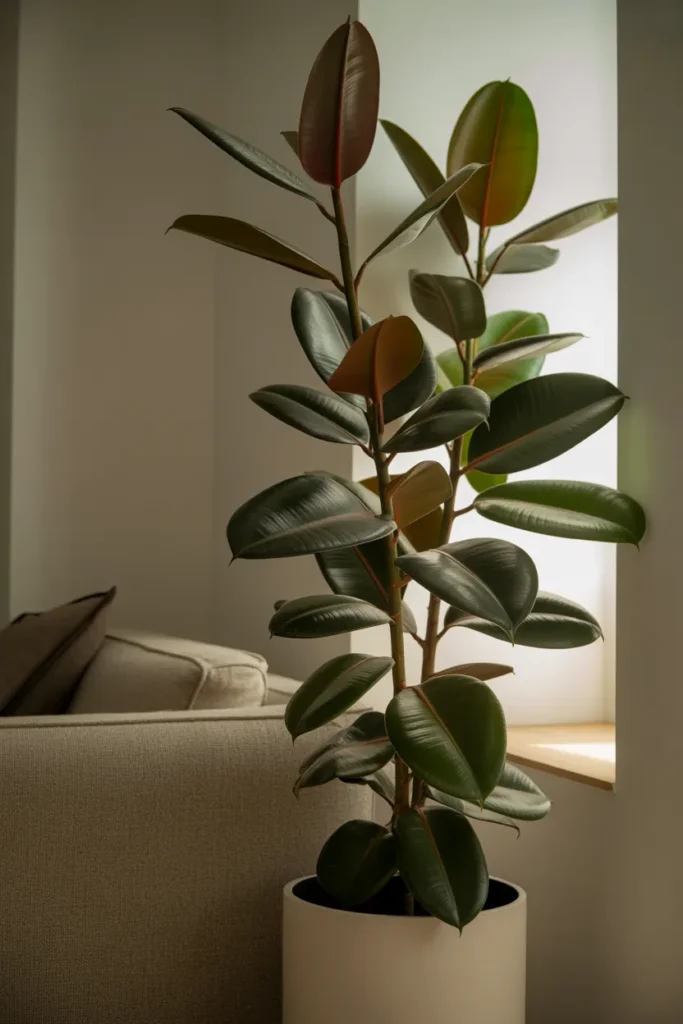
Here’s a 2026 prediction you’ll see everywhere. The Rubber Plant is overtaking the Fiddle Leaf Fig in popularity.
Why? It’s easier. The glossy, dark leaves look modern and rich. And it grows into a tree-like shape that commands attention.
The leaves come in dark green, burgundy, and variegated patterns. The burgundy variety has deep red tones on the undersides.
Rubber Plants grow straight up. That vertical growth fits perfectly in corners or next to sofas.
Care hack: Keep in bright indirect light. Water when the top inch of soil dries. The sap can irritate skin, so use gloves when pruning.
Plant 7: Boston Fern
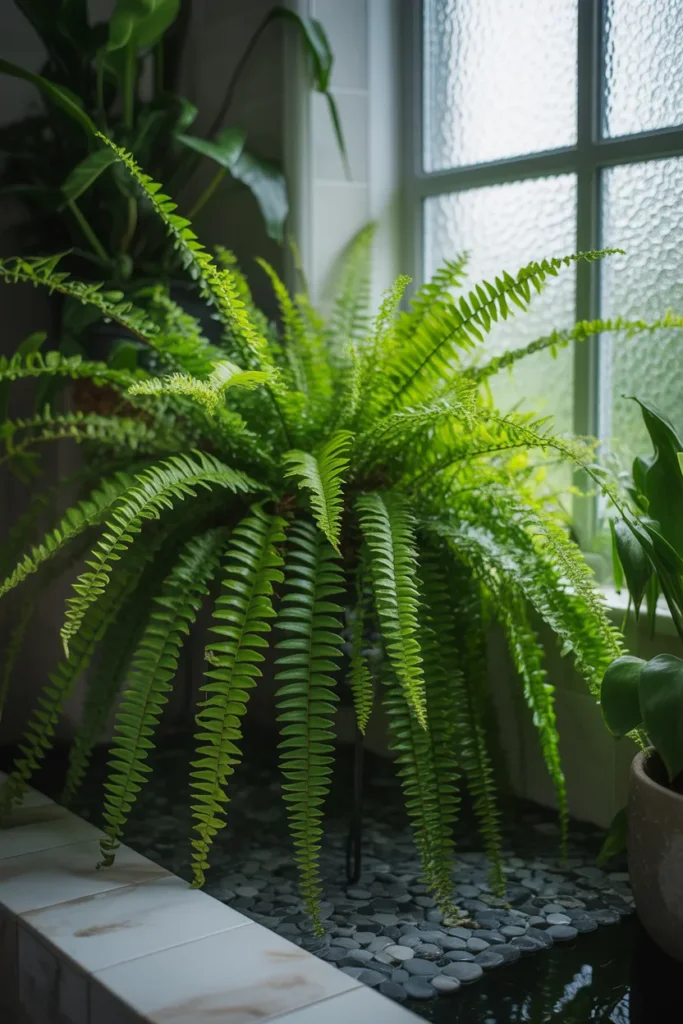
This plant is lush. The fronds arch outward and create a soft, feathery cloud of green.
Boston Ferns have been popular since the Victorian era. They’re coming back because people want soft textures again.
The catch? Ferns like humidity. But you can solve that easily. Place it on a pebble tray with water or group it with other plants.
Bathrooms are perfect for ferns. The steam from showers gives them exactly what they need.
Care hack: Keep the soil consistently moist. Mist the fronds every few days if your air is dry. Bright indirect light works best.
Plant 8: Calathea
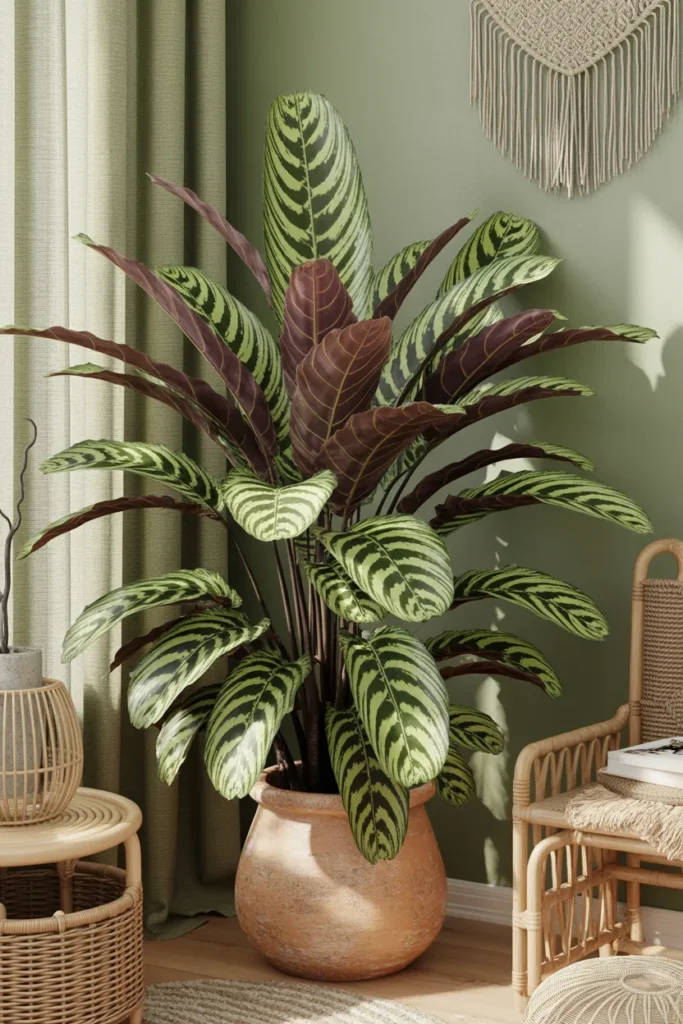
Calatheas have bold leaf patterns. Stripes, feathering, deep purple undersides. They’re living art.
They also move. The leaves fold up at night and open in the morning. That adds an interactive element to your space.
Some varieties are called “Prayer Plants” because the folded leaves look like hands praying.
The downside? Calatheas can be picky about water. They don’t like chemicals.
Care hack: Use distilled water if your tap water has chlorine or fluoride. Keep soil damp but not soggy. No direct sun or the leaves will fade.
Plant 9: Bird of Paradise
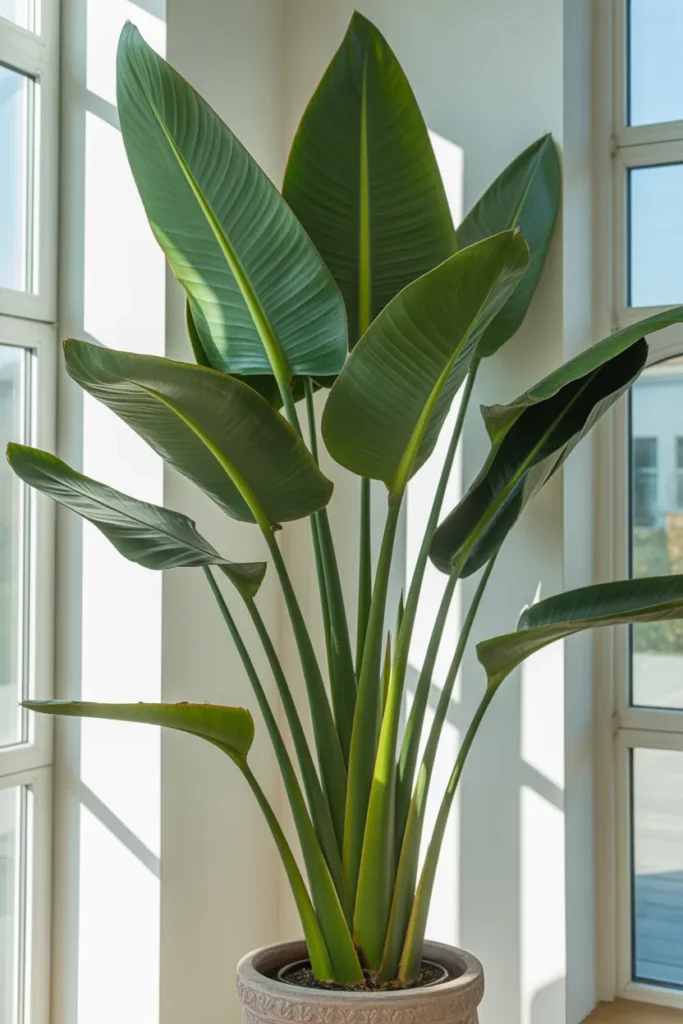
This one grows tall. Really tall. The large, banana-like leaves create serious drama.
Indoors, a Bird of Paradise can reach six to seven feet. That’s taller than most door frames.
It’s not as hard as it looks. Give it bright light and regular water. It grows fast and fills empty space quickly.
The plant is related to the outdoor flowering version. But indoors, it rarely blooms. That’s fine. The leaves are the main attraction.
Care hack: Rotate the pot every month so it grows straight. Water when the top inch of soil dries. Clean the large leaves so they can soak up light.
Plant 10: ZZ Plant
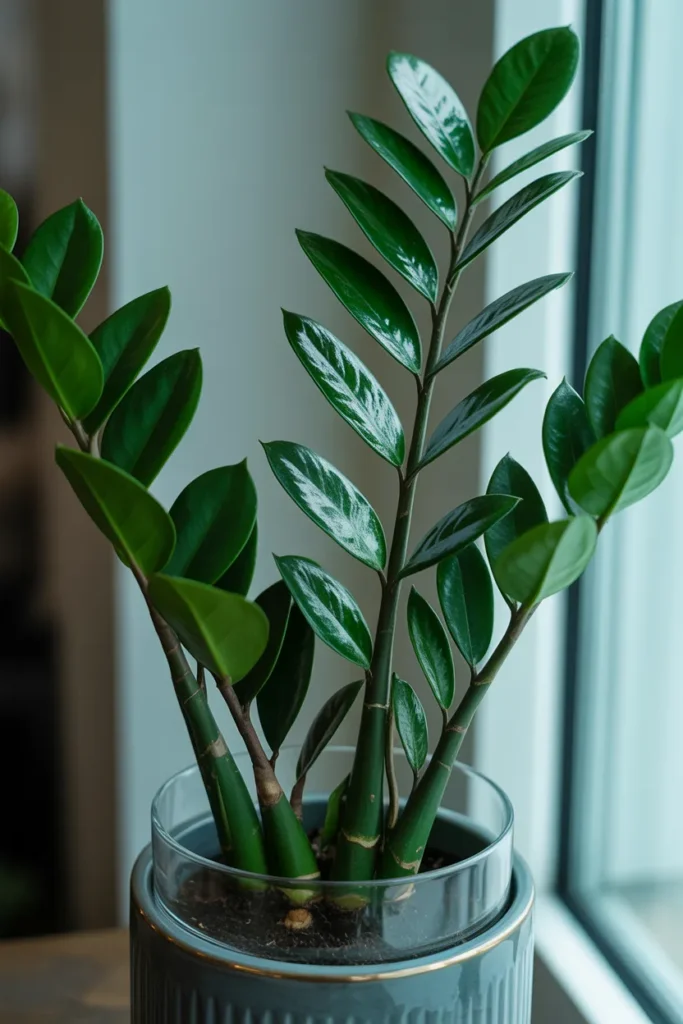
This plant thrives on neglect. The glossy, dark green leaves look almost fake. That’s how perfect they stay.
It handles weeks of drought and very low light. If you travel often or just forget to water, get a ZZ plant.
The plant grows from underground rhizomes. Those potato-like structures store water for months. That’s why it survives when you ignore it.
ZZ stands for Zamioculcas zamiifolia. Don’t worry about the name. Just remember it’s the easiest plant you’ll ever own.
Care hack: Water every three to four weeks. Wipe the leaves monthly to remove dust. Keep away from pets. It causes mild mouth irritation.
Plant 11: Peace Lily
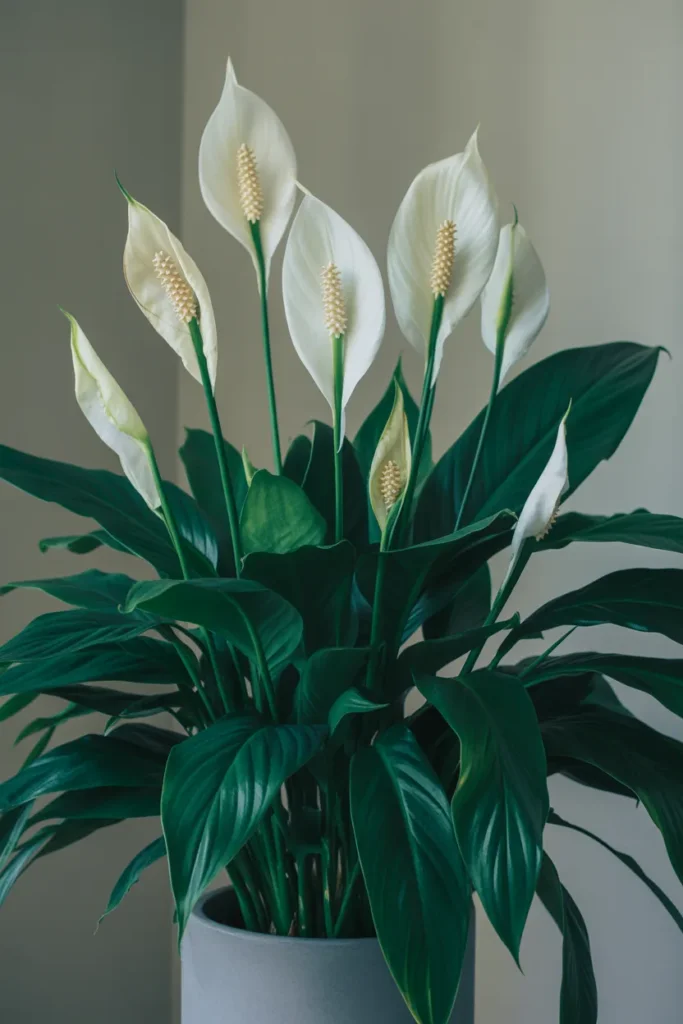
Peace Lilies are elegant. The dark green leaves and white flowers feel clean and calm.
They also communicate clearly. When the leaves droop, you waited too long to water. Give it a drink and watch it perk up in hours.
This feature makes Peace Lilies perfect for beginners. The plant tells you exactly when it’s thirsty.
The white flowers are called spathes. They last for weeks and add a soft contrast to all that green.
Care hack: Keep in low to medium light. Water when leaves start to droop. Note: mildly toxic to pets. Keep out of reach.
Plant 12: Spider Plant
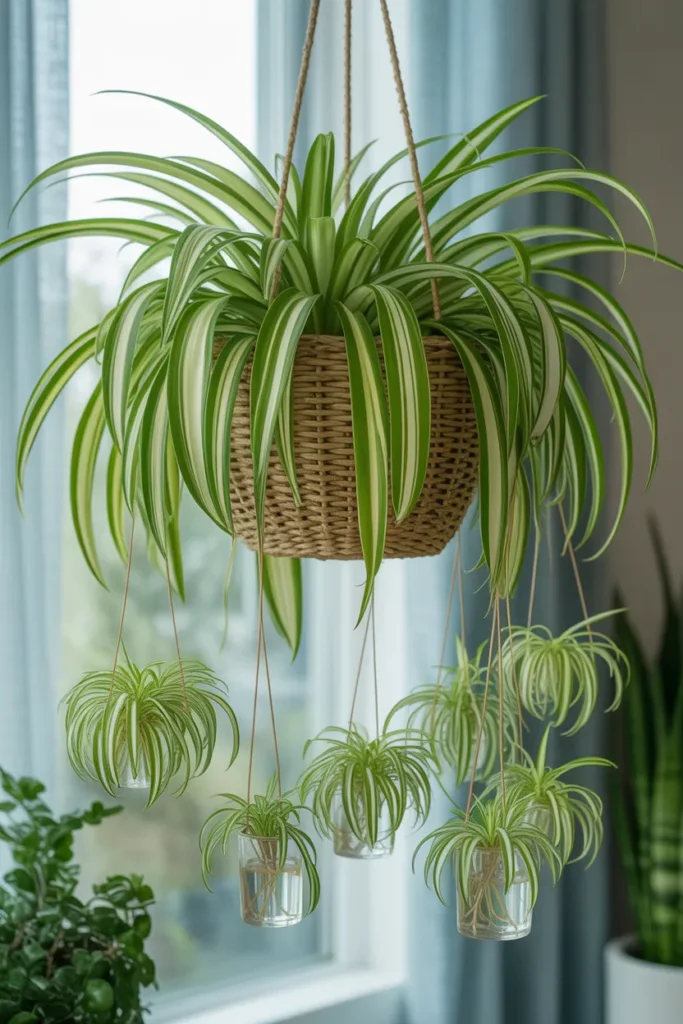
This is a nostalgic favorite that’s coming back in 2026. The arching green and white leaves look great in hanging planters.
It grows fast and produces baby “spiderettes” you can propagate. One plant turns into many for free.
The spiderettes hang down from long stems. They look like tiny versions of the mother plant. You can clip them off, put them in water, and grow new plants.
This plant also cleans air. Studies show it removes formaldehyde and xylene.
Care hack: Bright indirect light is best. Let soil dry between waterings. The plant produces more spiderettes when slightly root bound.
Plant 13: Aloe Vera
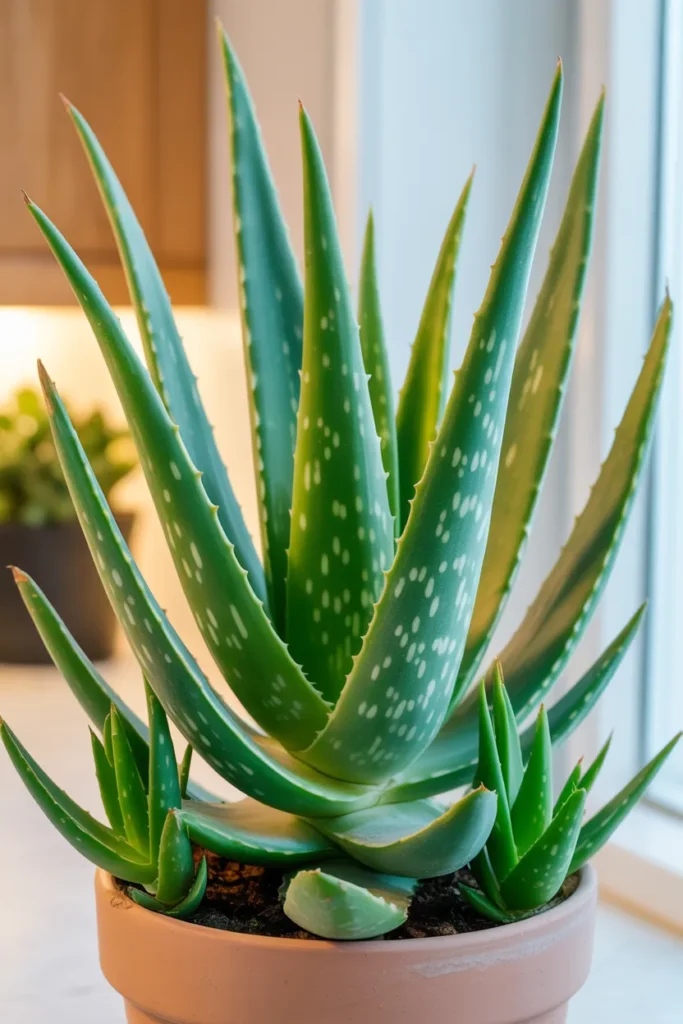
Aloe is useful. The gel inside the leaves soothes burns and cuts. Keep one in your kitchen.
It stores water in its leaves, so it handles dry periods easily. Give it bright light and ignore it.
The leaves grow upward in a rosette shape. That structure adds a different texture than trailing or bushy plants.
Aloe also produces pups. Those are baby plants that grow from the base. You can separate them and give them to friends.
Care hack: Water deeply once every three weeks. Less in winter. If the leaves turn brown and mushy, you overwatered. If they turn thin and curl, it needs more water.
Plant 14: Chinese Evergreen
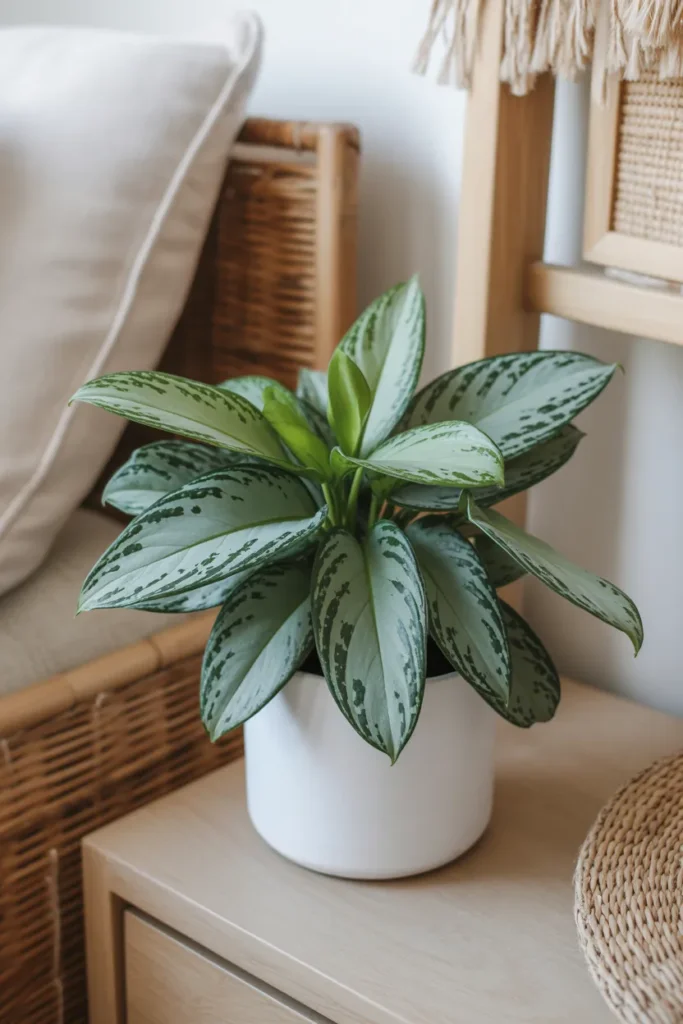
This plant handles almost any indoor condition. Low light, dry air, irregular watering. It doesn’t care.
The leaves have silver, gray, and green patterns. Those colors match the neutral boho palette perfectly.
Chinese Evergreens stay compact. They won’t take over your space. That makes them great for desks, shelves, or nightstands.
In 2026, the “Silver Bay” variety is especially popular. The leaves look almost metallic.
Care hack: Let the soil dry out completely between waterings. Wipe the broad leaves monthly. Toxic to pets, so keep it high up.
Plant 15: Ponytail Palm
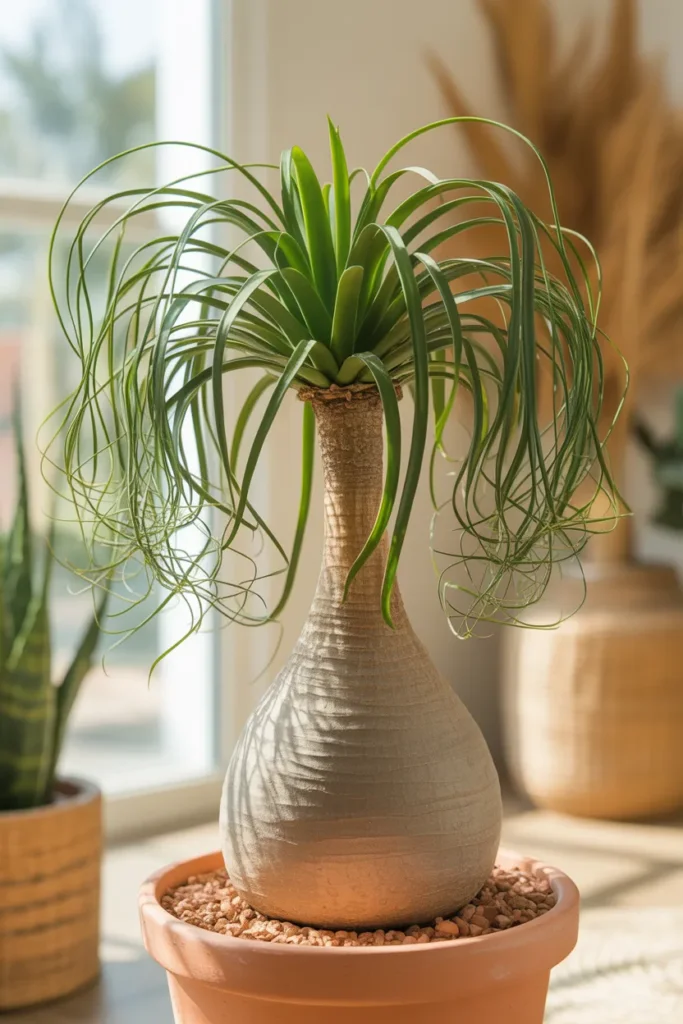
This is not actually a palm. It’s a succulent. The bulbous trunk stores water for months.
The long, curly leaves sprout from the top like a ponytail. That unique shape adds whimsy to any boho room.
Ponytail Palms grow slowly. That’s good news. You won’t need to repot it for years.
It loves bright light but tolerates medium light. The trunk will grow thicker with more sun.
Care hack: Water deeply once a month. Let the soil dry completely between waterings. Overwatering is the only real risk. Use a cactus mix for soil.
Pots, Macrame, and Placement
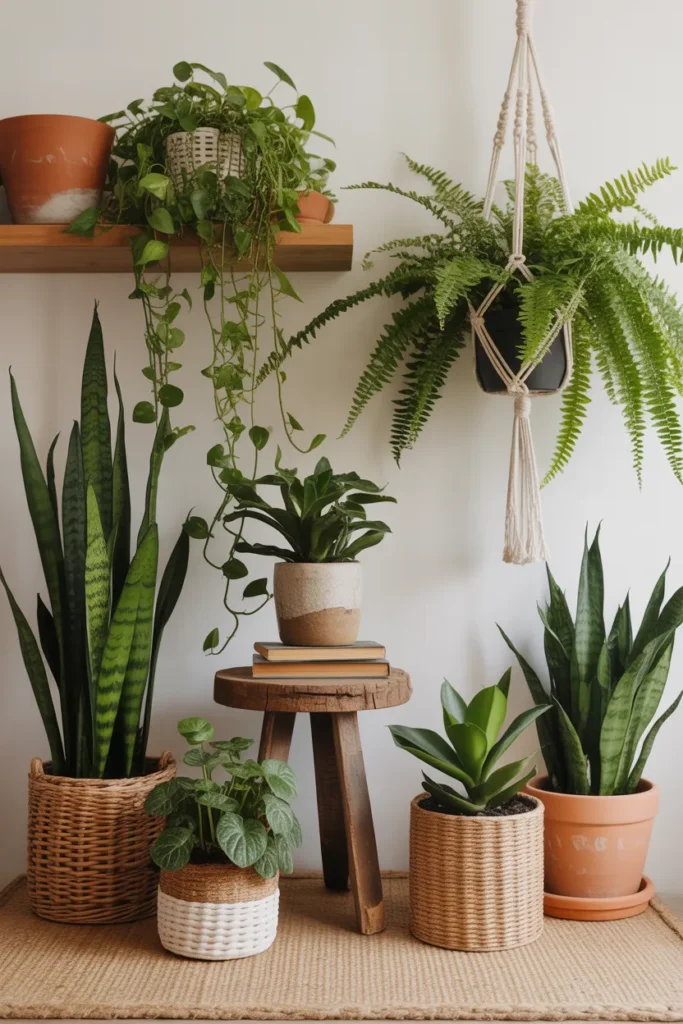
A plant is just a plant until you dress it up. The right container and placement turn greenery into decor.
Here’s what works for 2026 boho style.
Stick with natural materials. Terracotta is classic and affordable. Wicker baskets add texture. Jute wraps feel earthy. Skip plastic pots. They don’t breathe and they don’t look right. Put your plastic nursery pot inside a woven basket or ceramic planter.
Don’t just place plants randomly. Pair them with purpose. Put a tall structural plant like a Snake Plant next to a trailing Pothos on a shelf. The vertical lines and cascading vines balance each other.
Group three plants together at different heights. Use a plant stand, a stack of books, or an upside-down pot to lift one higher.
High plants in macrame hangers create the “boho fringe” effect. Low plants in terracotta pots feel grounded and earthy.
Put humidity lovers like ferns in bathrooms. Put tough plants like ZZ in dark hallways. Match the plant to the room’s conditions, not just where you want decor.
Conclusion
Here’s the truth. Bohemian style is about freedom. Your plants should not be a source of stress.
You don’t need 50 rare plants. You don’t need a greenhouse. You need 2 or 3 of these resilient picks placed with intention.
Start with a Pothos on a high shelf. Add a Snake Plant in a dark corner. Finish with a Rubber Plant as your statement piece.
Place them in natural light when possible. Water only when the soil feels dry. And watch your sanctuary grow.
The 2026 trend is clear. Less clutter, better choices, healthier plants. You can do this.
Which plant are you grabbing first?