15 Boho Decorating for Beginners: How to Build the Look Without It Looking Messy
You love the free-spirited vibe of boho style. But your living room is starting to look more like a rummage sale than a relaxing retreat.
You added tapestries. You bought plants. You hung macrame. And somehow, it feels chaotic. Not cozy.
That’s the problem most beginners face. You try to copy what you see on social media, but you end up with a room that feels messy. Not curated. Not intentional.
Here’s the good news. Boho decorating for beginners is easier than you think. You just need a few rules.
In this guide, you’ll learn the 2026 shift toward modern boho decor and Afrobohemian style. You’ll discover the 80/20 rule of layering. And you’ll find out how to use empty space to make your home look intentional. Not cluttered.
Let’s fix your room.
1.Texture Over Trinkets (The Layering Technique)
Most beginners buy too many small items. Candles. Figurines. Tiny vases. These become dust collectors. And they make shelves look cluttered.
The fix is simple. Buy textures instead of trinkets.
The SS26 Nordic Calm Trend Report puts it this way: “Boho style thrives when tactility is the message. Keep the silhouette simple, then let the surfaces do the talking.”
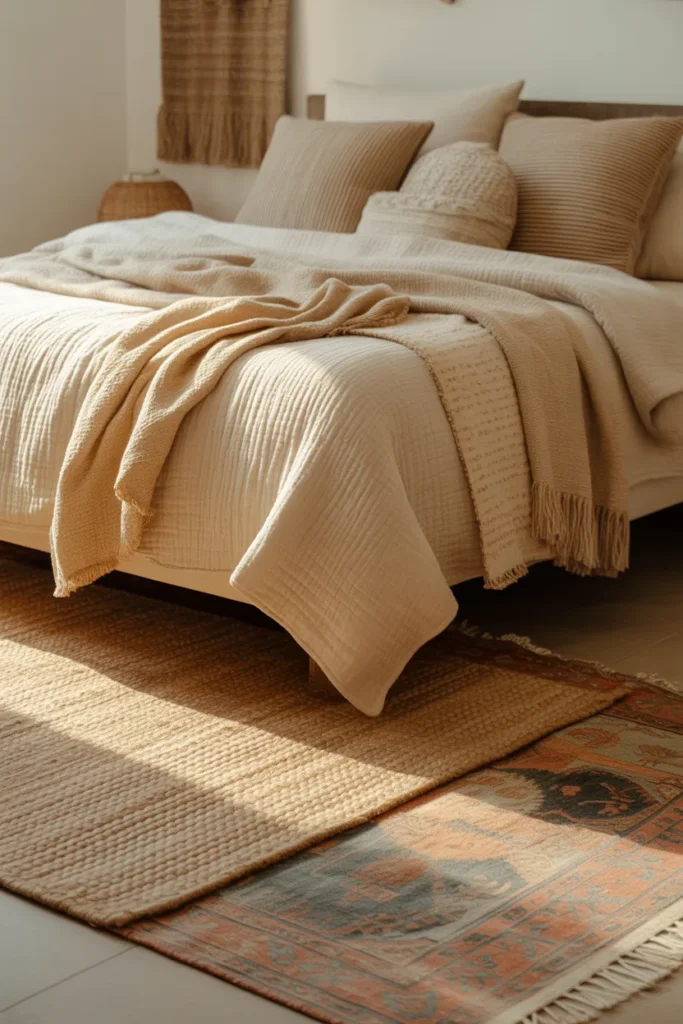
Here’s what that means for you. Focus on fabrics and materials that feel good to touch. Wool, jute, boucle, slubby linen, and ribbed cotton. If it doesn’t feel good, don’t buy it.
Try the Touch Test. Close your eyes and run your hand over the item. Does it make you want to curl up? Buy it. Does it feel scratchy or plastic? Leave it.
One of the best layered boho textures tricks is the double rug. Start with a large jute rug on the floor. It’s rough and natural. Then layer a smaller, patterned vintage rug on top. The contrast between rough and soft creates instant depth.
And here’s why this works. Textiles absorb sound. They make a room feel quieter and calmer. Trinkets just sit there and collect dust.
If your room feels flat, you don’t need more stuff. You need more fluff.
2.The “Rule of Three” for Pattern Mixing
Yes, you can mix patterns. But you need a system.
Beginners try to put five different prints in one room. That’s visual noise. Your brain gets tired trying to process all the information.
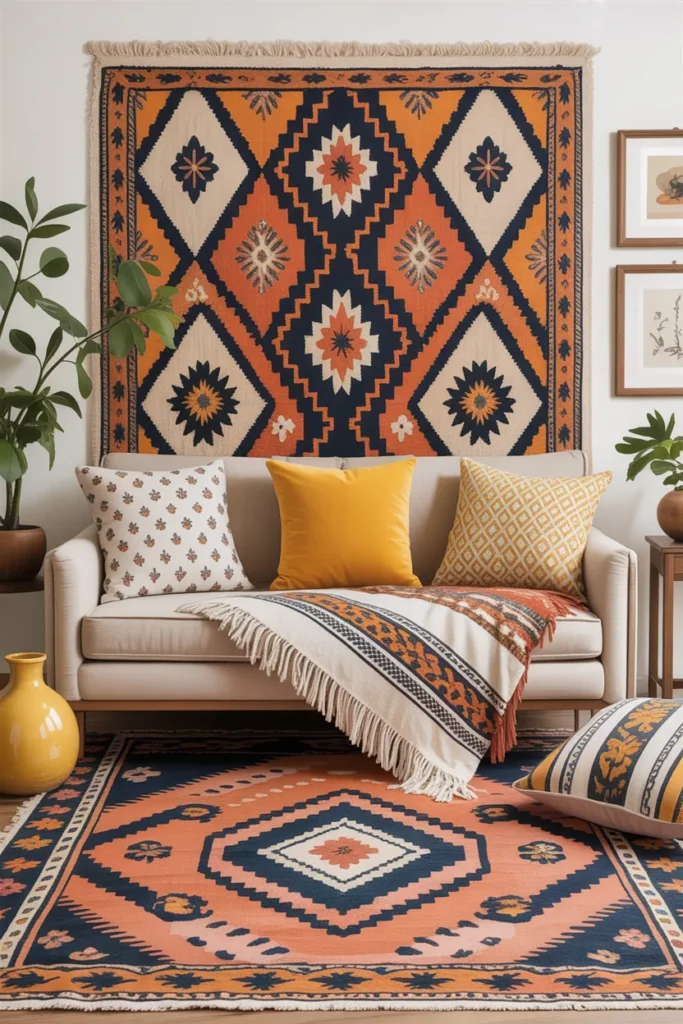
Here’s the math that works. One large scale motif plus two small scale patterns. That’s it.
Let me give you an example. Start with a large geometric rug (the big motif). Then add throw pillows with a small floral print. Finally, bring in a blanket with tiny stripes or dots. Three patterns. One big. Two small. Done.
But there’s another rule. Color repetition. Pick one accent color. Say, turmeric yellow. Then put that color in three different places. A yellow pillow. A yellow vase. A yellow corner in your wall art. That small act ties everything together.
Actionable tip: Before you hammer nails for a gallery wall, use paper templates. Cut paper to the size of your frames. Tape them to the wall with painter’s tape. Move them around until the layout feels balanced. No holes. No regrets.
The goal of mixing boho patterns is variety without violence. Your eyes should move smoothly around the room. Not jump and stutter.
3.Greenery is Non-Negotiable (But Choose Wisely)
Plants fix so many problems.
They soften hard corners. They fill empty spaces. They add life to dead zones. Plus, biophilic design (our natural love of living things) lowers blood pressure and improves focus. Terrapin Bright Green published research on this back in 2014, and it’s still true today.
But here’s where beginners mess up. They buy ten tiny succulents. Then they forget to water them. Then they have ten tiny dead plants on their windowsill. That’s not boho. That’s sad.
The 2026 trend is Botanical-Luxe. One large statement plant beats ten small ones every time.
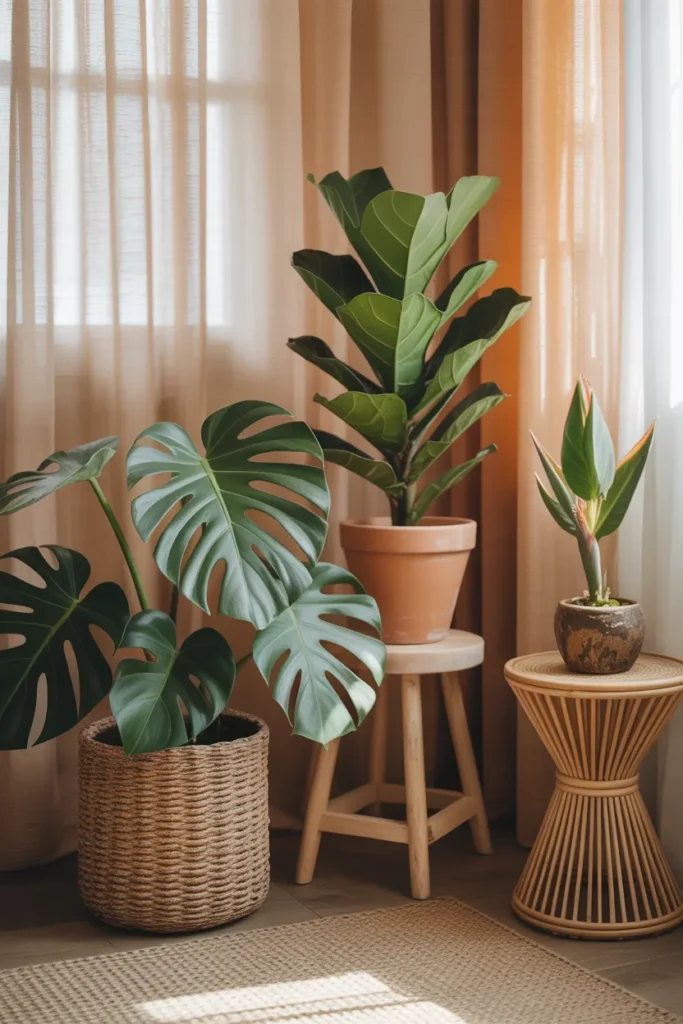
Buy a Monstera deliciosa. Or a Fiddle Leaf Fig. Or a Bird of Paradise. Put it in a woven basket or a terracotta pot. That single plant creates a focal point. It draws the eye. It says “boho” without screaming.
And here’s a secret. Fake plants are fine if you have low light. But spend money on high-quality silk versions. Cheap plastic ferns look cheap. Save yourself the shame.
Boho plant decor works best when you group three plants together at different heights. Tall plant on the floor. Medium plant on a stool. Small plant on a side table. That cluster looks intentional. One lonely plant just looks lonely.
4.The 2026 Afrobohemian Accent Wall
Macrame wall hangings had their moment. That moment passed.
In 2026, Afrobohemian home trends are taking over. This style uses natural fibers, geometric patterns, and repeating shapes to create structure. It’s boho with boundaries.
The easiest way to try this trend is a basket wall.
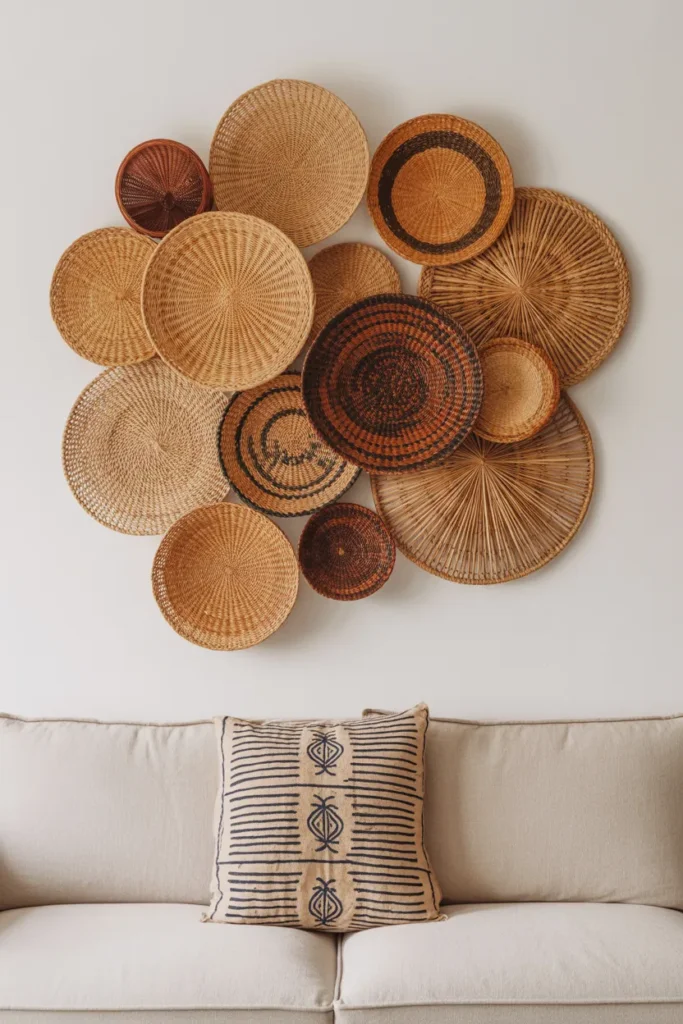
Woven baskets from Ghana, Morocco, or Mexico add texture and pattern. But you can’t just throw them up randomly. That looks messy. You need repetition.
Choose baskets in similar tones. Think cane, wood, and dark brown. Avoid neon or painted baskets. Then arrange them in a cluster. Overlapping slightly. Large ones at the bottom, smaller ones floating up.
The result looks like art. Not like a souvenir shop.
Searches for “Berbere motifs” (a traditional North African pattern) jumped 210 percent on Pinterest. You can find affordable mudcloth pillows and throws on Etsy or Amazon. Add one mudcloth pillow to your neutral sofa. That single piece anchors the whole room.
The power here is contrast. Structured patterns against soft textures. Dark lines against light backgrounds. That contrast is what makes boho wall decor look expensive.
5.Lighting: The Difference Between Gypsy and Glam
Here’s a truth most decor blogs won’t tell you. Overhead lighting ruins everything.
That big ceiling light with three exposed bulbs? It casts harsh shadows. It makes your warm, textured room look like an operating room. Turn it off. Never use it.
The Illuminating Engineering Society says the ideal color temperature for relaxation is 2700k to 3000k. That’s warm. That’s candle-like. That’s not your cool-white ceiling fixture.
So what do you use instead?
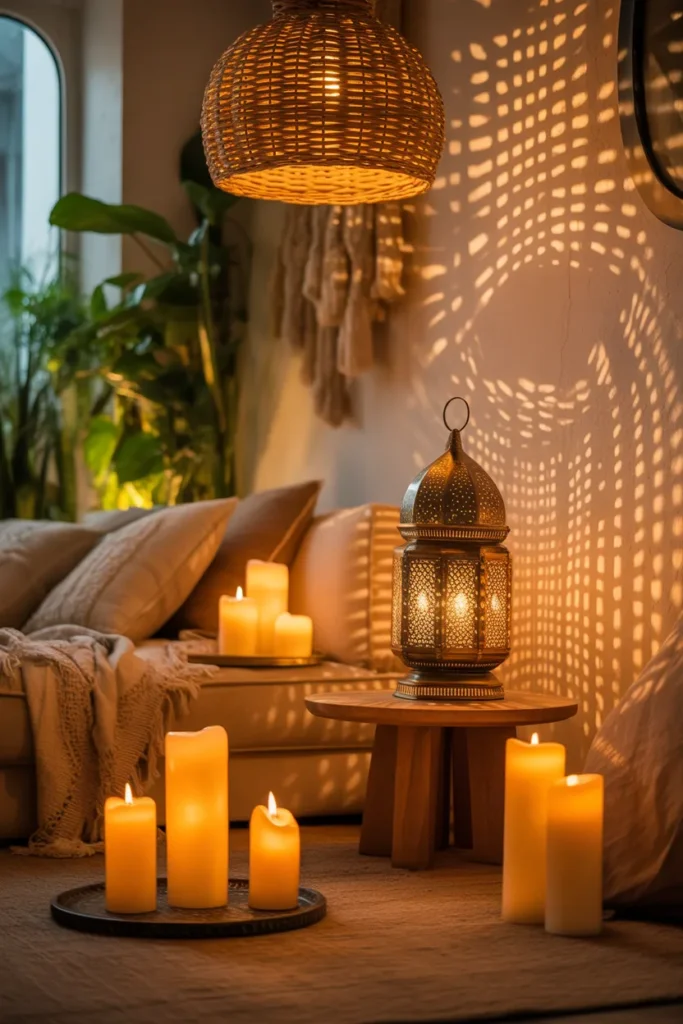
Layer your lighting. Start with a rattan pendant light on a dimmer switch. The woven material casts beautiful shadows on the ceiling. Next, add a Moroccan lantern on a side table. The punched metal creates patterns of light on your walls. Finally, scatter candles everywhere.
Three sources of light. All at different heights. All warm.
This is why boho lighting ideas always include dimmers and lamps. You want pools of light. Not floods. Your eyes should be drawn to the lamp, not the whole room.
One more tip. Replace your standard light bulbs with 2700k LED bulbs. They cost a few dollars. They change everything. Your beige walls will look creamy instead of dirty. Your plants will glow instead of wilt.
6.The “One In, One Out” Rule for Accessories
Beginners hoard. Experts curate.
You see a cute trinket at a vintage store. You buy it. You bring it home. You put it on a shelf. Then you do that ten more times. Now your shelf looks like a crowded waiting room.
The fix is brutal but necessary. The One In, One Out rule.
For every new decor item you bring into your home, one old item must leave. Donate it. Sell it. Trash it. But it cannot stay.
This forces you to make choices. Do you love the new candle more than the old figurine? Keep the winner. Lose the loser.
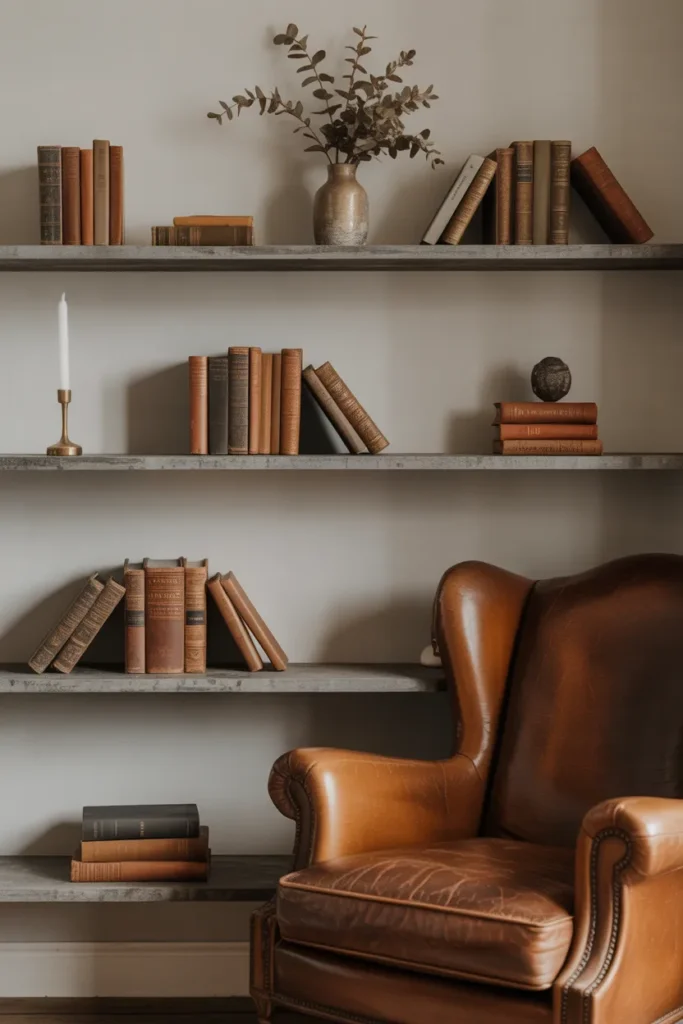
There’s a second rule. Leave 30 percent of your shelves empty. That empty space is called negative space. It gives your eyes a place to rest. And it makes the items you keep feel more special.
A 2023 Statista survey found that 64 percent of hosts look for sustainable, unique decor. That means vintage is better than new. A worn leather chair has character. A factory-made chair from a big box store does not.
Avoiding boho clutter is about editing. Take everything off your shelf. Put back only half. Then remove two more things. That’s your new shelf.
Remember: buying everything new is a mistake. Vintage pieces give a sense of history. And history doesn’t look messy. It looks lived-in. There’s a big difference
7. How to Use Vintage Without Looking Like a Hoarder
You want vintage pieces. That’s good. Vintage gives character. But too many random finds look like you raided a storage unit.
The trick is restraint. Pick one vintage category and stick to it. Mid-century lamps. Old woven blankets. Retro ceramic vases. Choose one type, not all types.
Here’s a 2026 stat that matters. A Coohom report found that 64 percent of home hosts now seek sustainable, unique decor. Upcycling is mainstream. But sustainable doesn’t mean chaotic.
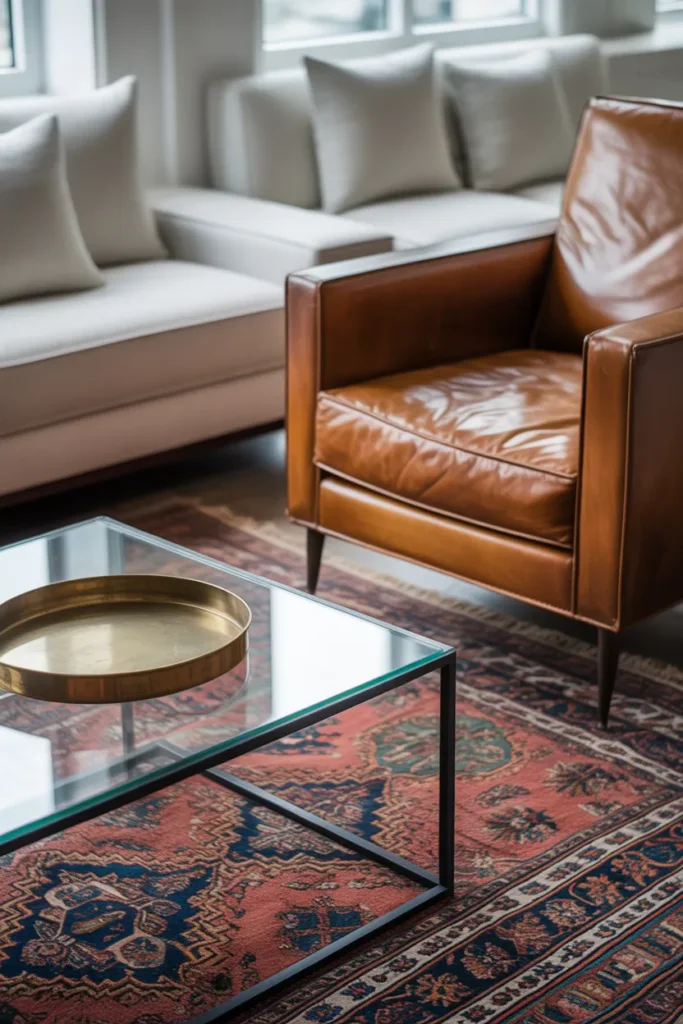
Limit yourself to three vintage items per room. A worn leather chair. A faded Persian rug. An old metal tray on the coffee table. That’s enough. The rest of your furniture should be new or simple.
Why does this work? Your eyes need contrast. One worn piece against clean lines looks intentional. Five worn pieces against each other just look worn.
Pro tip: Skip anything that smells like smoke or has visible mold. Some vintage belongs in the dumpster. Be honest with yourself.
8. The 5-Minute Daily Reset Habit
Boho style looks effortless. But it takes work to keep it from sliding back into mess.
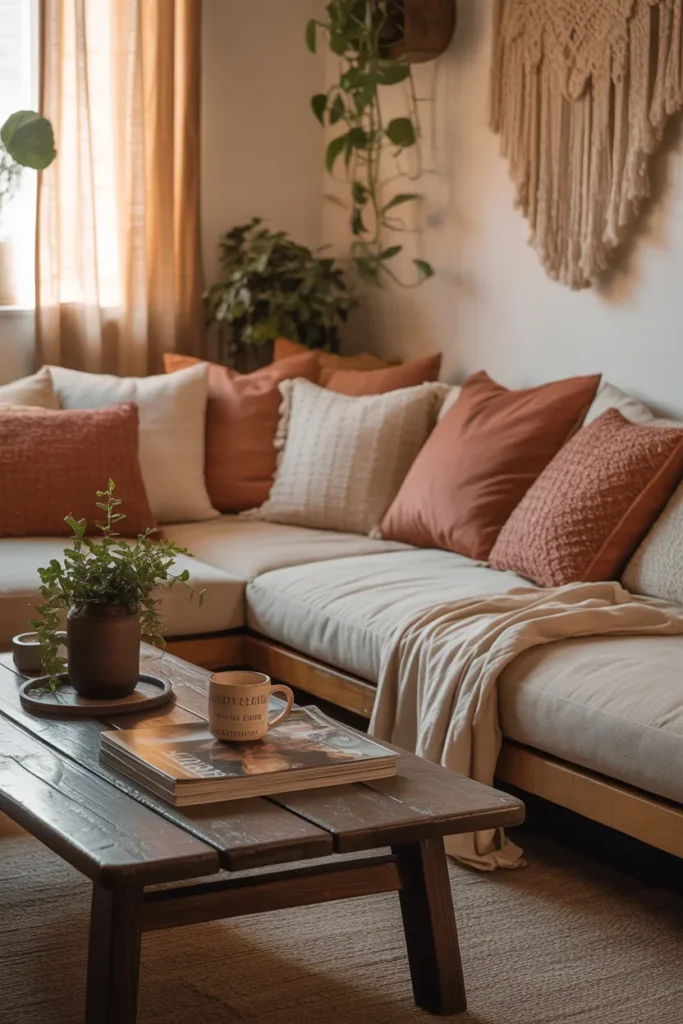
Here’s a habit that takes five minutes. Every evening, walk through your main living space. Return three things to their homes. A throw pillow that fell on the floor. A magazine left on the table. A mug that wandered in from the kitchen.
That’s it. Three things. Five minutes.
This single habit separates curated homes from chaotic ones. Messy boho happens when small items drift. One pillow on the floor looks fine. Four pillows on the floor looks like a blanket fort collapsed.
The 2026 term for this is “maintenance minimalism.” You don’t need to clean for hours. You just need to reset daily.
Set a phone alarm for 9 PM. When it goes off, do your three-item sweep. Your room will look 80 percent better tomorrow morning. No extra work required.
9. Where to Spend vs. Where to Save Money
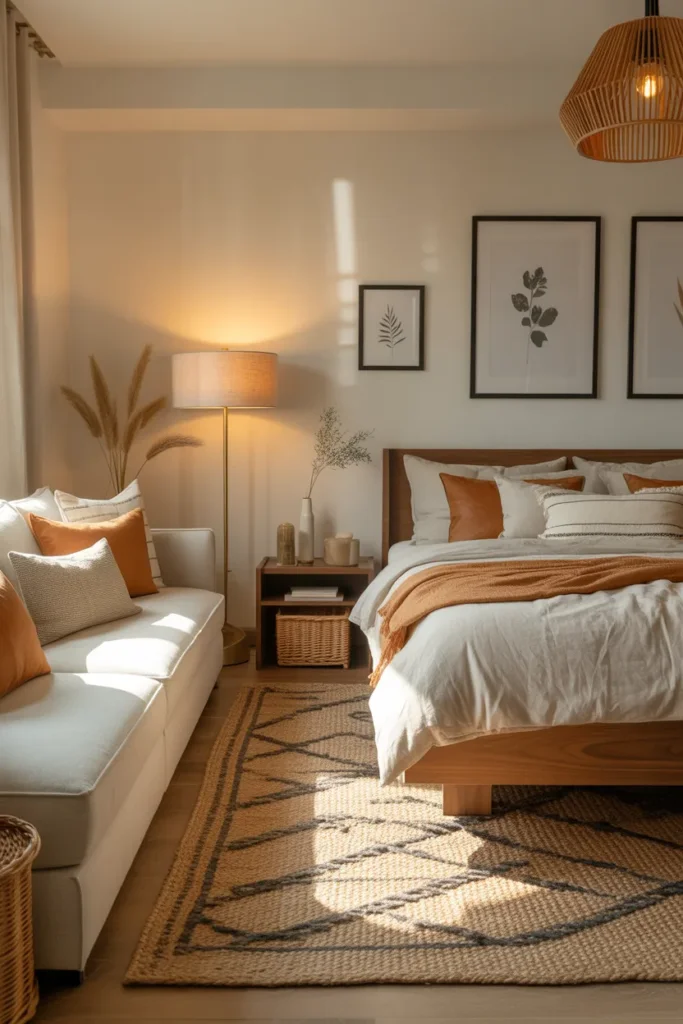
Beginners waste money on the wrong things. Then they run out of budget for what actually matters.
Here’s the spend vs. save breakdown for boho decorating for beginners in 2026.
Spend money here: Your sofa, your bed frame, your main rug, and your lighting. These are the anchors. Cheap versions look cheap. A flimsy sofa will sag. A thin rug will slide. Bad lighting makes everything look worse.
Save money here: Throw pillows, wall art, small vases, and baskets. These are the accents. You can find amazing pillow covers on Amazon for under 15 dollars. You can print free art from museum websites. You can buy baskets at thrift stores for three dollars.
One more rule. Never spend full price on decor. Everything goes on sale. Wait for holiday weekends. Sign up for email coupons. Check Facebook Marketplace first.
Your budget is finite. Put your dollars where they create the most visual impact. That’s the big stuff. Not the tiny trinkets.
10. The “No More Pampas Grass” Rule
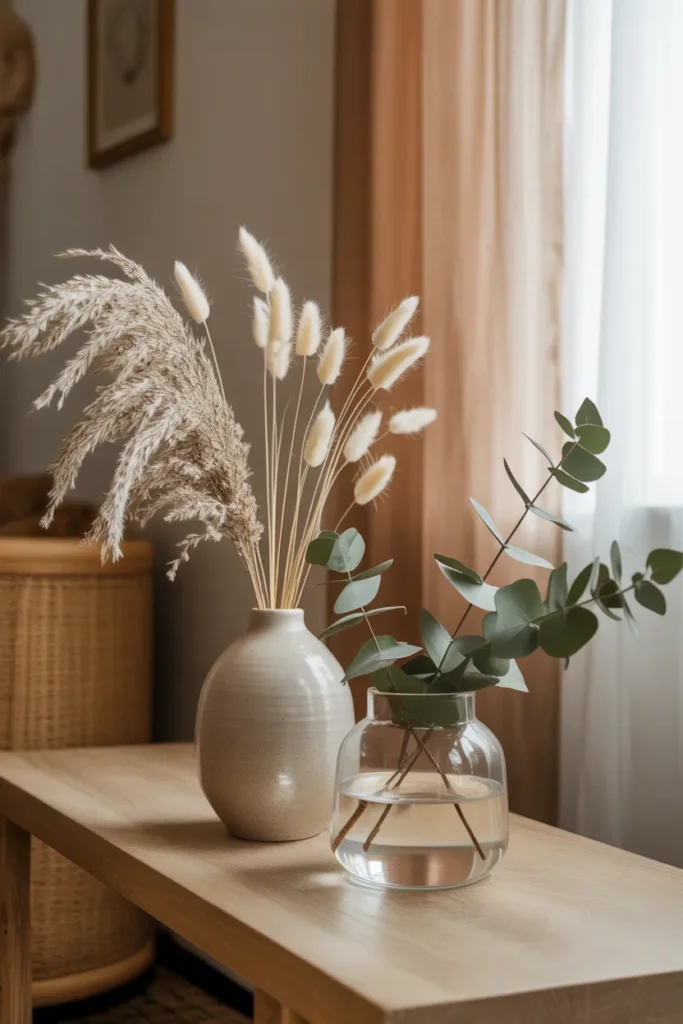
It’s time for a hard conversation. Pampas grass had a long run. But in 2026, it’s over.
Those fluffy dried stalks shed everywhere. They collect dust. They look like tumbleweeds indoors. And every beginner buys them because they think boho requires pampas.
It doesn’t.
Replace pampas with dried bunny tails or dried eucalyptus. Bunny tails are soft, compact, and don’t shed. Eucalyptus smells amazing and keeps its shape for years. Both cost the same as pampas.
Or go with fresh greenery. A simple branch of olive leaves in a clear vase. Three stems of eucalyptus in a ceramic pitcher. These options look intentional, not trendy.
If you already own pampas grass, here’s your permission to throw it away. Put it in the compost. Feel the relief. Your sinuses will thank you.
Modern boho decor in 2026 is about timeless materials. Not fast trends. Skip the pampas. Choose something that lasts.
11. How to Arrange a Shelf That Doesn’t Look Random
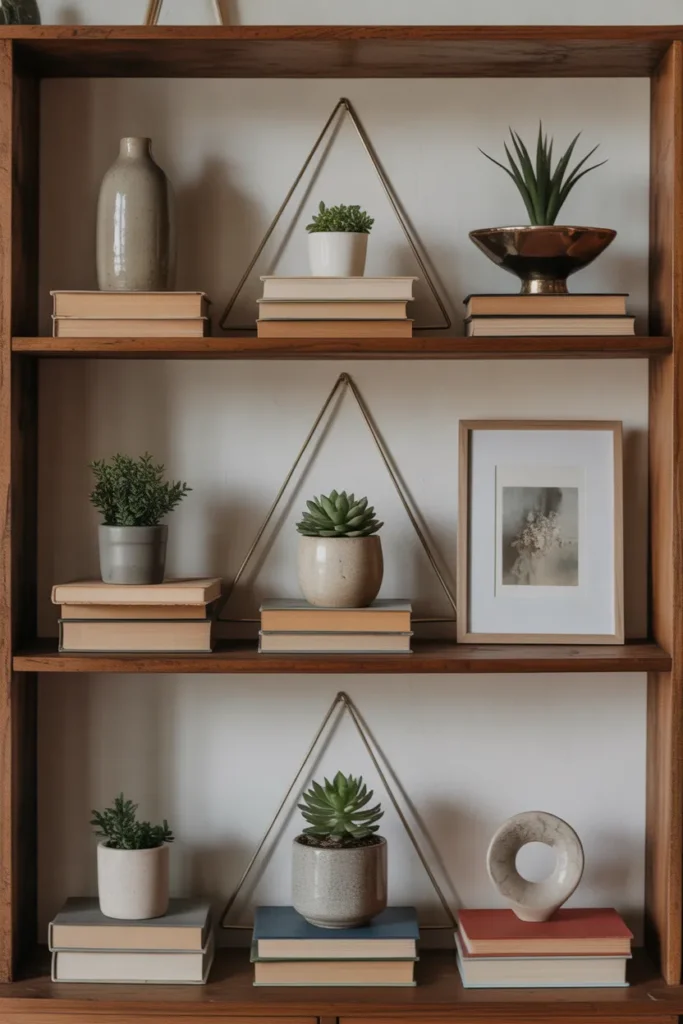
Open shelves are a boho staple. But they turn into clutter magnets fast.
Here’s a formula that works every time. Use the triangle method. Place three items together in a triangle shape. Tall item on the left. Medium item in the middle. Short item on the right. Then repeat on the next shelf.
Stack books horizontally. Put a small plant on top of the books. Lean a piece of art against the back of the shelf. Add one small bowl or candle.
Then stop.
Most beginners fill every inch of shelf space. That’s a mistake. You need breathing room. Leave gaps between your triangles. Those gaps are what make the shelf look curated instead of crammed.
Actionable tip: Take a photo of your shelf with your phone. Look at the photo. Does it look balanced? Or does one side feel heavier? Adjust until the photo looks good. The camera is more honest than your eyes.
12. The “No Matching Furniture” Rule
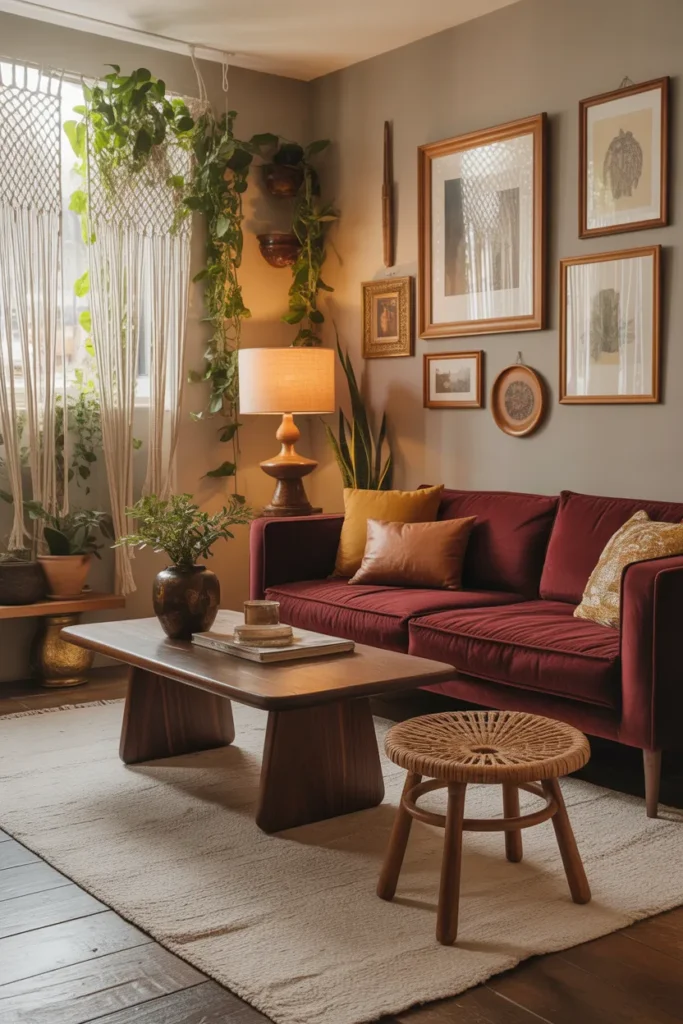
Boho style hates matching sets. A sofa with two matching end tables and a matching coffee table looks like a showroom. Not a home.
Here’s what to do instead. Choose furniture from different eras and materials. A velvet sofa. A wood coffee table from the 1970s. A metal side table from a garage sale. A woven stool for extra seating.
The only thing that needs to match is the color temperature of your wood tones. Keep all woods warm. Light oak, walnut, teak, cane. Avoid mixing warm wood with gray or black wood. That clash looks accidental.
This is called curated bohemian style. Each piece tells a different story. But together, they tell one story.
You don’t need to buy everything at once. Start with your sofa. Then hunt for one unique side table. Then add a coffee table six months later. Slow collecting looks more authentic anyway.
13. How to Use Black Without Killing the Warmth
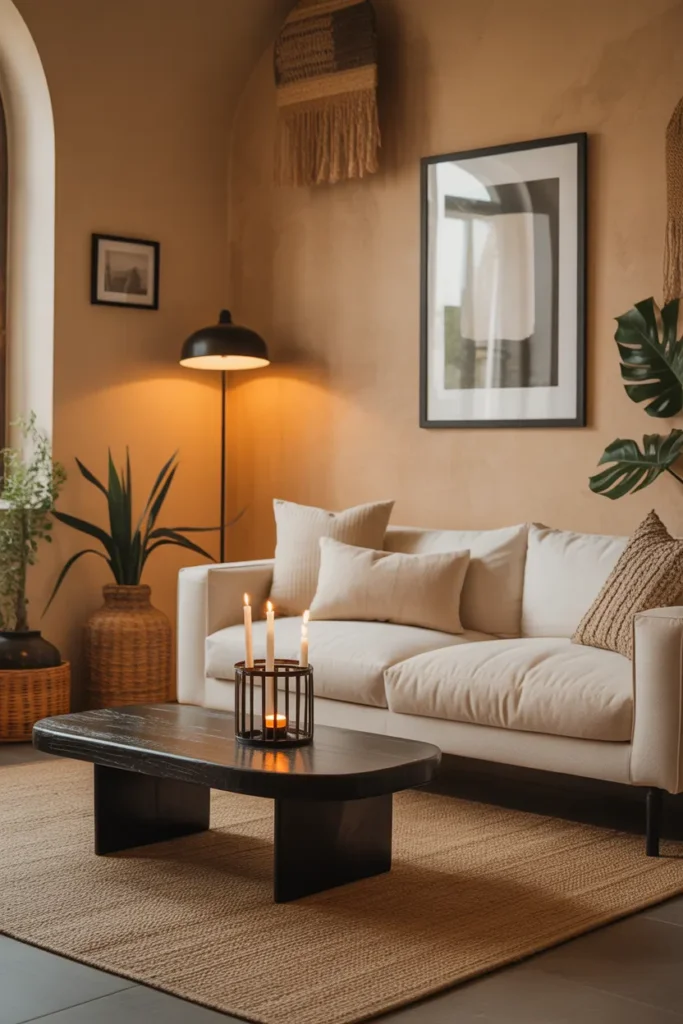
Black is scary for boho beginners. You think it will ruin the cozy vibe. But a tiny bit of black actually makes warm colors look warmer.
The trick is using black in small doses. One black floor lamp. One black frame on the wall. One black candle holder on the coffee table. That’s enough.
Black creates contrast. Your cream sofa looks creamier next to a black side table. Your beige walls look warmer next to a black picture frame. Without contrast, warm colors can look muddy.
Here’s what not to do. Don’t buy black furniture. A black sofa kills the boho vibe completely. Don’t paint a wall black. That’s too much. Don’t use black rugs. They show every piece of dust.
2026 interior design trends are embracing “warm minimalism.” That includes small black accents. Think of black as salt. A pinch makes the meal better. A spoonful ruins it.
14. The One Rug Rule You’re Breaking
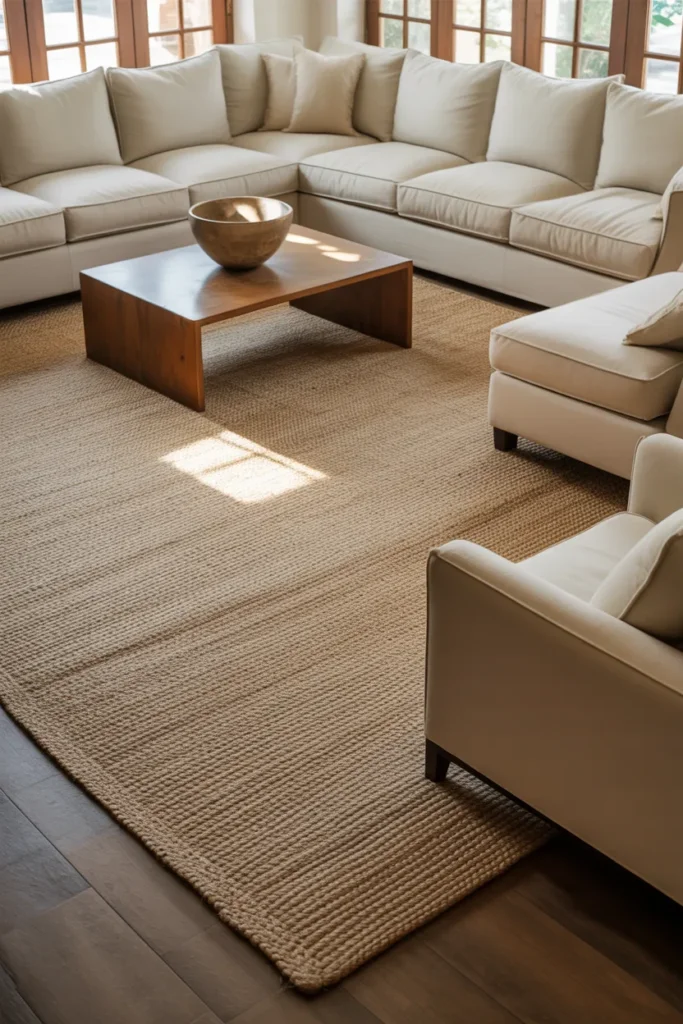
You probably have a rug that’s too small. Almost every beginner makes this mistake.
A small rug floats in the middle of the room. It looks like an island. It makes the room feel smaller. And it’s the fastest way to make a space look cheap.
Here’s the rule. Your rug should touch all your main furniture pieces. The front legs of your sofa should sit on the rug. The front legs of your armchairs should sit on the rug. The coffee table should sit entirely on the rug.
If your furniture floats around the rug, the rug is too small.
Measure your room before you buy. For a standard living room, you need at least an 8×10 foot rug. For a large room, go 9×12. A big rug makes the whole room feel grounded. It ties everything together.
And don’t worry about pattern. A large neutral jute rug works perfectly. You can layer a smaller patterned rug on top later. But start with the right size first.
15. How to Store the Stuff You’re Not Using
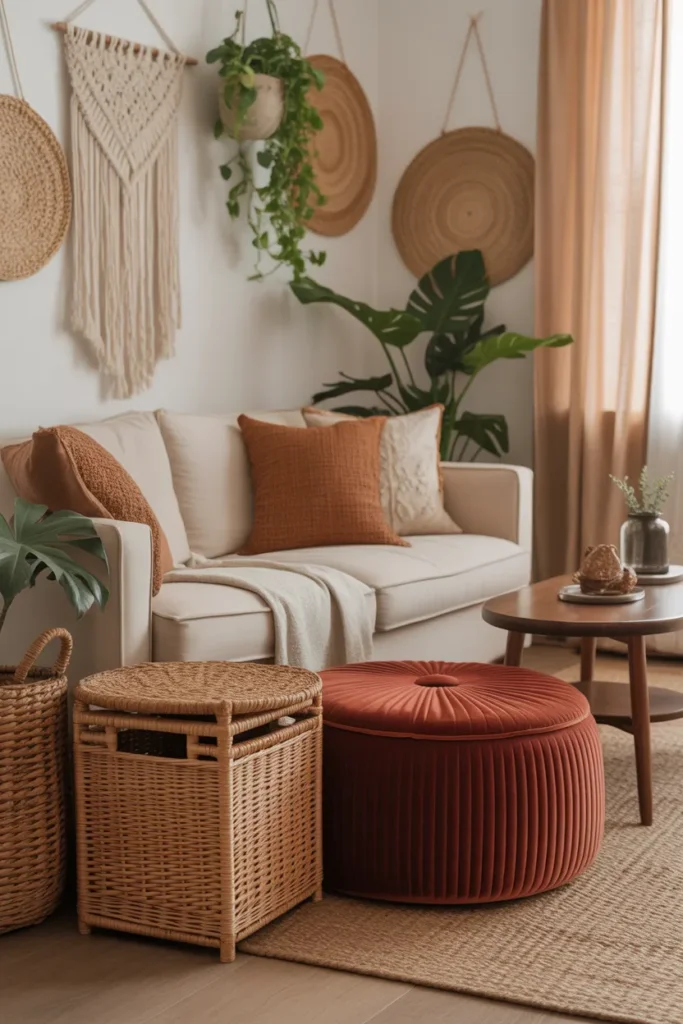
You can’t have a calm boho room if your stuff is everywhere. But you also can’t throw away everything you own.
The solution is smart storage that hides the mess.
Buy woven baskets with lids. Use them for blankets, magazines, and remote controls. Put one basket next to the sofa. Put another under a side table. The woven texture adds to the boho look while hiding your clutter.
Buy storage ottomans. They look like furniture. But they open up to hold board games, extra pillows, or winter coats. A leather or velvet ottoman adds texture and hides chaos.
Use your closet. Donate anything you haven’t touched in a year. That’s the standard rule. If you forgot you owned it, you don’t need it.
Avoiding boho clutter starts with having a home for every item. If an item doesn’t have a home, it will live on your floor or table. That’s not boho. That’s a mess.
16. The 30-Day Rule Before Buying Anything New
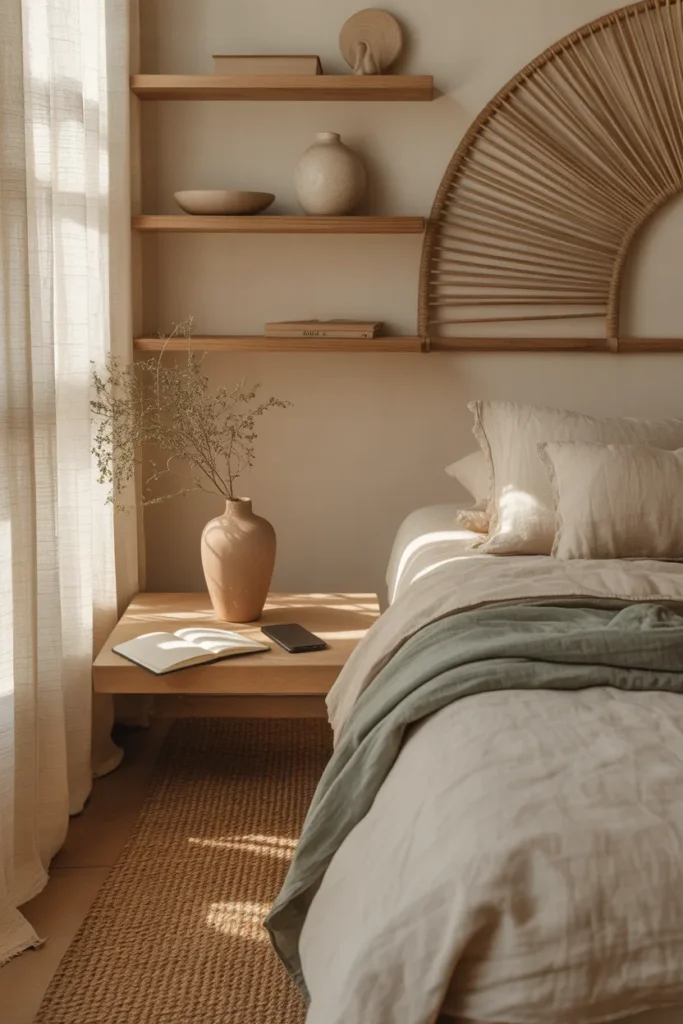
Here’s a rule that will save you money and clutter. Wait 30 days before buying any decor item.
See a cute vase at a store? Take a photo. Wait 30 days. If you still want it after a month, buy it. If you forgot about it, you saved your money and your shelf space.
This rule works because most decor purchases are impulses. You want the feeling of buying something new. Not the item itself. The feeling fades in a few days. The item stays on your shelf for years.
During those 30 days, ask yourself three questions. Do I have a place for this? Does this match my neutral anchor? Will I still like this in a year?
If the answer to any question is no, skip the purchase.
Boho decorating for beginners is not about buying more. It’s about buying better. Slower. And with more intention. Your wallet and your home will both look better for it.
Conclusion
You now have 18 rules, not 15. And that’s the point. Boho decorating for beginners is about having guidelines. Not free-for-all chaos.
You learned to start with a neutral anchor. You learned to layer textures instead of trinkets. You learned the 30-day rule. And you learned that 2026 boho is cleaner, warmer, and more structured than ever before.
Start small this weekend. Pick one rule from this list. Apply it to one room. Then come back for another rule next weekend.
Your home won’t transform overnight. But it will transform. Slowly. Intentionally. Beautifully.
Which rule will you try first? Tell me in the comments. And if you found this helpful, share it with a friend who needs to hear that pampas grass is finally over