15 Small Bathroom Ideas with Tub That Save Space
A bathtub can make a small bathroom feel crowded. Many homeowners look at their limited space and think the tub has to go.
But that is not always the best answer.
Many families still need a bathtub for children. Some people enjoy soaking after a long day. Others want to keep a tub because it can help resale value when selling a home.
The good news is that a small bathroom can still feel open and comfortable. The right layout, storage choices, and design details can make a huge difference.
Recent Houzz research found that bathroom renovations remain one of the most common home improvement projects. Homeowners continue investing in better bathroom layouts even as homes become smaller.
These small bathroom ideas with tub solutions will help you create a room that feels bigger, works better, and looks more modern.
Why Keeping a Tub Still Makes Sense in Small Bathrooms
Many homeowners worry that a bathtub takes up too much room. Sometimes that concern is valid. But removing the tub is not always the smartest choice.
Families with young children often use bathtubs daily. A tub can also be useful for pets, cleaning large items, and relaxing after work.
Recent Houzz bathroom trend research showed that many homeowners continue adding soaking tubs and wellness features during renovations. This suggests that comfort remains important even in smaller homes.
A tub shower combination is often the most practical solution. You get two functions in one area. That saves space while keeping the room flexible.
If your bathroom is compact, focus on making the tub work better instead of removing it completely.
Choose an Alcove Tub Instead of a Freestanding Tub
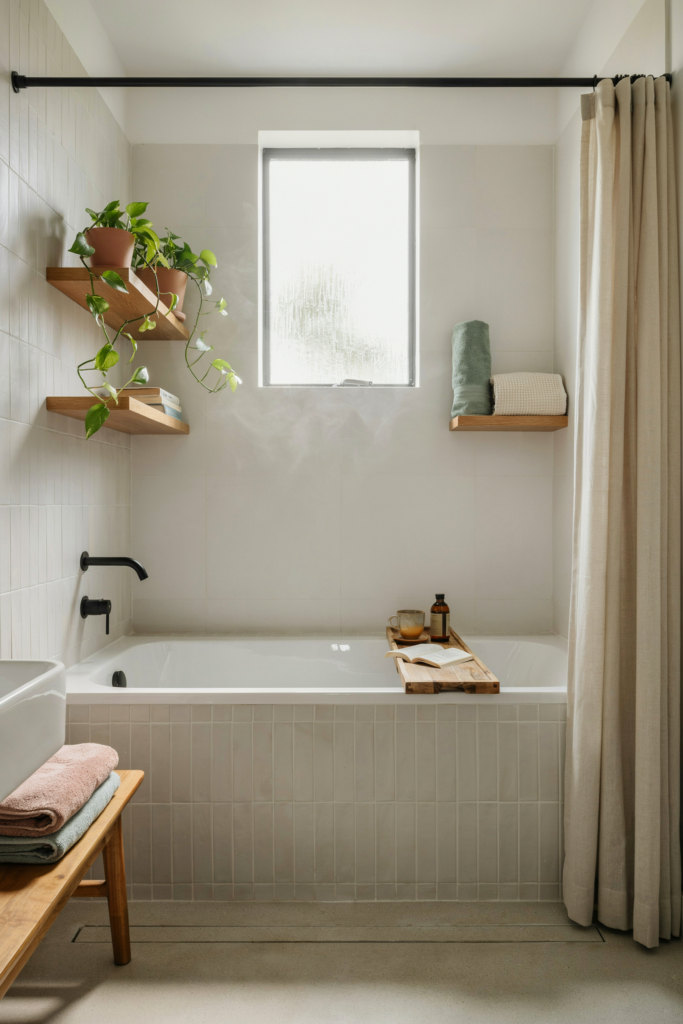
Many small bathrooms feel crowded because freestanding tubs need space around every side.
An alcove bathtub fits between three walls. This layout uses every inch more efficiently. It is the reason most small bathrooms use this design.
A standard alcove tub is often around 60 inches long and fits neatly into a wall recess. Freestanding tubs usually need additional clearance that can make a room feel cramped.
Another advantage is easier cleaning. You do not have to reach behind the tub to remove dust or water spots.
Installation costs are usually lower as well. That makes alcove tubs one of the most budget friendly bathtub ideas for small bathrooms.
If your goal is maximum function in minimum space, an alcove tub is hard to beat.
Install a Wall Mounted Vanity
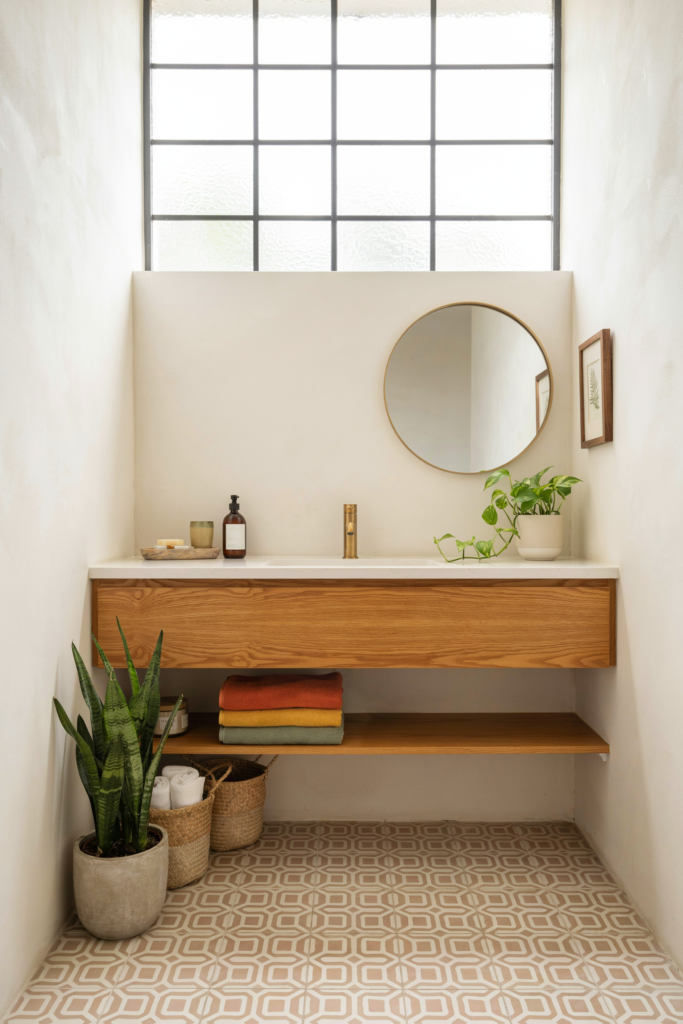
Floor space affects how large a room feels.
A wall mounted vanity leaves visible flooring underneath. Even though the actual bathroom size stays the same, the extra sightline creates the feeling of more space.
This design also gives the room a cleaner and more modern appearance.
Many homeowners use the area underneath for small storage baskets. Others leave it open to keep the room feeling airy.
Floating vanities work especially well in bathrooms under 50 square feet because every visual trick matters.
When planning a space saving bathroom design, this is one of the simplest upgrades you can make.
Use Large Mirrors to Double Visual Space
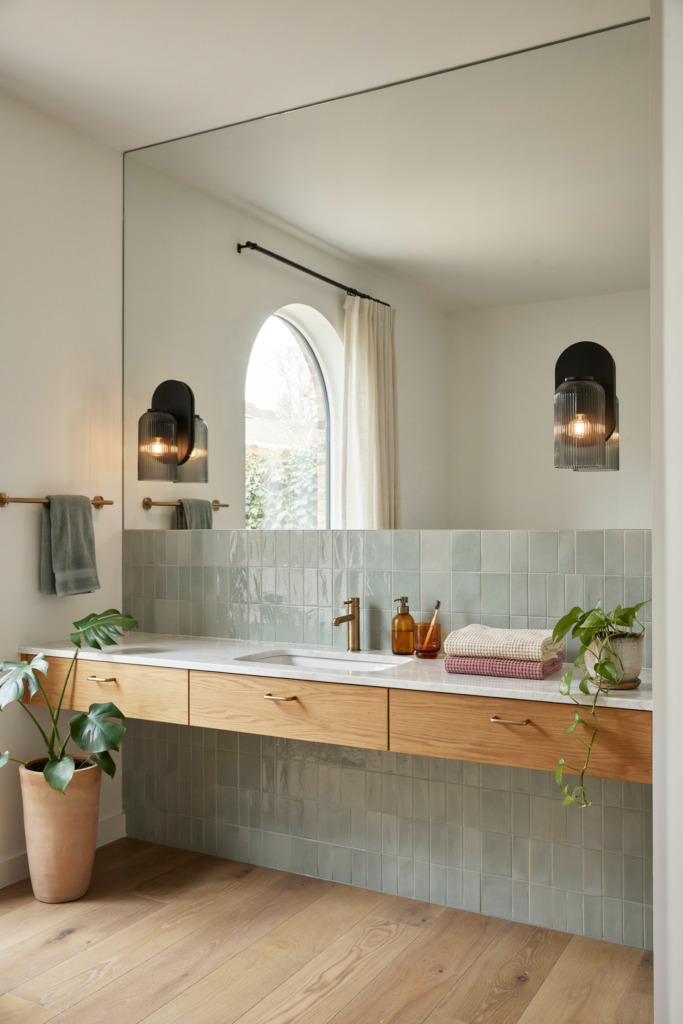
Small bathrooms often feel closed in because there are too many visual barriers.
A large mirror helps solve that problem immediately.
Mirrors reflect both natural and artificial light. That makes the room brighter and creates the illusion of depth.
A mirror that stretches across the vanity can visually double the size of the space.
Many interior designers recommend oversized mirrors in compact bathrooms because they deliver a big impact without requiring extra square footage.
This improvement is affordable, easy to install, and works with almost every style.
Add Recessed Shower Niches for Storage
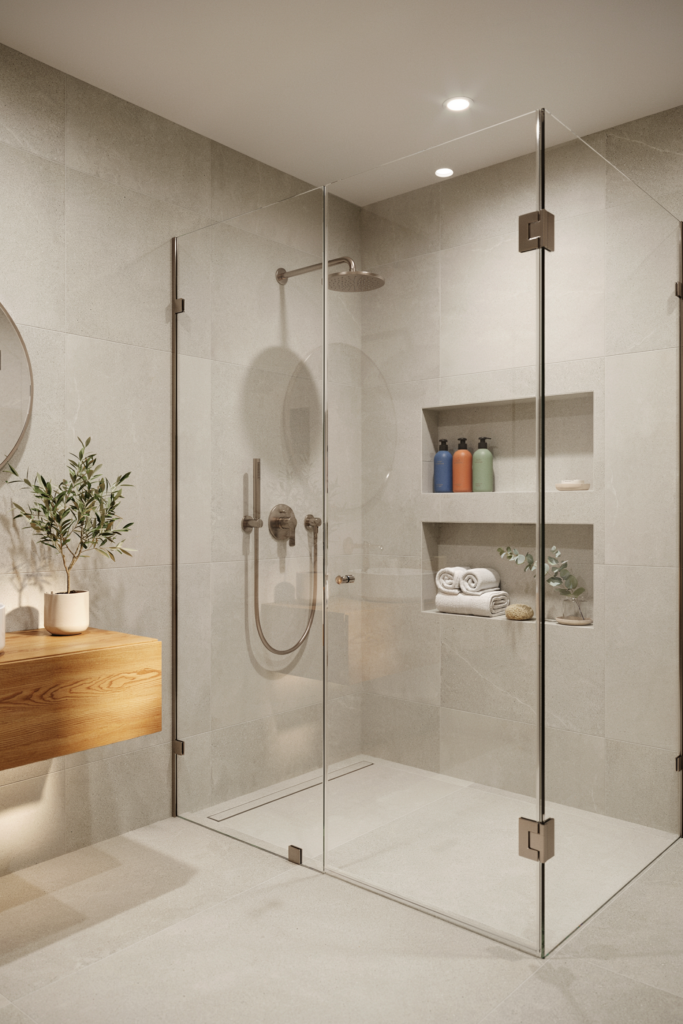
Storage becomes a challenge when every inch matters.
Many people solve this problem with wire baskets and hanging shelves. Unfortunately, those items often make the bathroom feel cluttered.
A recessed niche sits inside the wall rather than sticking out into the room.
That means shampoo, soap, and daily essentials have a dedicated place without taking up valuable space.
The clean appearance also makes the tub area feel more organized.
If you are remodeling, adding a niche during construction is usually worth the extra effort.
Extend Tile From Floor to Ceiling
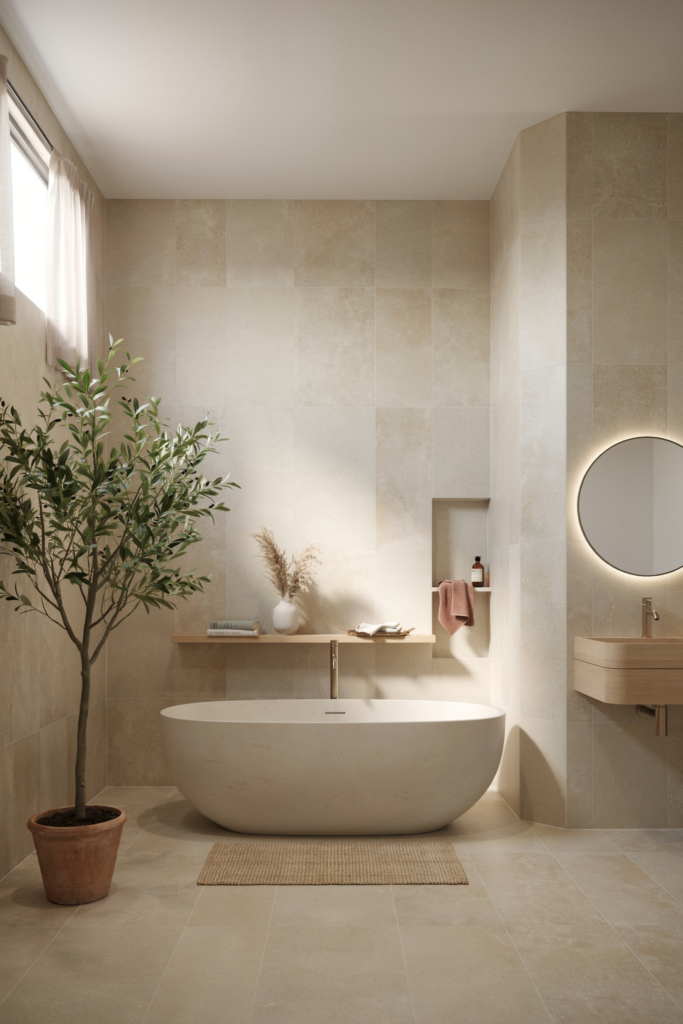
Short tile sections can break up a wall visually.
Floor to ceiling tile creates a more continuous look. Your eyes travel upward without interruption.
This simple trick makes ceilings appear taller.
Many bathroom designers are also embracing tile drenching in 2026. This approach uses the same tile over larger surfaces to create a calm and unified appearance.
Another benefit is durability. Tile protects walls from moisture and is easy to clean.
For small bathroom tub layout ideas, this technique can dramatically improve the room’s proportions.
Use a Glass Tub Shower Screen Instead of a Curtain
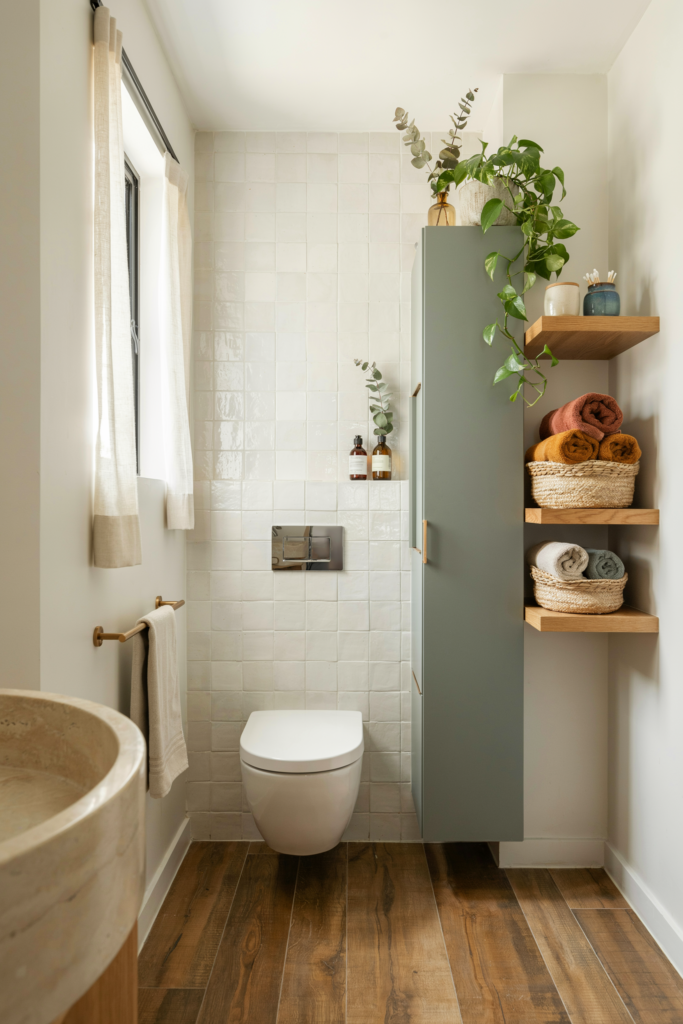
Traditional shower curtains block sightlines.
Every time the curtain closes, the room feels smaller.
A clear glass screen allows you to see the entire bathroom. Natural and artificial light can travel freely across the room.
The result is a brighter and more open space.
Glass screens also look cleaner and more modern than many fabric curtains.
They are not perfect. Water spots require occasional cleaning. But the visual improvement is often worth it.
Add Vertical Storage Above the Toilet
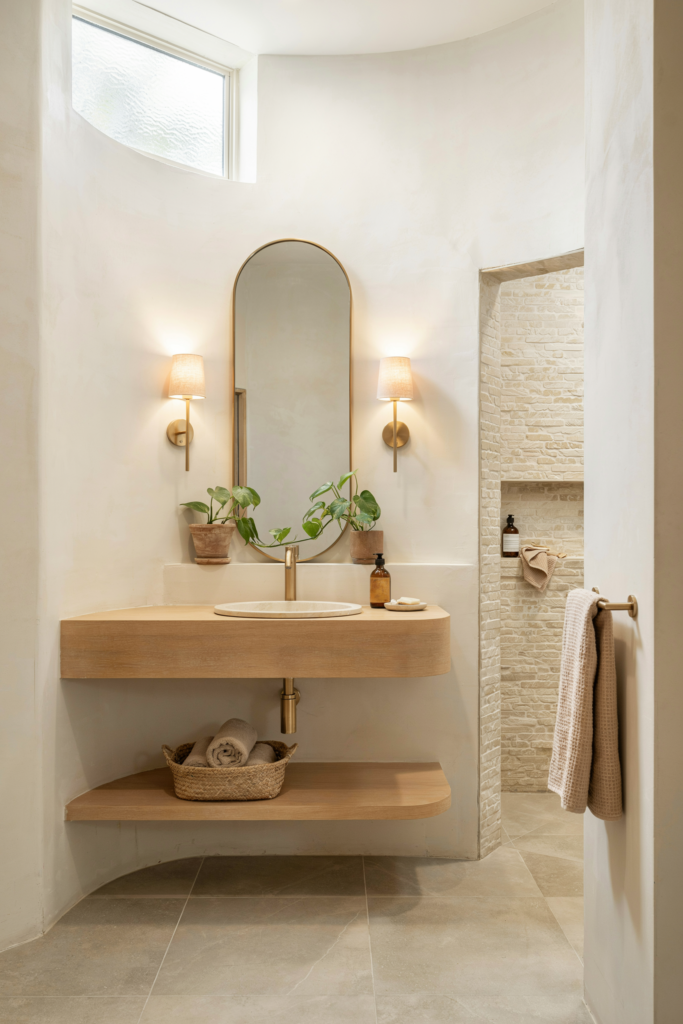
The wall above the toilet is often wasted space.
This area can provide valuable storage without using any floor space.
Floating shelves work well for towels and baskets. Slim cabinets can hide extra toiletries. Decorative containers can help organize everyday items.
The key is keeping the shelves narrow enough that they do not feel bulky.
Using vertical space is one of the easiest ways to improve a small bathroom without changing the layout.
Pick Light Colors With Warm Undertones
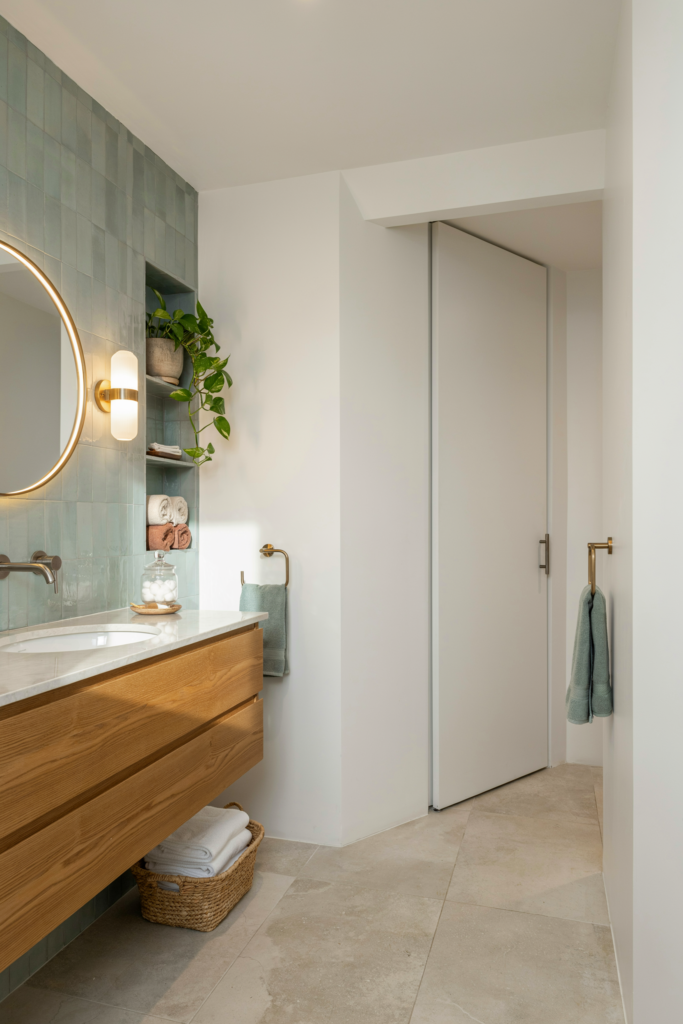
Color affects how large a room feels.
Dark colors can look beautiful. However, they often absorb light and make compact bathrooms feel smaller.
Soft whites, warm beige tones, creamy greige shades, and light taupe colors reflect more light around the room.
The National Kitchen and Bath Association continues to report strong demand for neutral bathroom palettes.
Warm neutrals create a welcoming atmosphere while helping the room feel more open.
If you are unsure which color to choose, start with a warm off white. It works with almost every style.
Use Sliding Doors Instead of Swing Doors
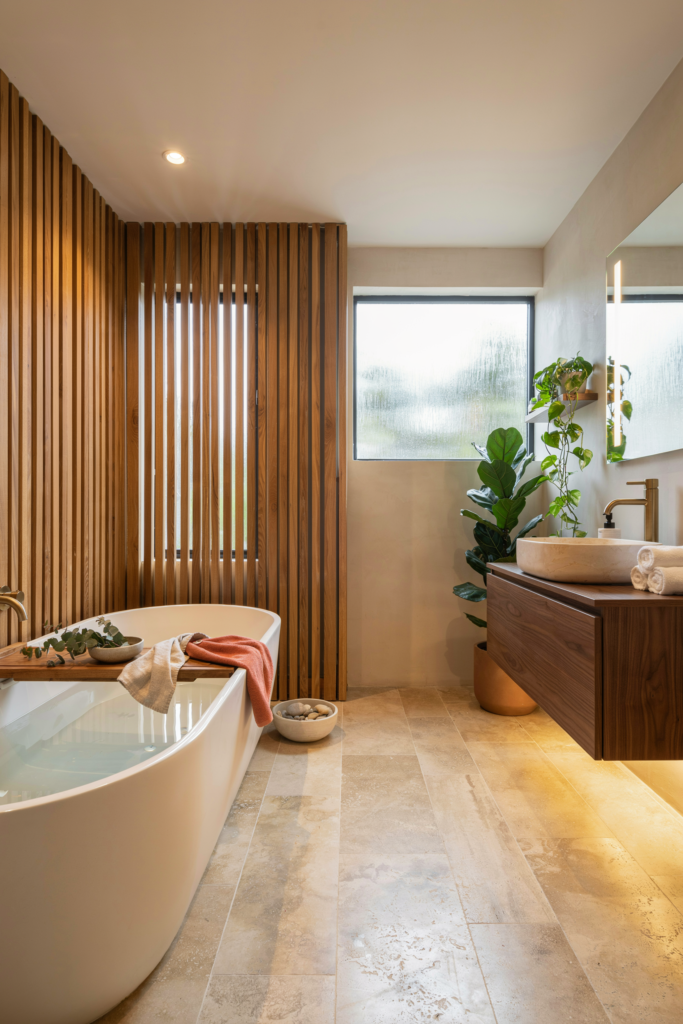
Traditional bathroom doors require clearance space to open.
That space cannot be used for furniture, storage, or movement.
A sliding door removes that issue completely.
Pocket doors are especially useful because they disappear into the wall when opened.
Even gaining a few extra feet of usable space can improve traffic flow in a compact bathroom.
For homeowners planning a renovation, this change often delivers more value than expected.
Choose a Deep Soaking Tub With a Smaller Footprint
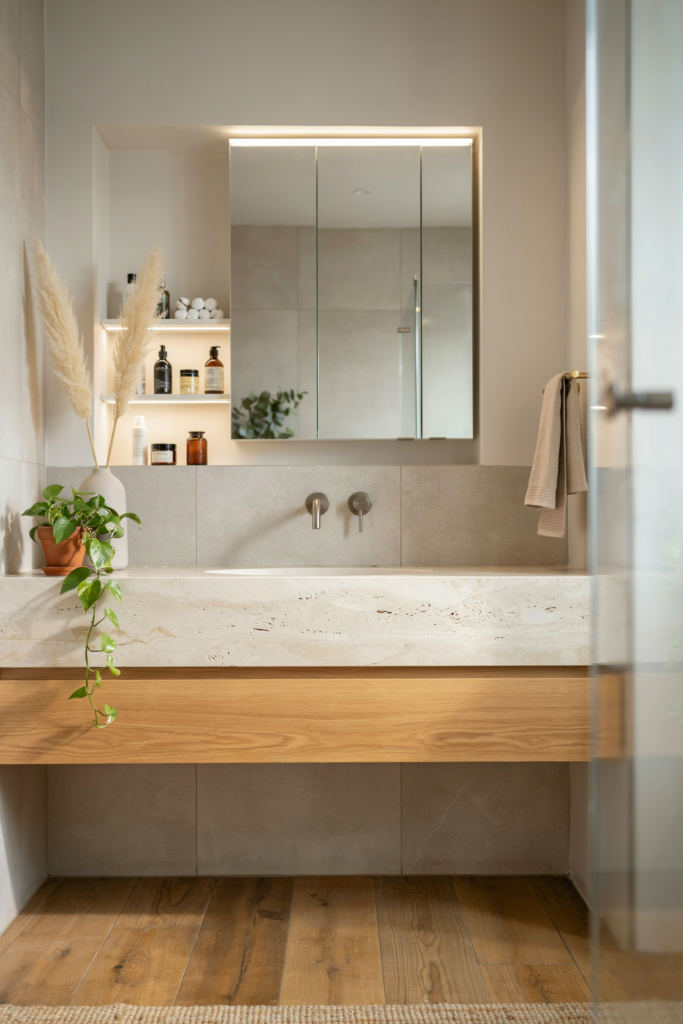
Many people assume comfort requires a large bathtub.
That is not always true.
Compact soaking tubs are designed to be deeper rather than longer. This allows you to enjoy a comfortable bath while using less floor space.
Japanese inspired soaking tubs have become increasingly popular because of this advantage.
These tubs work particularly well in apartments and older homes with limited bathroom dimensions.
If you want luxury without sacrificing space, this option deserves consideration.
Install Built In Medicine Cabinets
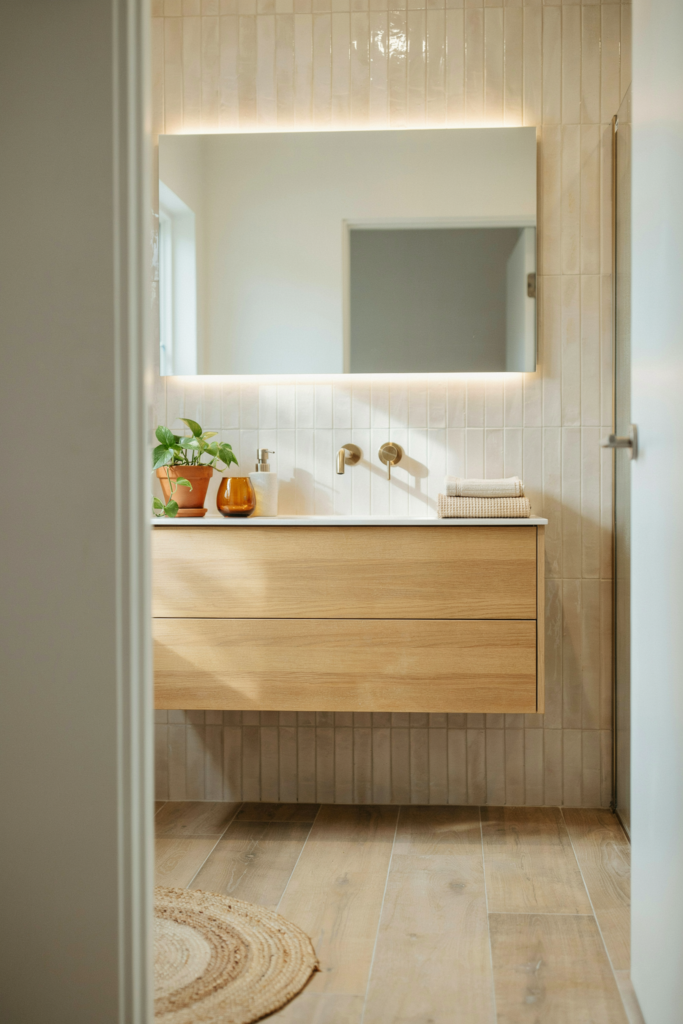
Countertop clutter makes bathrooms feel crowded.
A built in medicine cabinet solves this problem by creating hidden storage inside the wall.
Modern versions often include mirrors, adjustable shelves, and integrated lighting.
You gain storage without adding visual bulk.
This is especially useful for storing medications, skincare products, and grooming tools.
The less clutter you see, the larger the room feels.
Use Large Format Tiles
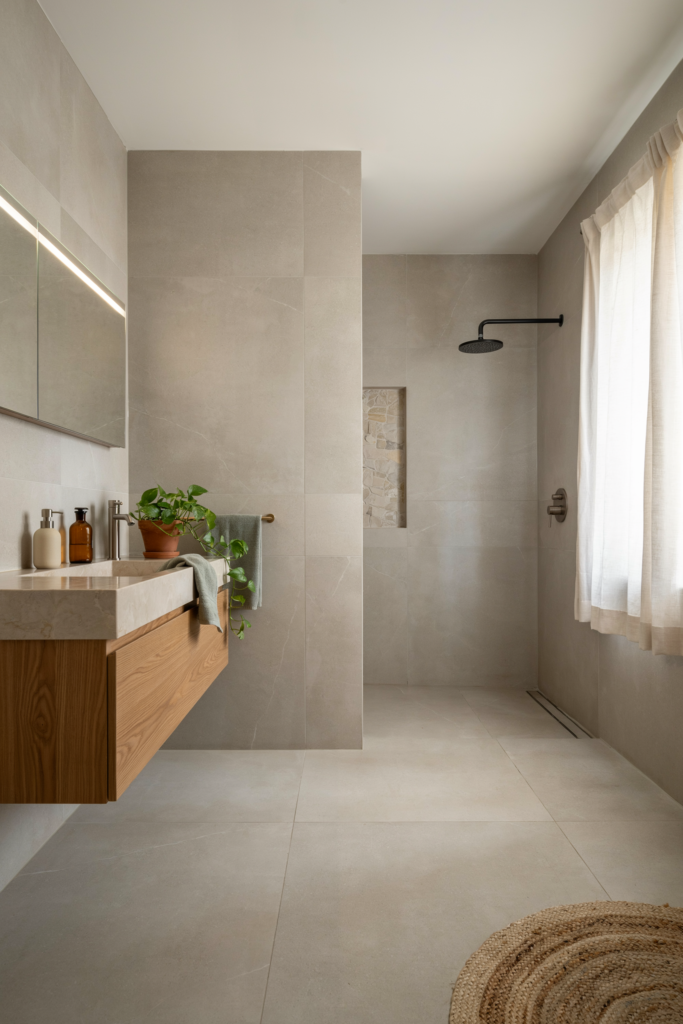
Many homeowners believe small rooms need small tiles.
In reality, large format tiles often work better.
Large tiles create fewer grout lines. Fewer visual interruptions make the floor and walls appear more continuous.
This creates a cleaner and more spacious appearance.
Many modern bathroom designs use larger tiles specifically for this reason.
The effect is subtle but noticeable.
Layer Your Bathroom Lighting
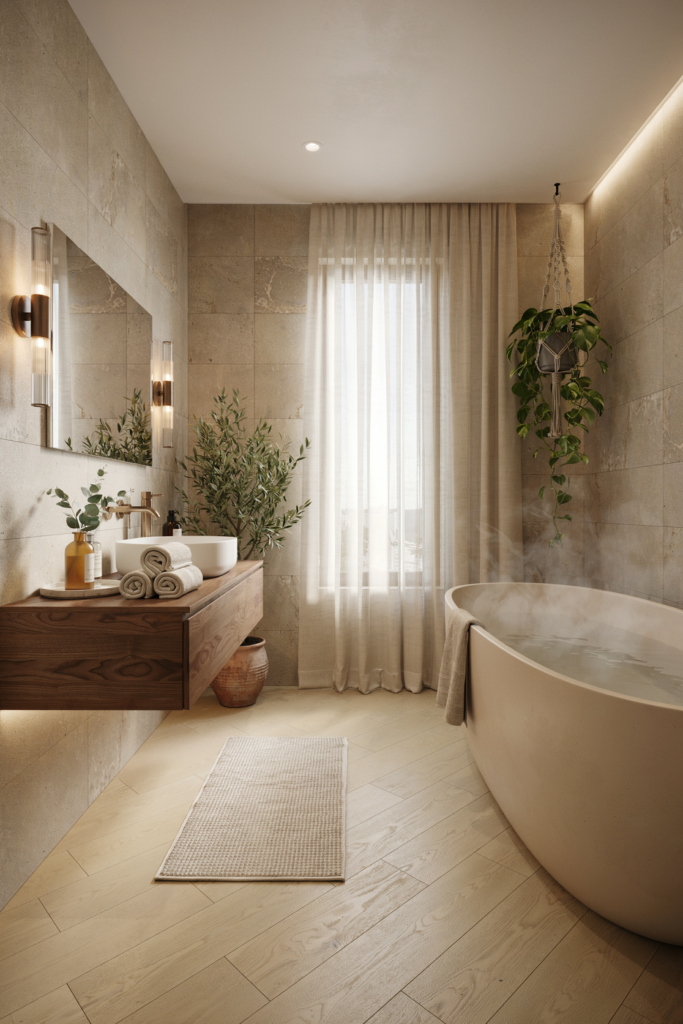
Poor lighting can make even a well designed bathroom feel cramped.
A single ceiling fixture rarely provides enough illumination.
Layered lighting creates a more balanced space.
Wall sconces near the mirror reduce shadows. Vanity lighting improves visibility. Soft lighting near the tub can create a relaxing atmosphere.
Recent bathroom trend studies show homeowners increasingly prioritize comfort and wellness features.
Good lighting supports both goals while making the room feel larger.
Create Hidden Storage Under the Tub
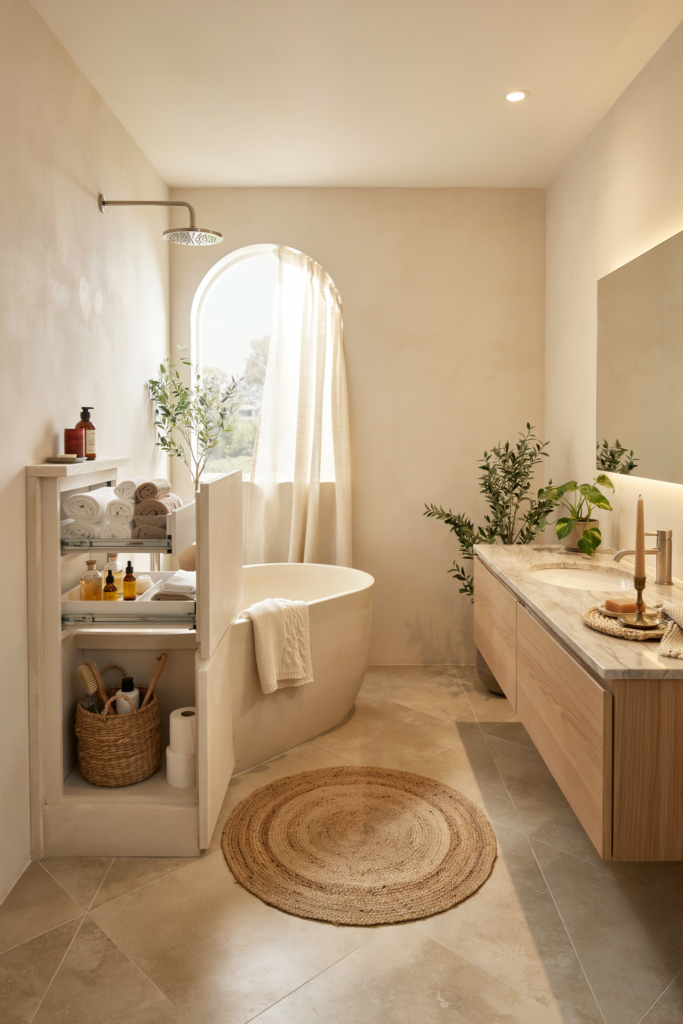
Most homeowners overlook the area beneath the bathtub.
In some custom layouts, this space can be converted into storage.
Removable panels or pull out drawers can hold extra towels, cleaning supplies, or seasonal items.
This solution works best during major renovations when the tub area is being rebuilt.
It is not suitable for every bathroom. Plumbing locations can limit storage opportunities.
But when possible, it helps maximize every inch.
Reduce Visual Clutter With Minimal Accessories
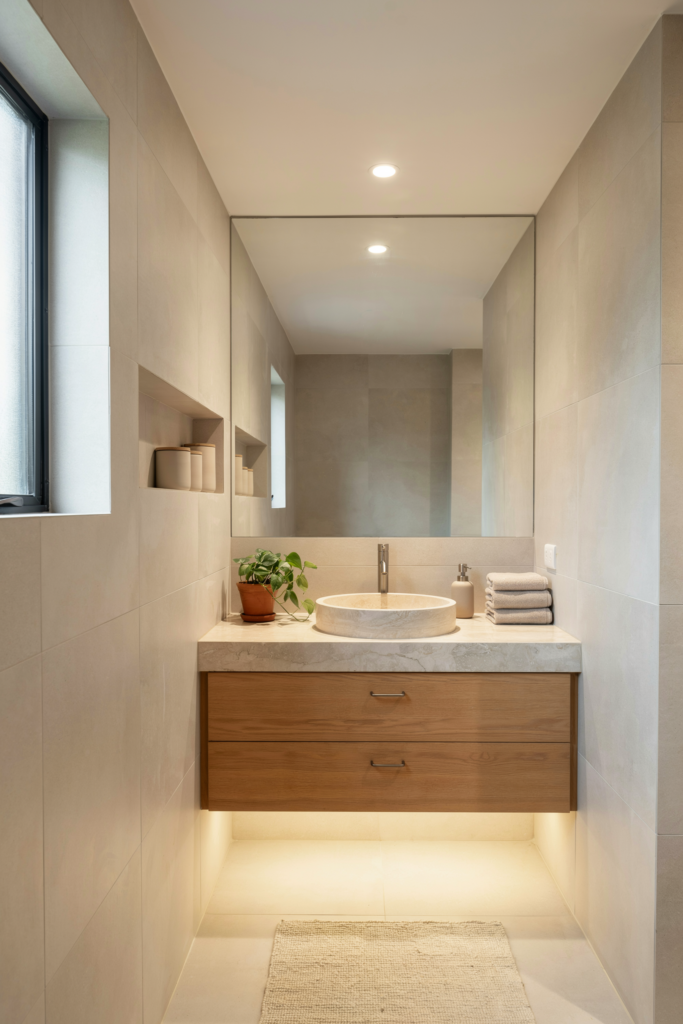
Too many accessories create visual noise.
That noise makes small bathrooms feel smaller.
Try keeping only essential items on the countertop.
Store extras inside cabinets and drawers. Use matching containers when possible. Choose a few decorative pieces instead of many.
This approach does not cost anything. Yet it can completely change how the room feels.
A cleaner space almost always appears larger.
Small Bathroom Design Mistakes That Waste Space
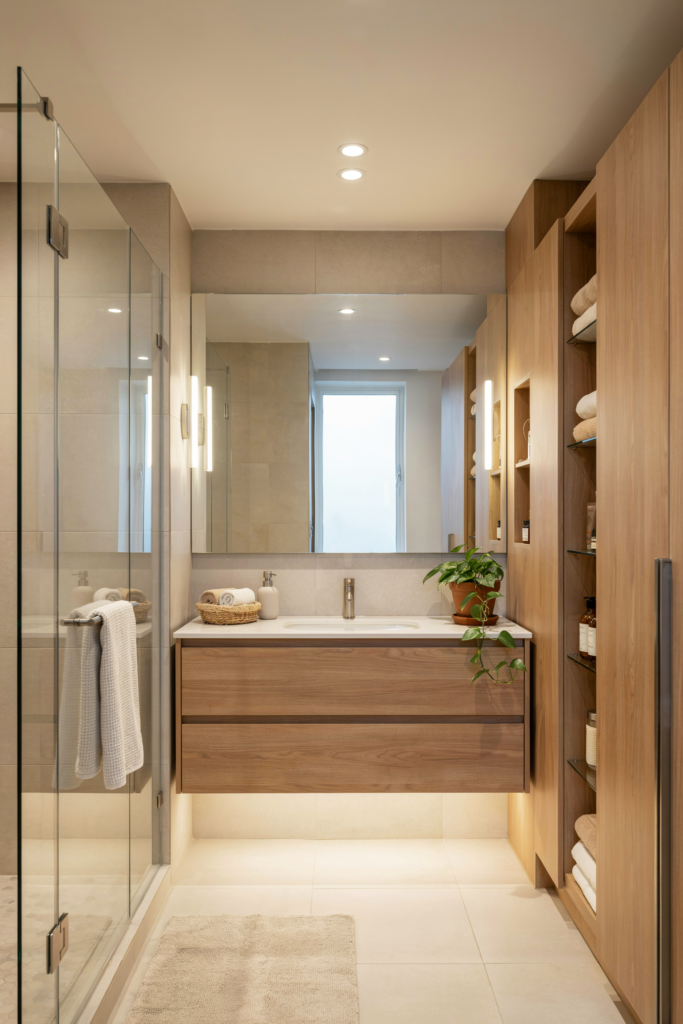
Many bathroom problems come from poor design choices rather than room size.
Oversized vanities are a common mistake. They provide storage but consume valuable floor area.
Poor lighting creates shadows that make the room feel smaller.
Using too many materials can also make the design feel busy. Several tile styles, multiple colors, and competing finishes often create visual clutter.
Small mirrors limit light reflection. Large mirrors generally work better in compact spaces.
Storage planning is another major issue. Without enough storage, everyday items end up on counters and shelves.
The result is a room that feels crowded even when it is clean.
Before starting a remodel, think carefully about how you use the bathroom every day. The best design is one that supports your routine while keeping the room open and organized.
Final Thoughts
A small bathroom does not have to feel cramped just because it includes a bathtub.
The most effective improvements often focus on visual space rather than physical space. Floating vanities, large mirrors, glass screens, and better lighting can make a dramatic difference.
Storage also matters. Recessed niches, medicine cabinets, vertical shelving, and hidden storage help reduce clutter without taking up more room.
Start by choosing two or three ideas that fit your budget and layout. Small changes can have a surprisingly large impact.
With the right approach, these small bathroom ideas with tub solutions can help you create a bathroom that feels larger, works harder, and stays comfortable for years to come.