16 Fun Paint Ideas for Kids Room Makeovers
Intoduction
A few cans of paint can completely change how your child feels about their room. The right colors can make a small bedroom feel bigger, a dark corner feel cozy, or a plain wall feel full of personality. And the best part is you do not need expensive furniture or custom decor to make it happen.
Many parents struggle with the same problem. They want a room that feels fun and creative without making it messy or overwhelming. Some paint ideas look great online but become too loud after a few months. Others cost too much or take too much time to finish.
That is why smart paint choices matter.
This guide shares fun paint ideas for kids room updates that actually work in real homes. You will find ideas that are affordable, easy to try, and flexible enough to grow with your child. Some are quick weekend projects. Others create a bigger transformation with very little cost.
You will also learn which colors help create calm spaces, which paint finishes are easier to clean, and how to avoid common decorating mistakes.
Why Paint Matters in a Child’s Room
Paint does more than change how a room looks. It changes how the room feels.
Children use their bedrooms for almost everything now. They sleep there, play there, read there, and often do homework there too. Because of that, color choices matter more than many parents realize.
Soft blues and greens are often linked with calm and focus. That is one reason many designers use sage green, dusty blue, and muted earth tones in modern kids room paint ideas. Yellow can encourage creativity, but too much bright yellow may feel overstimulating in small spaces.
And here is something many parents forget.
The finish matters just as much as the color.
Flat paint hides wall flaws well, but it is harder to clean. Satin and eggshell finishes are easier to wipe down after fingerprints, crayons, or sticky marks. In busy bedrooms or playrooms, that makes a big difference.
Low VOC paint has also become more popular in 2026. VOCs are chemicals released into the air while paint dries. Many parents now choose low VOC or zero VOC paint to improve indoor air quality.
Design experts are also moving away from loud primary colors. Softer earthy shades now appear more often in Pinterest trends and modern family homes because they age better and create calmer spaces.
The goal is simple. You want a room that feels playful without feeling chaotic.
Rainbow Arch Accent Wall
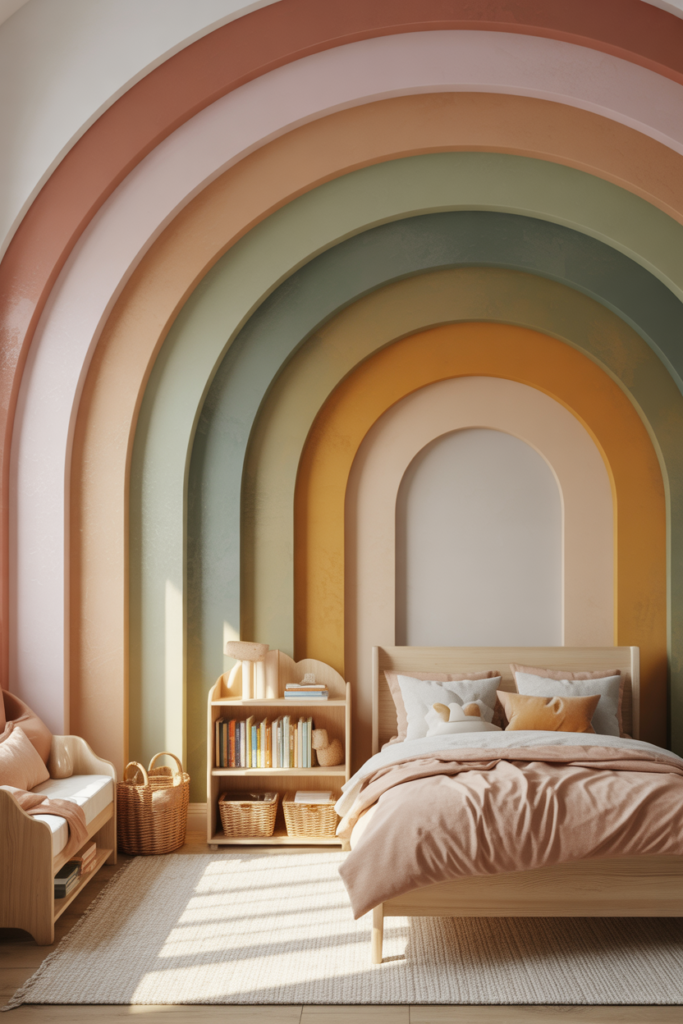
Plain white walls can feel cold in a child’s room. A rainbow arch changes that fast.
This idea works especially well behind a bed, bookshelf, or reading corner. Instead of painting a full rainbow across the wall, many parents now use oversized arches in muted colors. Think dusty pink, clay, sage green, beige, and soft mustard.
That softer palette matters.
Bright neon rainbows can quickly overpower a room. Muted tones feel warmer and easier to match with furniture later.
Painter’s tape makes this project easier than most people expect. You can sketch the arches with string and pencil first, then slowly build each curved section. Even beginners can finish this in a weekend.
This design works well because it grows with kids. Toddlers love the playful shape. Older children usually still like the soft artistic look years later.
If you want a quick improvement without painting every wall, this is one of the safest places to start.
Color Blocked Walls
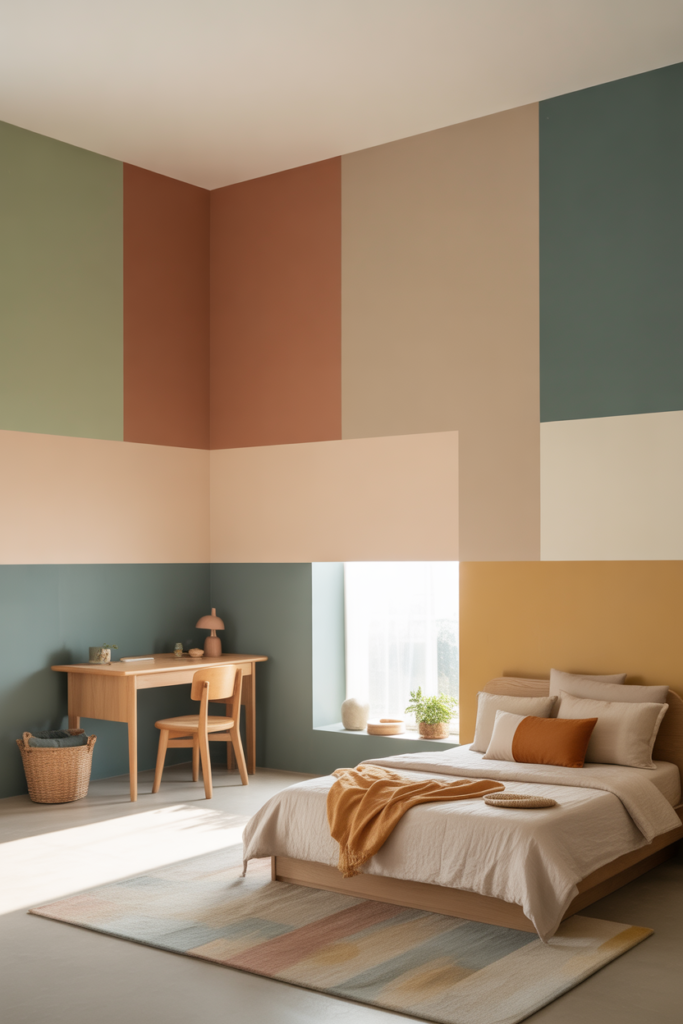
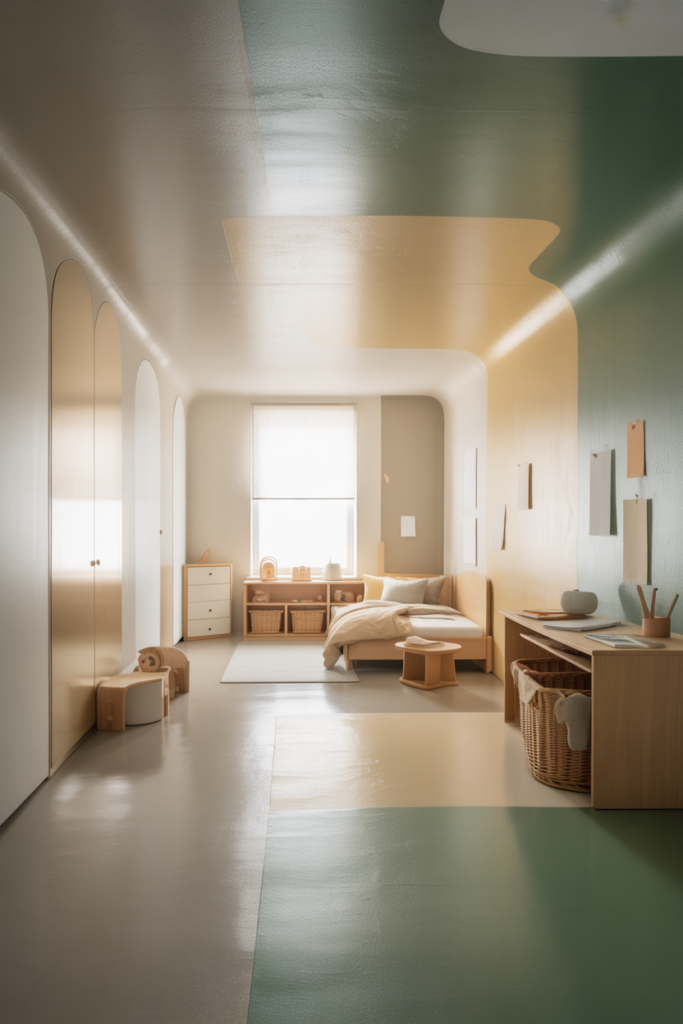
Color blocking is one of the easiest ways to make a bedroom feel more modern.
Instead of painting every wall one color, you divide the wall into sections using two or three shades. Some parents split walls horizontally. Others create large geometric shapes.
This approach works well in small rooms because it helps organize the space visually. A study area can use calmer shades while the play section uses warmer colors.
Some color combinations that work especially well include sage green with terracotta, teal with beige, and mustard with cream.
And here is why many parents like this idea.
It looks expensive without costing much.
You only need painter’s tape, a level, and a few paint samples. Even slightly uneven walls often look intentional with geometric designs.
Color blocked walls are still trending in 2026 because they feel playful without looking childish.
Chalkboard Paint Creativity Corner
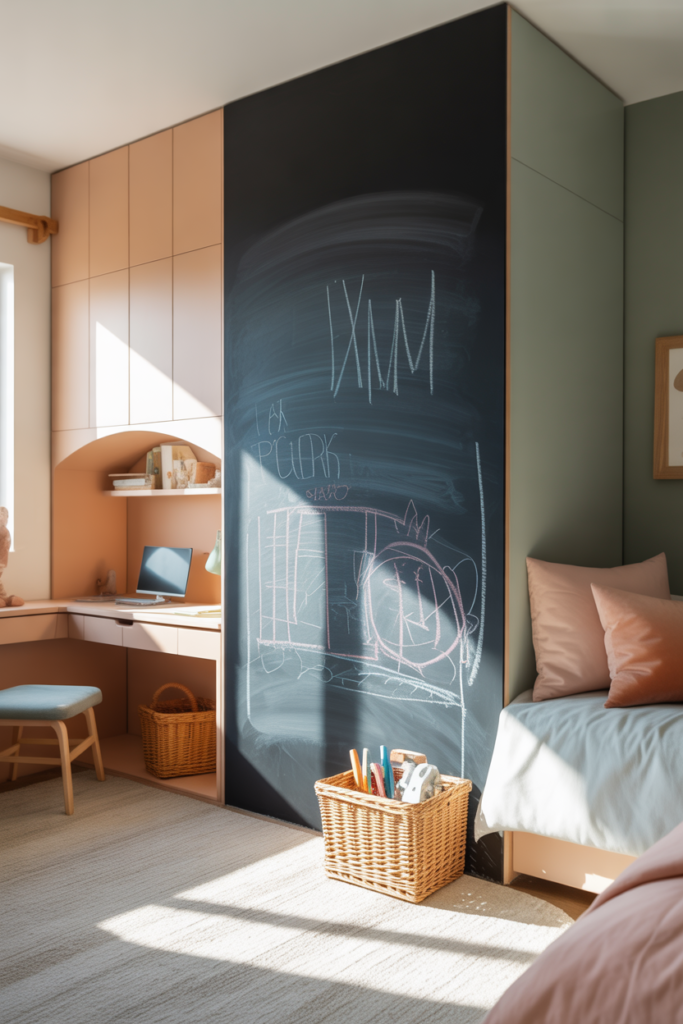
Children naturally draw on walls. Chalkboard paint gives them a place where they are actually allowed to do it.
A chalkboard wall works best in one section of the room instead of covering every wall. Too much black paint can make a bedroom feel darker than expected.
Many parents use chalkboard paint near desks, reading corners, or play tables. Kids can practice spelling words, draw pictures, write reminders, or leave notes.
Dust control matters though.
Regular chalk creates more mess than washable dust free chalk. Keeping a small tray or basket nearby also helps keep supplies organized.
One smart trick is pairing matte black chalkboard paint with softer room colors like beige, sage, pale blue, or muted peach. The contrast makes the room feel balanced.
This idea works especially well for school age children who enjoy creative activities but still need a functional bedroom.
Ceiling Painted Like the Sky
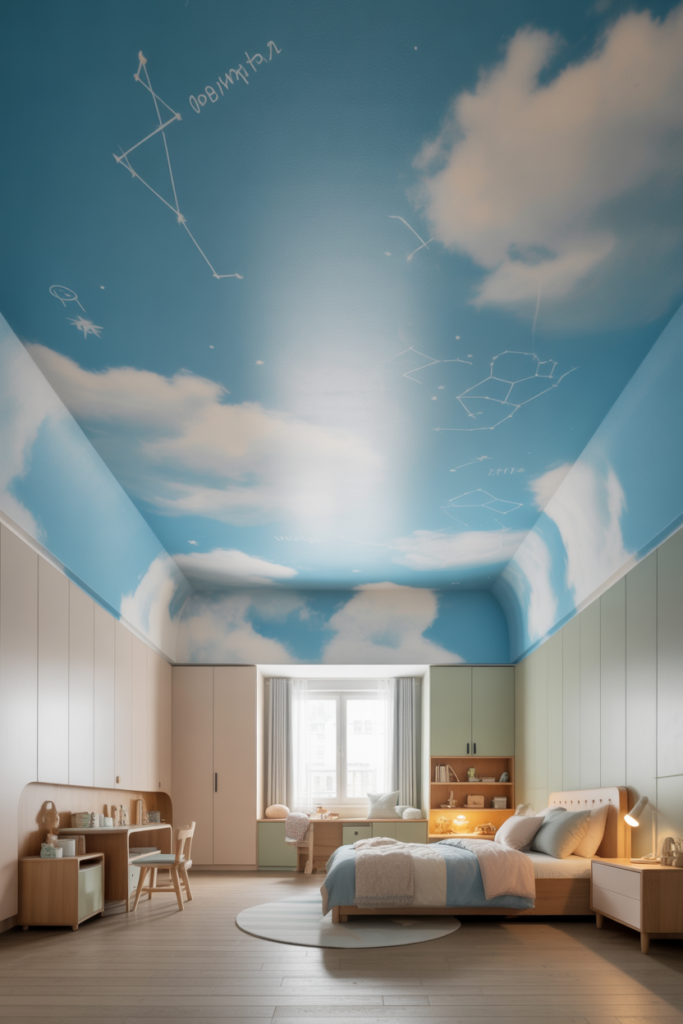
Most people forget the ceiling.
But for children, the ceiling is part of the room they stare at every night before sleeping.
A sky inspired ceiling can make the entire room feel calmer and more imaginative. Soft blue paint with white clouds creates a bright daytime feel. Deep navy with stars creates a cozy nighttime effect.
Glow in the dark constellations are still popular in 2026 because they combine decor with learning. Some parents even paint simple moon phases or star maps for older children.
This idea also changes how a room feels physically.
Light blue ceilings often make smaller rooms appear taller and more open.
If you want something subtle, keep the walls neutral and focus only on the ceiling. That keeps the room playful without overwhelming the space.
Nature Inspired Green Walls
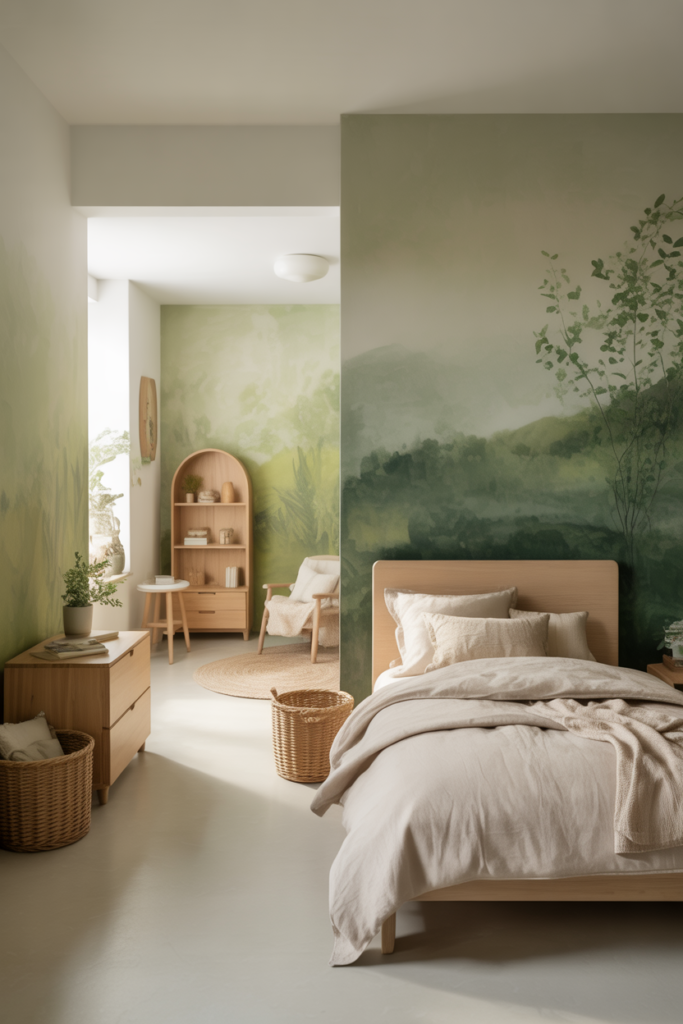
Green has become one of the most popular kids room paint ideas for a reason.
It feels calm, natural, and easy to live with.
Soft sage, eucalyptus, olive, and moss green shades now appear in many modern family homes because they work with almost every furniture style. Green also acts almost like a neutral color now.
And unlike bright cartoon themes, green walls usually age well.
A toddler room painted sage green can still work for a pre teen years later with only small decor changes.
Nature inspired rooms also connect well with wood furniture, woven baskets, linen bedding, and soft lighting. That combination creates a warm space without needing expensive decorations.
Search interest in warm green paint colors has continued to rise as more parents move away from bright primary palettes. Many interior designers now recommend earthy shades because they help rooms feel peaceful while still looking playful.
If you want a paint idea that lasts longer than short trends, green is one of the safest choices.
Mountain Murals for Adventure Themes
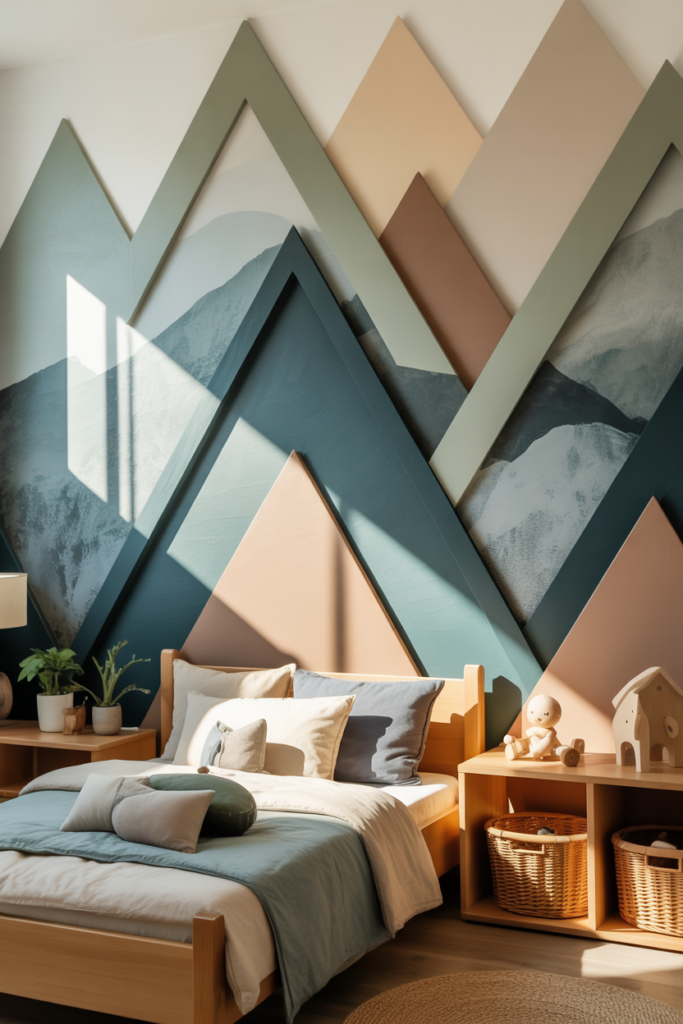
Mountain murals are simple, but they create a huge impact.
Most designs use large painted triangles in layered shades of green, gray, blue, or beige. Some murals cover one wall completely while others stay low along the bottom half of the room.
This style works especially well for adventure themed bedrooms. Camping decor, forest themes, animal prints, and wood furniture all pair naturally with mountain shapes.
And unlike detailed murals, mountains are beginner friendly.
You do not need artistic skills. Painter’s tape helps create clean edges, and slightly uneven lines still look natural.
Many parents also like this design because it grows well with age. The room still feels stylish as children get older.
Two Tone Walls That Grow With Kids
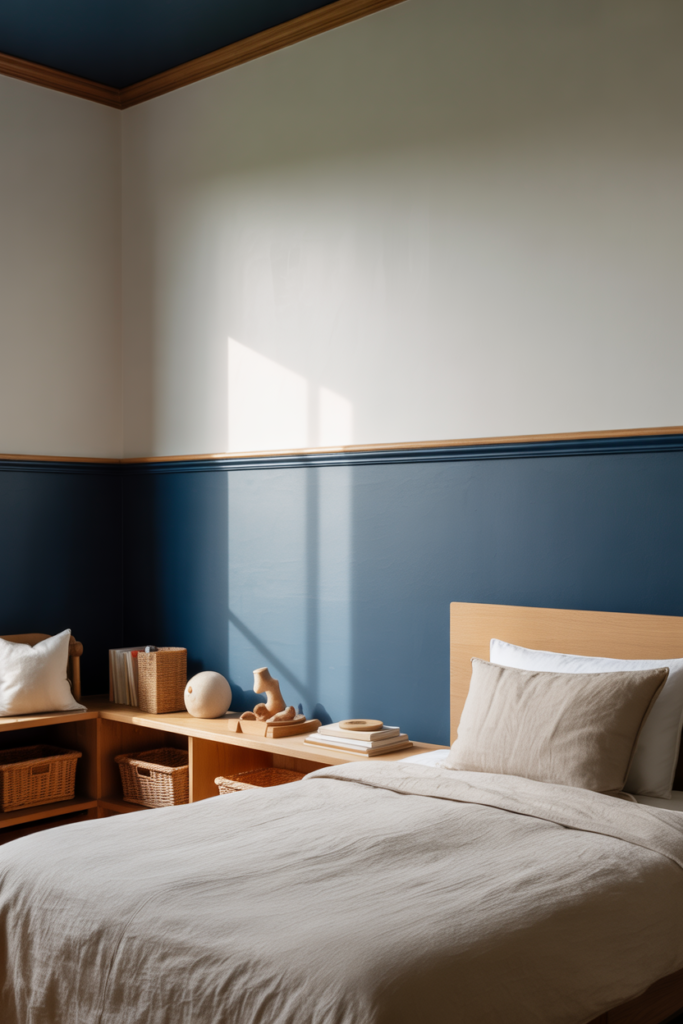
Children grow fast. Their rooms should be flexible too.
Two tone walls help solve that problem.
This style usually uses a darker shade on the lower half of the wall and a lighter shade above. The darker section hides fingerprints, toy marks, and scuffs much better than plain white walls.
Popular combinations include navy with white, forest green with cream, and clay with beige.
This idea also feels more mature than cartoon murals or character decals. That means you will probably not need to repaint again after only a few years.
Adding a wood trim line between the two colors can also make the room feel more finished.
If you want a practical paint idea that still feels creative, this one works extremely well.
Space Themed Galaxy Paint Design
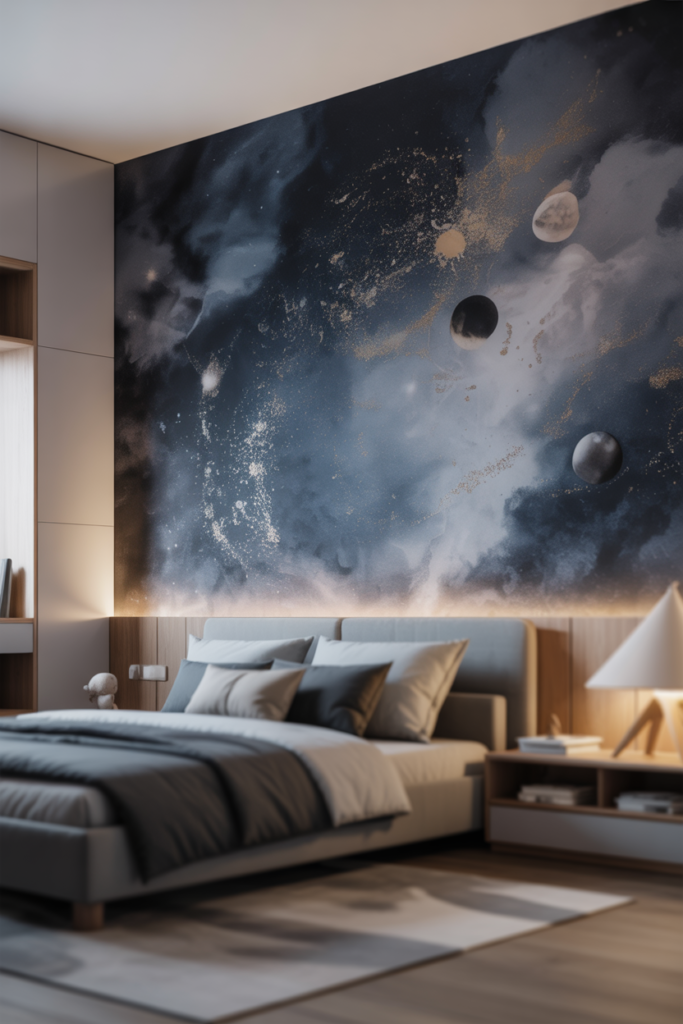
Some children want their bedroom to feel like another planet.
Galaxy walls help create that feeling without needing expensive furniture.
Most designs start with a deep navy or charcoal wall. White paint splatter techniques create stars, while metallic silver or gold adds extra detail.
A toothbrush is often the easiest way to create tiny star effects. It sounds messy, but it works surprisingly well.
This theme works best on one accent wall instead of every wall in the room. Too much dark paint can make smaller bedrooms feel cramped.
Glow in the dark stars, planet decals, and LED strip lighting also pair well with galaxy walls.
Older children usually enjoy this design more because it feels immersive and creative without looking too childish.
Soft Pastel Ombre Walls
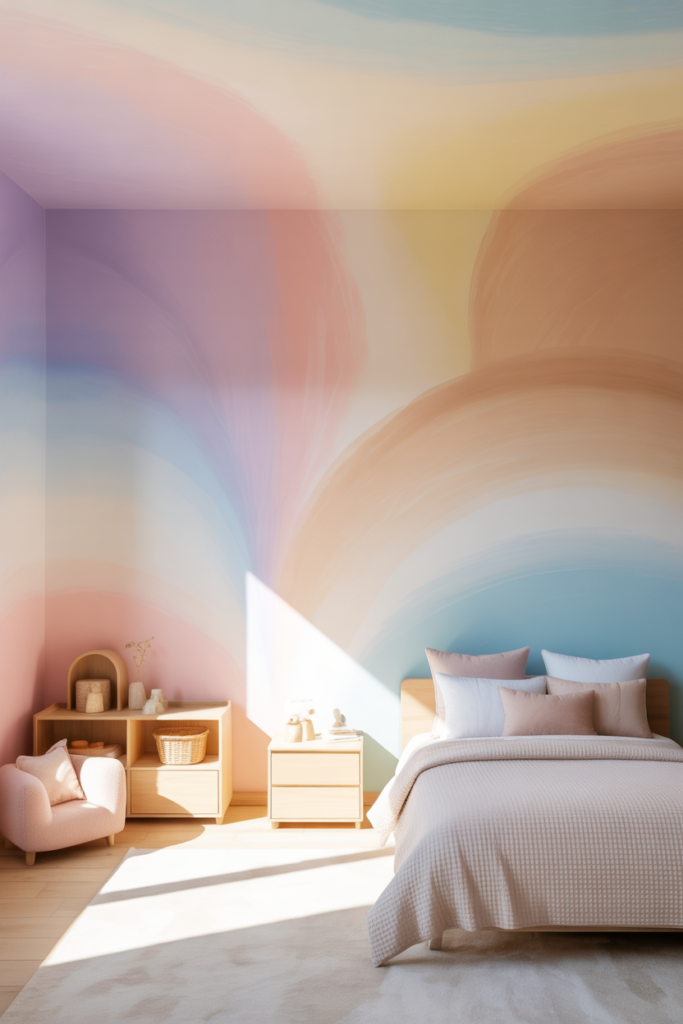
Ombre walls create a soft blended color effect that feels calm and artistic.
Instead of sharp paint lines, the colors gradually fade into each other. This style works especially well in nurseries and tween bedrooms.
Lavender fading into white creates a dreamy look. Blush fading into beige feels warmer and softer. Sky blue ombre walls often work beautifully in smaller rooms because they create an airy feeling.
This technique takes more patience than standard painting.
You usually need to blend sections while the paint is still wet. A large sponge or dry roller helps soften the transition between shades.
The final result feels softer than geometric patterns or bold murals.
That is one reason ombre walls continue appearing in Pinterest bedroom trends.
Animal Silhouette Paint Designs
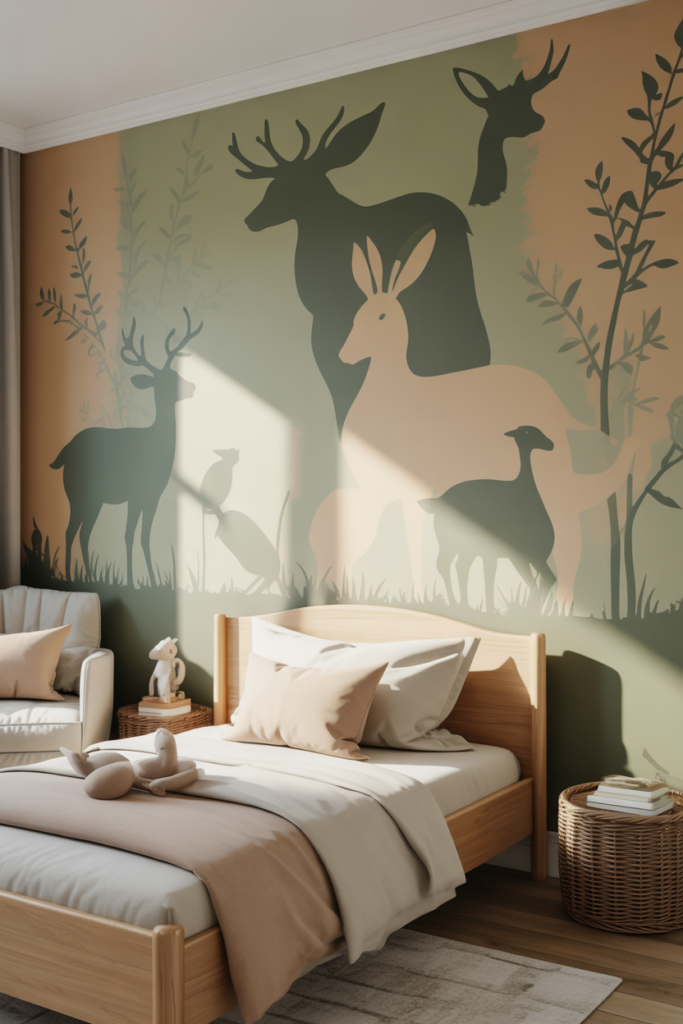
Animal themed rooms remain popular, but many parents now avoid large cartoon murals that children quickly outgrow.
Animal silhouettes are a smarter option.
Simple painted shapes like whales, birds, forest animals, or jungle leaves create personality without taking over the entire room. Stencils also make the process easier for beginners.
Woodland themes often use earthy greens and warm browns. Ocean themes pair soft blues with sandy beige tones. Jungle rooms usually mix muted greens with natural textures.
The best part is flexibility.
You can repaint small silhouette details later without repainting the whole wall.
This idea works especially well if you want themed decor that still looks clean and modern.
Storybook Reading Nook Paint Zones
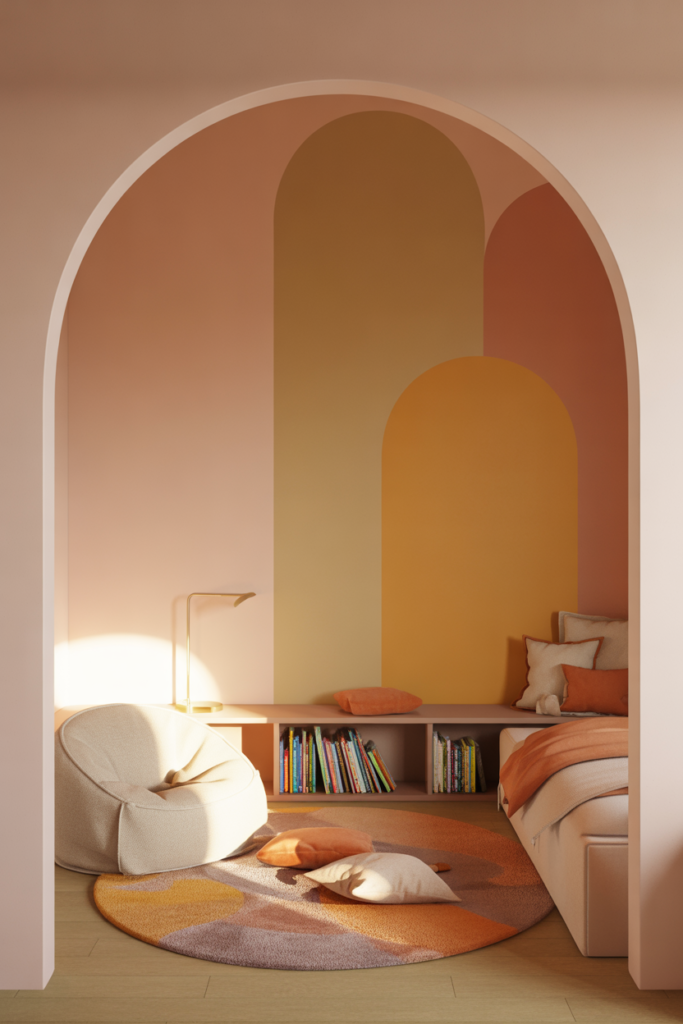
Children read more when reading spaces feel comfortable.
That is one reason painted reading corners have become more common in modern kids bedrooms.
Many parents create simple arches, circles, or framed paint sections behind bookshelves or beanbags. Warm colors like dusty peach, muted yellow, or soft terracotta help these spaces feel cozy.
Lighting matters too.
A small reading lamp or wall light often makes the painted area feel more intentional.
This idea works especially well in shared bedrooms because it visually separates one activity area from another.
And it does not require much paint.
Even a small painted section can completely change how a reading corner feels.
Retro Checkerboard Accent Walls
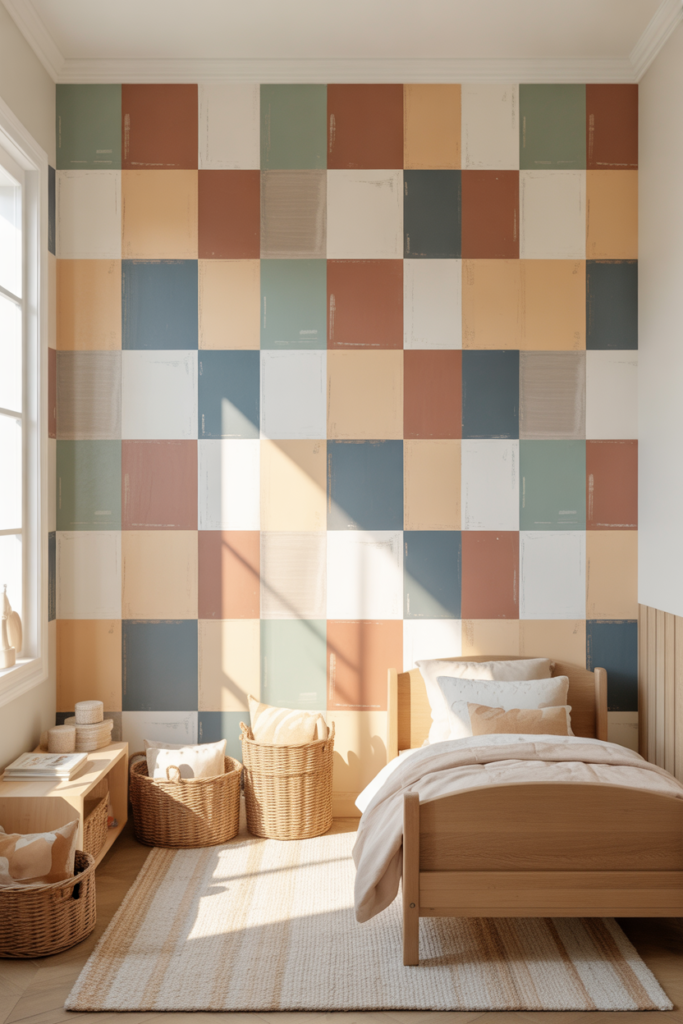
Checkerboard patterns have returned in modern interior trends.
But the newer versions look softer than older black and white designs.
Muted checkerboards using sage, beige, clay, dusty blue, or cream feel more playful and less harsh. These walls work especially well in playrooms or creative spaces.
The pattern takes time to measure correctly, but the process itself is simple. Painter’s tape and careful spacing matter more than artistic skill.
One important thing to remember is scale.
Large checkerboard squares often look calmer than tiny busy patterns.
If you want something trendy that still feels practical, this style balances both.
Paintable Wallpaper and Paint Combos
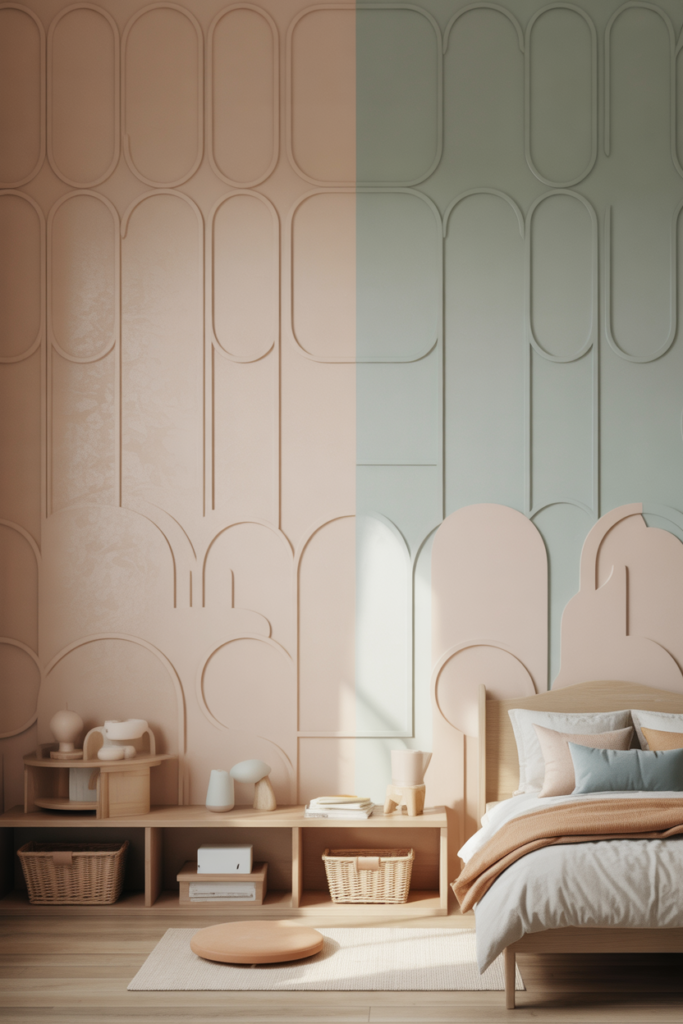
Some walls are too textured for murals.
That is where paintable wallpaper can help.
This material adds subtle texture while still allowing you to paint over it. Many parents use it to create striped effects, raised patterns, or soft dimensional walls.
It is also useful for renters because certain wallpaper types remove more easily later.
Combining wallpaper with painted sections often creates a more custom look without needing advanced skills.
For example, you can use wallpaper on the lower half of the wall and soft paint above.
Or create one textured accent wall behind the bed.
This idea works especially well for parents who want a designer style bedroom without a complicated mural project.
Under the Sea Paint Themes
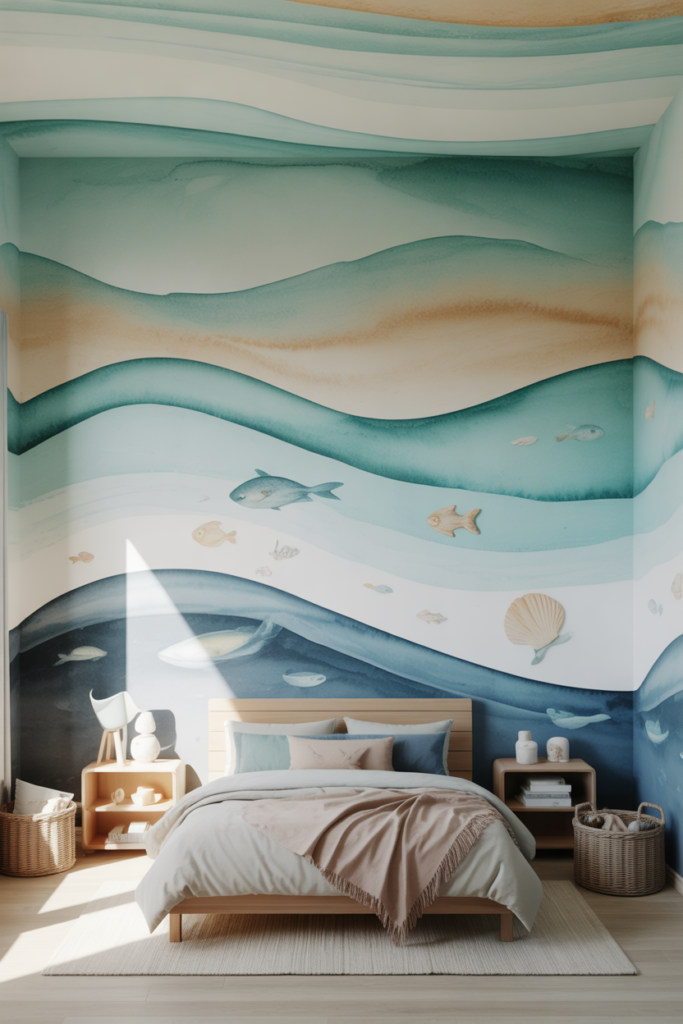
Ocean themed bedrooms can feel peaceful when done correctly.
The trick is avoiding overly bright colors.
Soft aqua, seafoam green, sandy beige, and muted navy usually create a calmer environment than bright cartoon blue walls.
Many under the sea paint ideas use wavy paint lines, watercolor effects, or soft sponge techniques to create movement.
Sea creatures work best as smaller details instead of giant wall murals.
This keeps the room from feeling visually crowded.
Underwater themes are especially helpful in rooms that need a calming atmosphere because cool colors often feel more relaxing.
DIY Stripe Walls for Small Rooms
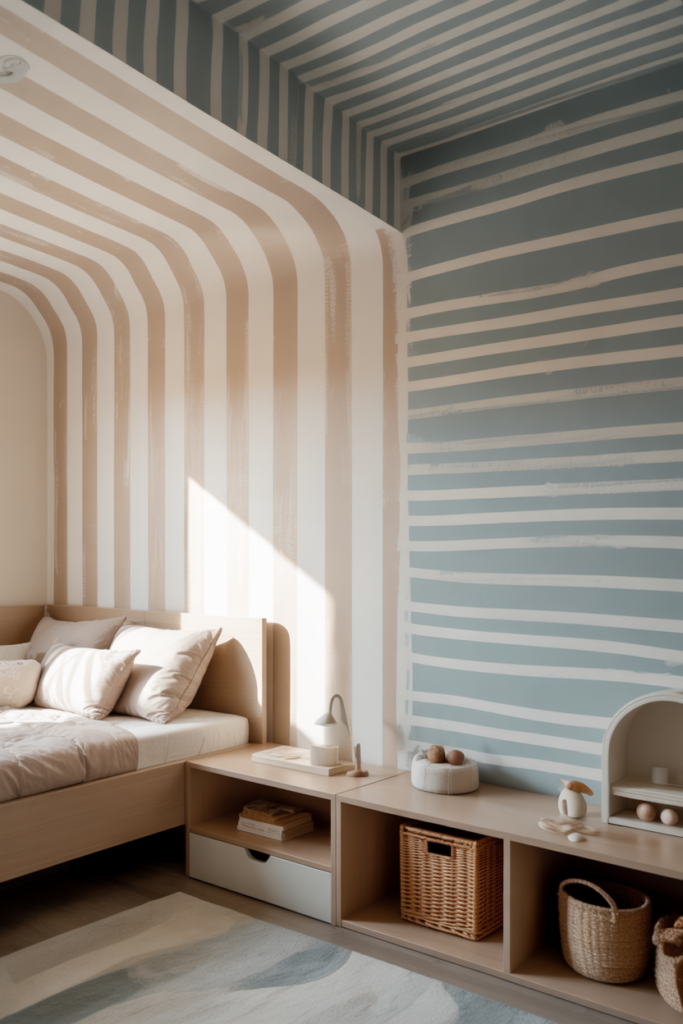
Stripes can completely change how a room feels.
Vertical stripes make ceilings appear taller. Horizontal stripes make narrow rooms feel wider.
That is why striped walls remain one of the easiest visual tricks for small bedrooms.
Wide stripes usually feel calmer than thin stripes. Soft neutral combinations also work better long term than bright contrasting colors.
This project requires patience more than skill.
Careful measuring and painter’s tape are the most important parts.
If you are nervous about bold patterns, start with muted stripes in similar shades like beige and cream or dusty blue and gray.
The effect still looks interesting without becoming overwhelming.
Interactive Magnetic Paint Wall
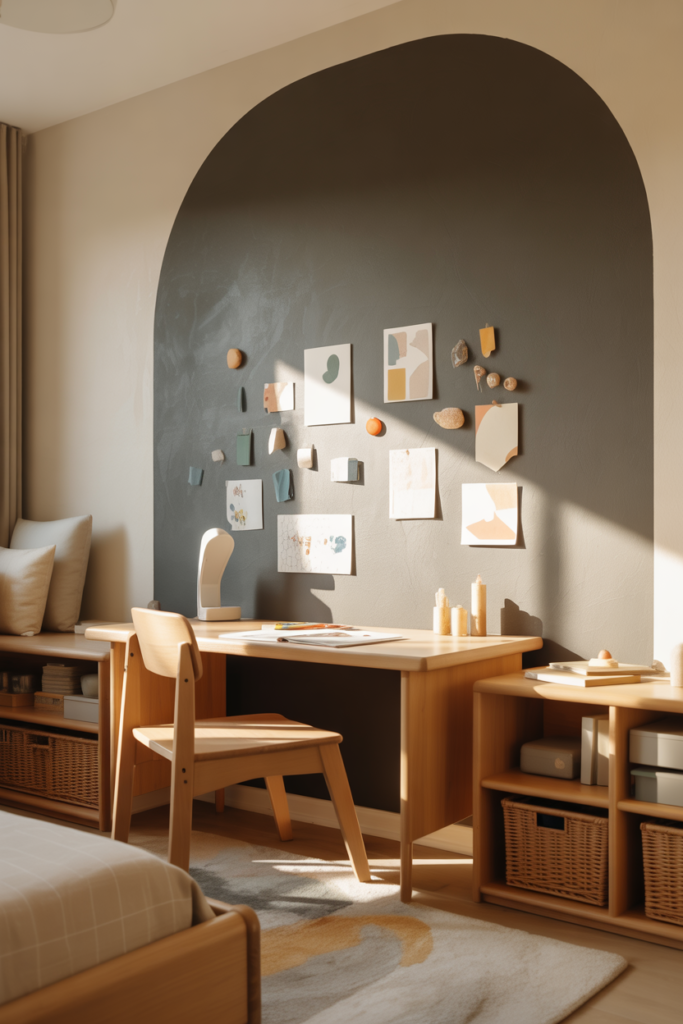
Magnetic paint sounds unusual at first. But it can be incredibly useful in a child’s room.
This special paint contains metal particles that allow magnets to stick to the wall after drying. Most parents apply magnetic paint underneath a normal paint color.
Children can use the wall for artwork, magnetic letters, schedules, learning activities, or photo displays.
There are a few things to know before starting.
Magnetic paint usually requires several coats to work properly. Stronger magnets also work better than lightweight decorative magnets.
Smaller sections often perform better than full walls.
Many parents create magnetic areas near desks or homework stations instead of painting the entire bedroom.
This project costs more than regular paint, but it adds function along with style.
For school age children, that extra function can be worth it.
Best Paint Finishes and Safety Tips for Kids Rooms
The paint color matters. But the paint type matters too.
Children’s bedrooms deal with fingerprints, spills, toy marks, and scratches almost every day. Choosing the wrong finish can make walls hard to clean.
Matte paint hides wall flaws well, but it stains more easily. Satin and eggshell finishes are usually better for children’s rooms because they wipe clean more easily.
Satin paint works especially well in high touch areas like playrooms, bunk bed walls, and homework spaces.
Low VOC and zero VOC paints have also become much more common in recent years. These paints release fewer chemicals into the air while drying.
That matters because children are often more sensitive to indoor air quality.
Ventilation also matters during painting.
Open windows when possible. Use fans to improve airflow. Let the room dry fully before children sleep there again.
Another smart step is testing paint samples first.
Paint often looks different depending on natural light, ceiling height, and flooring. A color that looks soft online may appear much darker in real life.
And here is something many people regret later.
Do not follow trends too aggressively.
Character murals and very bold colors can become outdated quickly. Flexible designs usually save more money long term.
Choose ideas your child can still enjoy a few years from now.
Conclusion
A child’s bedroom should feel creative, comfortable, and practical at the same time. The right paint choices can completely change how the space feels without requiring a huge budget.
Some families prefer soft calming colors. Others want playful murals or interactive walls. There is no perfect answer for every home.
The important thing is balance.
Choose colors that feel fun without becoming overwhelming. Pick designs that fit your child’s personality while still leaving room for growth.
If you are unsure where to start, begin with one accent wall or small paint project first. Even a simple reading nook or soft color block design can make a huge difference.
These fun paint ideas for kids room updates are meant to help you create a space your child actually enjoys spending time in. And that matters more than following every trend online.