15 Small Living Room Ideas With TV and Dining Table
Trying to fit a sofa, TV, and dining table into one room can feel frustrating. You want a comfortable place to relax, eat, and spend time with family. But when space is limited, every piece of furniture seems to compete for attention.
Many people make the same mistake. They buy furniture first and think about the layout later. The result is a room that feels crowded even when it is clean.
The good news is that you do not need a bigger home to make your space work better. Smart furniture placement and a few design choices can completely change how a room feels.
These small living room ideas with TV and dining table setups will help you create a space that feels organized, functional, and comfortable. Whether you live in a studio apartment, a small condo, or a compact family home, these ideas can help you make the most of every square foot.
Why Small Living Room Layouts Fail
Many small rooms feel cramped because the layout works against the space.
Oversized furniture is one of the biggest problems. A large sectional sofa or oversized dining table can block natural walking paths and make the room feel much smaller than it really is. Interior designers interviewed by The Spruce often point to bulky furniture and excessive decorating as common reasons rooms feel crowded.
Poor TV placement creates another issue. When the television sits in an awkward spot, furniture gets pushed into strange positions. Seating becomes uncomfortable and the room loses its balance.
Large dining tables can also create problems. A table designed for six people may take up valuable floor space that is rarely used.
Good layouts leave room to move. Many designers recommend keeping at least 24 inches of walking space in main pathways and around major furniture pieces. Small rooms work best when every item has a purpose.
The goal is simple. Create clear zones for watching TV, eating meals, and moving comfortably around the room.
1. Use a Round Dining Table for Better Flow
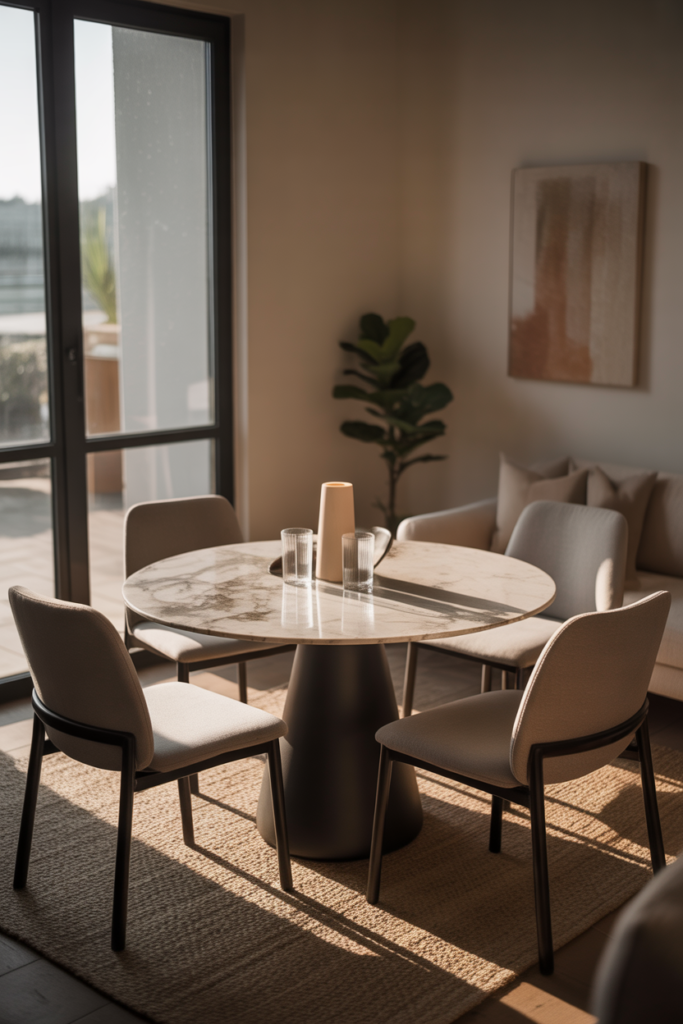
Many small living rooms lose valuable floor space because rectangular dining tables block walkways.
A round dining table solves this problem. The curved edges make it easier to move around the table without bumping into corners. This is especially helpful in apartments where every inch matters.
Round tables also create a softer look. They make compact rooms feel less crowded and more open. Most small round tables comfortably seat two to four people, which is enough for many households.
Designers often recommend pedestal style round tables because they remove bulky corner legs and provide more room for chairs.
If your room feels tight, a round dining table is often one of the fastest improvements you can make.
2. Mount the TV to Free Up Floor Space
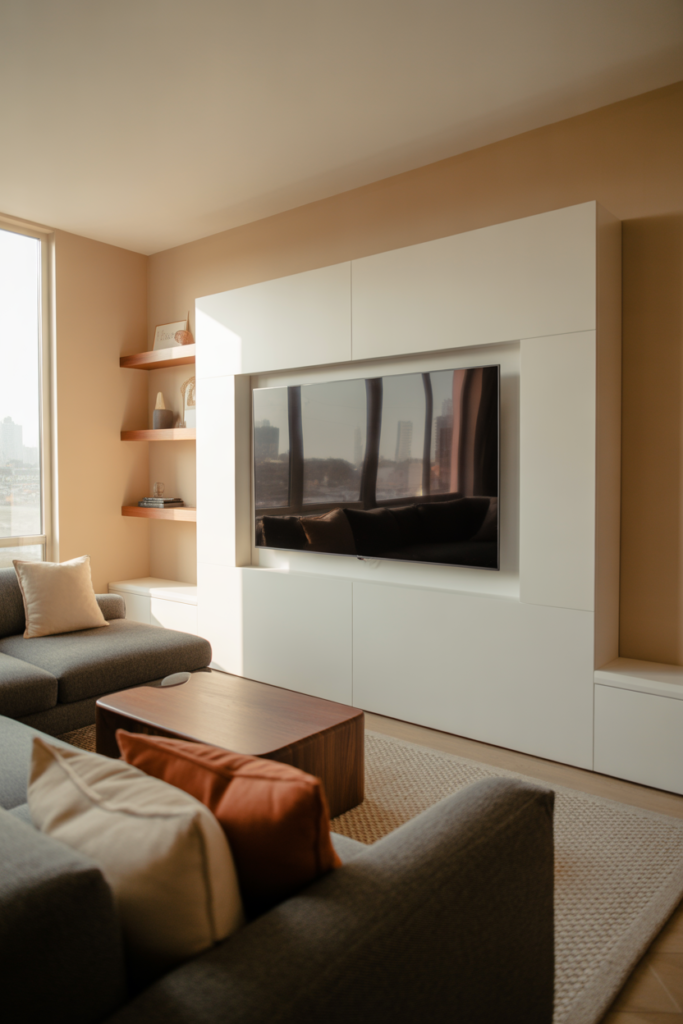
A traditional TV stand takes up more room than many people realize.
Mounting your TV on the wall instantly creates extra floor space. That space can be used for a dining table, storage cabinet, or simply left open to make the room feel larger.
A wall mounted TV also creates cleaner sightlines. Your eyes move more easily around the room when fewer pieces of furniture sit on the floor.
This approach works especially well in modern apartments and open concept spaces. It helps create a cleaner look while making the room feel less crowded.
If you rent, many landlord approved mounting systems are available that cause minimal wall damage.
3. Place the Dining Table Behind the Sofa
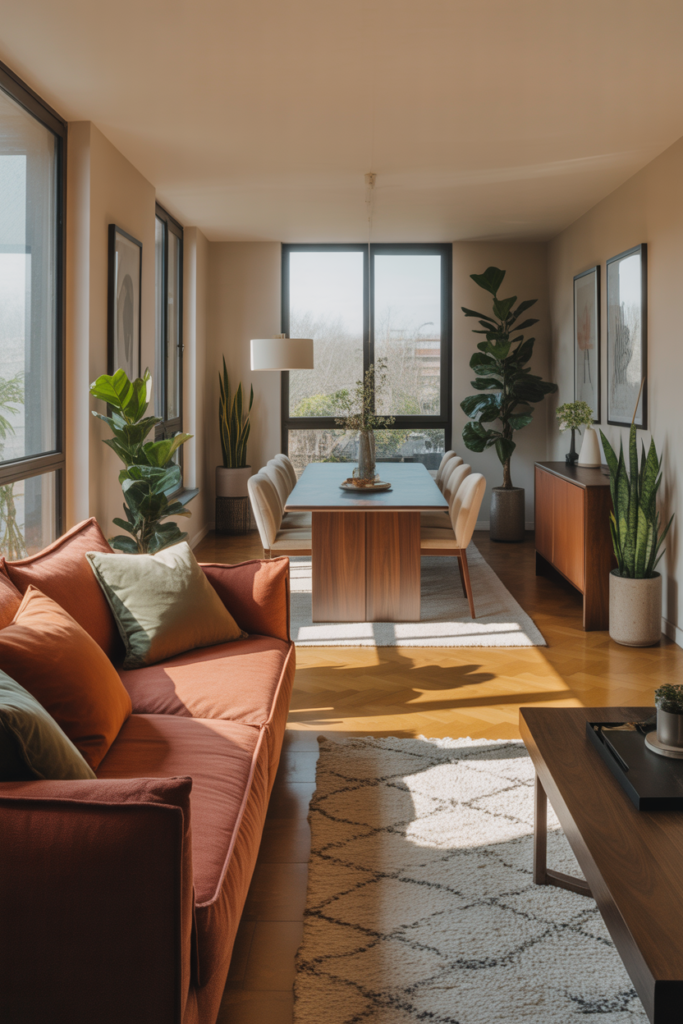
One of the smartest living room dining room layout ideas is placing the dining table directly behind the sofa.
This creates two separate zones without adding walls or room dividers.
The sofa acts as a natural boundary between the TV area and dining area. As a result, the room feels organized instead of crowded.
This layout works particularly well in apartments with rectangular floor plans. The living area stays focused on the television while the dining table gets its own dedicated space.
Many professional designers use this approach because it improves flow while keeping the room visually open.
If you have an open floor plan, this layout is worth trying first.
4. Choose an Extendable Dining Table
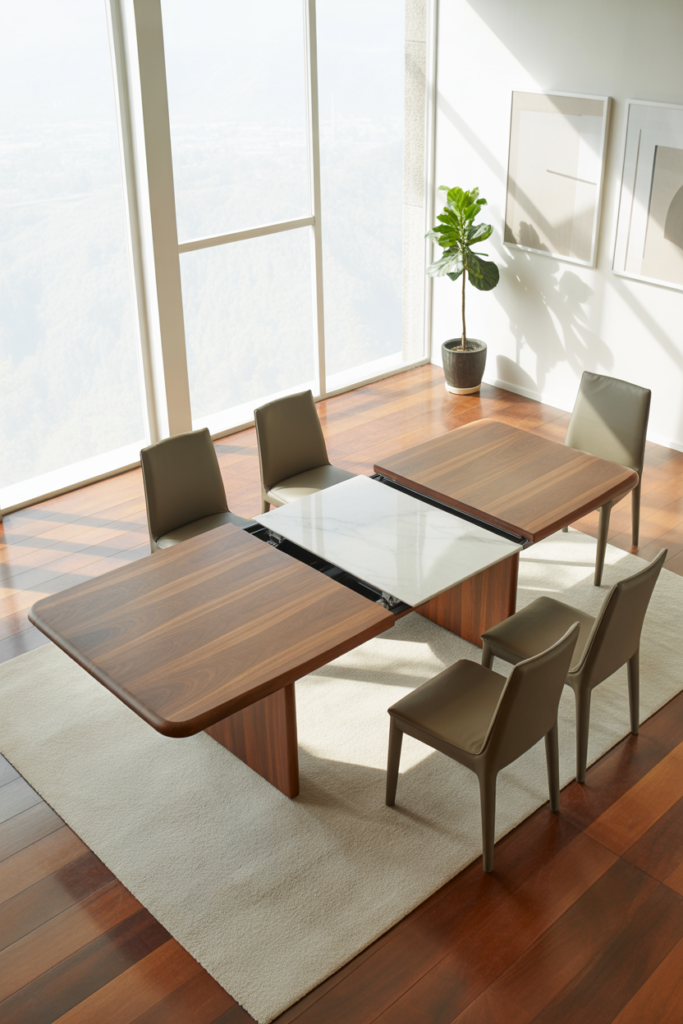
Large dining tables are useful during holidays. The rest of the year, they often waste space.
An extendable dining table gives you flexibility. You can keep it compact for daily use and expand it when guests visit.
This solution is becoming increasingly popular because it allows small homes to function like larger ones when needed.
Modern designs are much better than older versions. Many extensions are hidden inside the table and can be opened in minutes.
If you entertain occasionally but need to save space every day, an extendable table is a practical investment.
5. Use Bench Seating Along the Wall
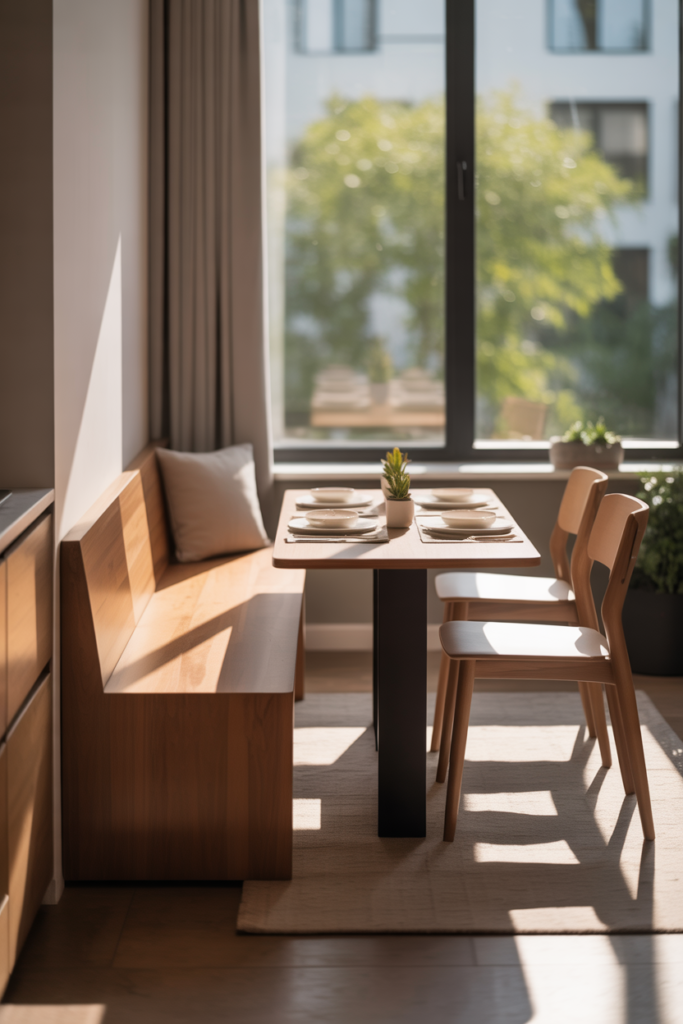
Dining chairs require more space than many people expect.
A bench placed against a wall uses less room because it can slide completely underneath the table when not in use.
This creates cleaner walkways and makes the dining area feel less bulky.
Many benches also include hidden storage. That extra storage can hold table linens, seasonal decorations, or everyday household items.
For small living room dining room combo layouts, bench seating often creates a more streamlined appearance than multiple chairs.
6. Float the Sofa Instead of Pushing Everything to Walls
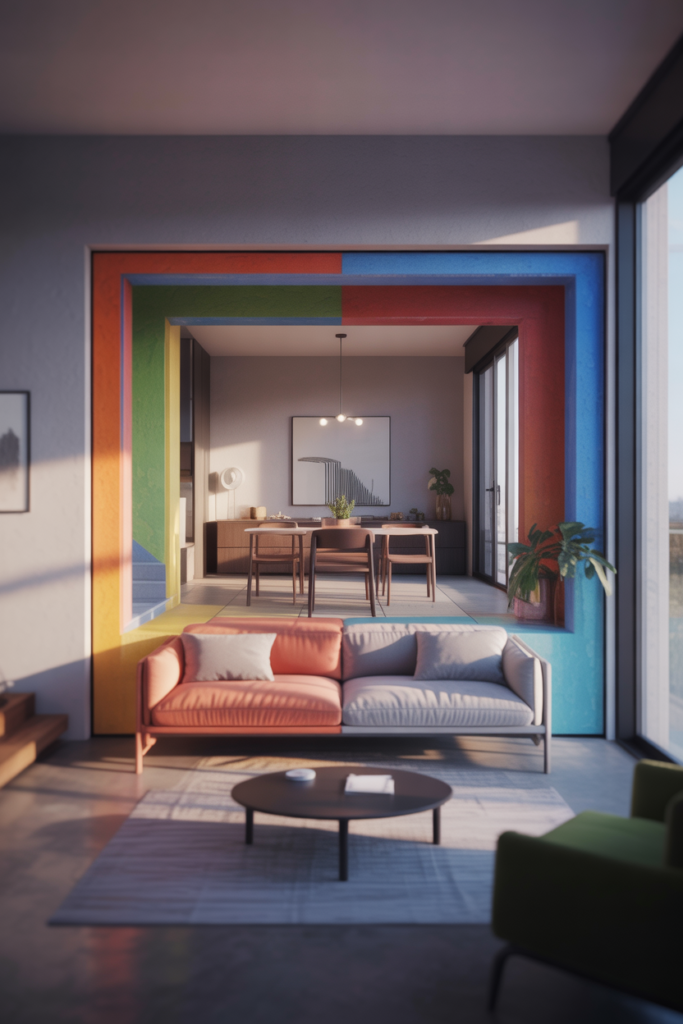
Many people believe furniture should always sit against walls in small rooms.
That advice does not always work.
Floating a sofa slightly away from the wall can actually improve the layout. It creates visual zones and helps define separate functions within the room.
This works especially well when a dining table sits behind the sofa.
The room feels more intentional and balanced. Instead of one crowded space, you create two connected areas that serve different purposes.
Even moving the sofa forward by a few inches can change how the room feels.
7. Use a Lift Top Coffee Table for Dining
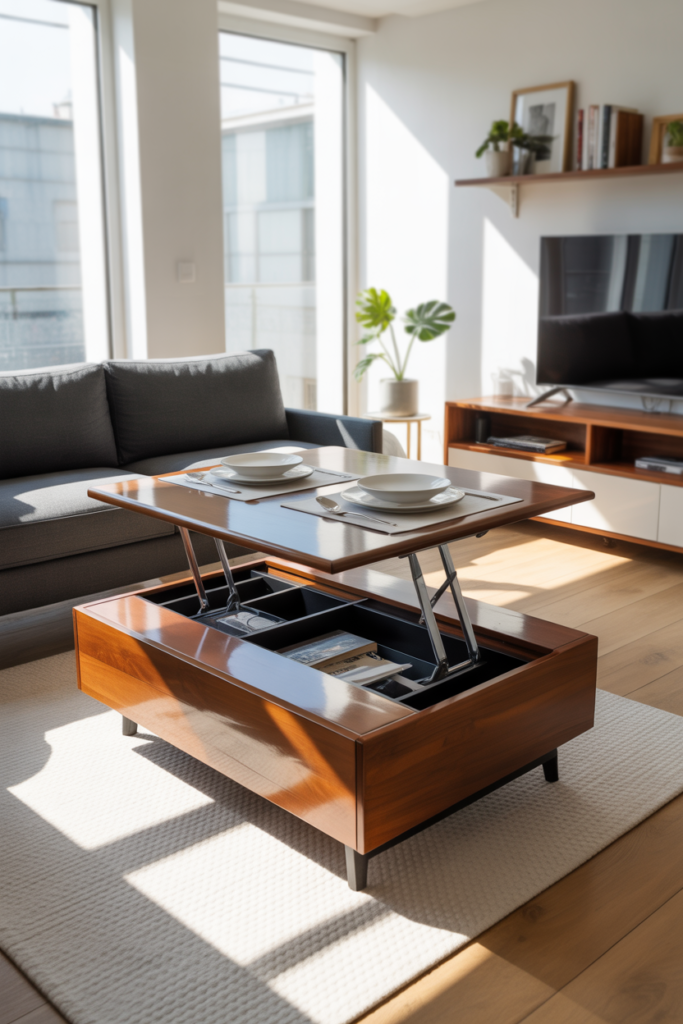
Sometimes there simply is not enough room for a separate dining table.
A lift top coffee table can solve that problem.
These tables raise to dining height when needed and lower again when finished. Many models also include hidden storage inside.
This option works well in studio apartments and extremely compact homes.
You may not want to host large dinner parties this way. But for everyday meals, it provides a simple and effective solution.
It is one of the best examples of multifunctional furniture available today.
8. Add a Corner Bistro Table
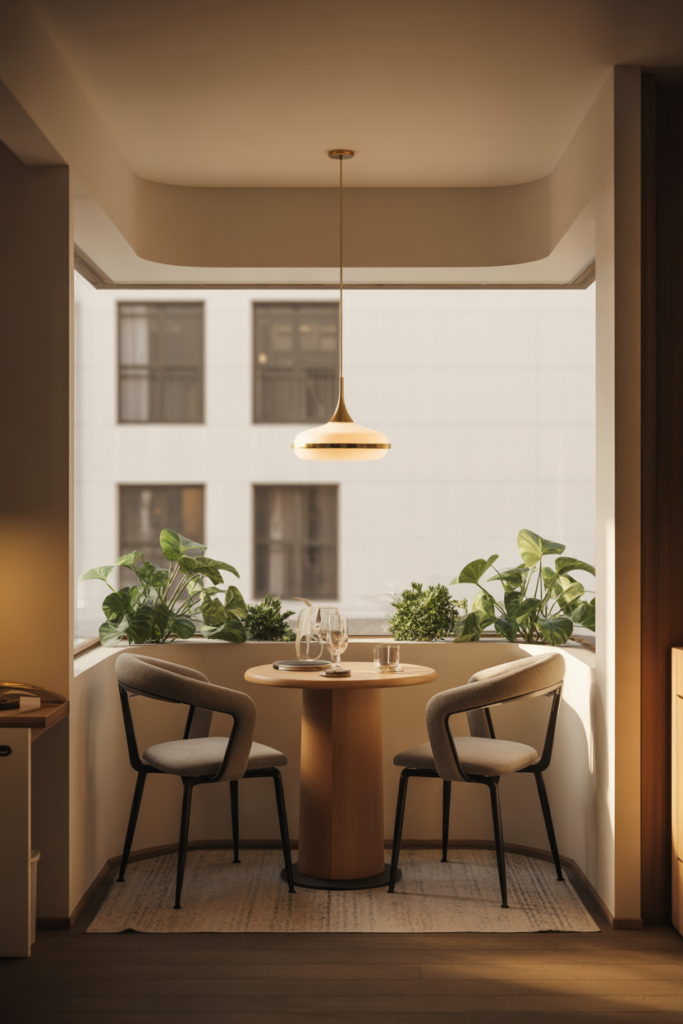
Corners often become wasted space.
A small bistro table can turn an unused corner into a functional dining area.
This setup works particularly well for singles, couples, and small households. It provides a comfortable place to eat without taking over the room.
The smaller scale also helps maintain open pathways throughout the space.
Many people enjoy the café style atmosphere these setups create. A simple pendant light above the table can make the corner feel even more inviting.
9. Try a Fold Down Wall Table
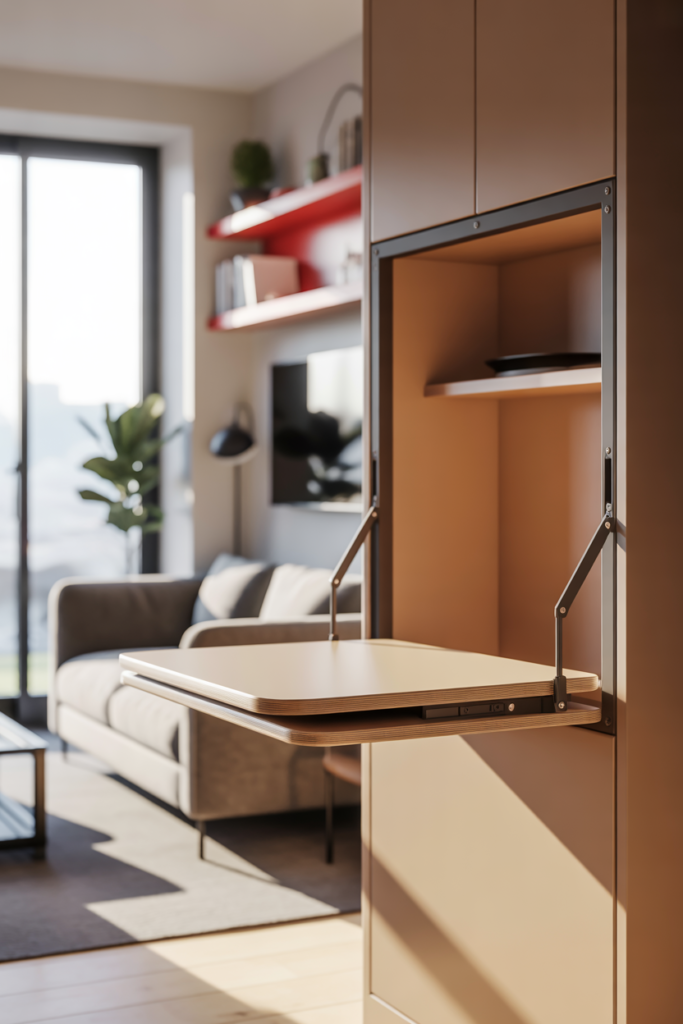
When space is extremely limited, flexibility becomes important.
A fold down wall table provides dining space only when you need it. When not in use, it folds flat against the wall.
This leaves valuable floor space available for daily activities.
Many homeowners install these tables near the TV area or along an unused wall.
Some models even include shelving, giving you extra storage along with a dining surface.
For studio apartments, few solutions save more space.
10. Choose Furniture with Visible Legs
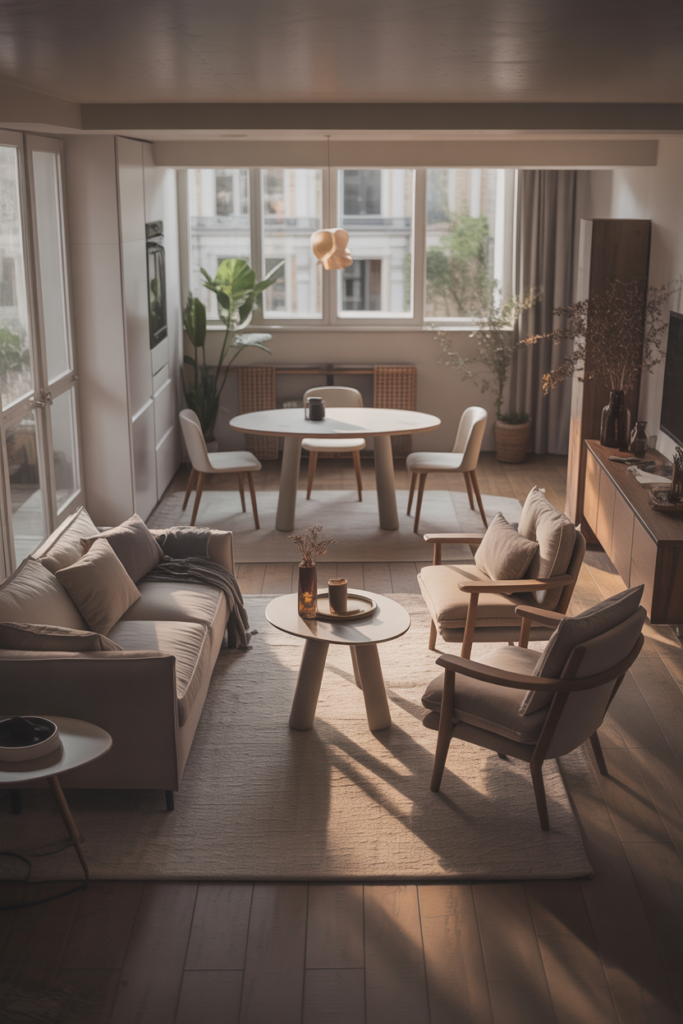
Heavy furniture can make a room feel smaller than it really is.
Furniture with visible legs creates the opposite effect.
Because you can see underneath the pieces, more of the floor remains visible. This creates a greater sense of openness throughout the room.
Sofas, chairs, and dining tables with raised legs often appear lighter and less bulky.
This visual trick has been used by designers for years because it works without requiring additional square footage.
Small space furniture should feel light, even when it provides plenty of function.
11. Use an L Shaped Sectional as a Divider
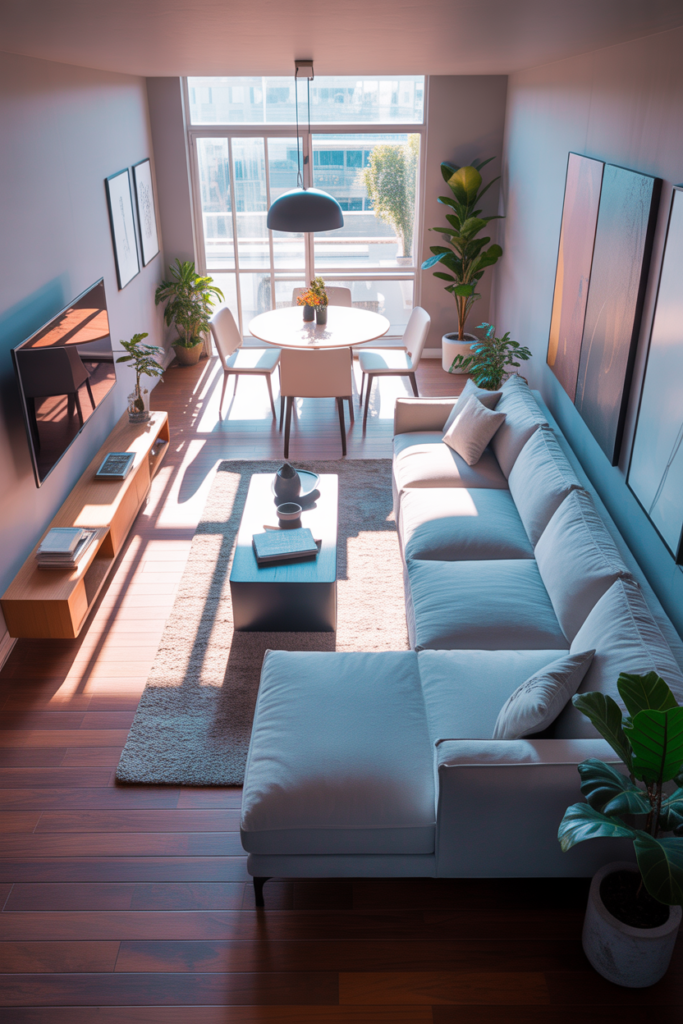
An L shaped sectional can help separate living and dining areas without additional furniture.
The longer side naturally defines the TV zone while the dining area remains open behind it.
This creates clear organization while maximizing seating.
Families often prefer this solution because it provides more seating than a standard sofa without requiring extra chairs.
The key is choosing a sectional that fits the room properly. Oversized versions can quickly overwhelm a compact space.
When sized correctly, this layout feels comfortable and practical.
12. Add Storage Furniture Around the TV
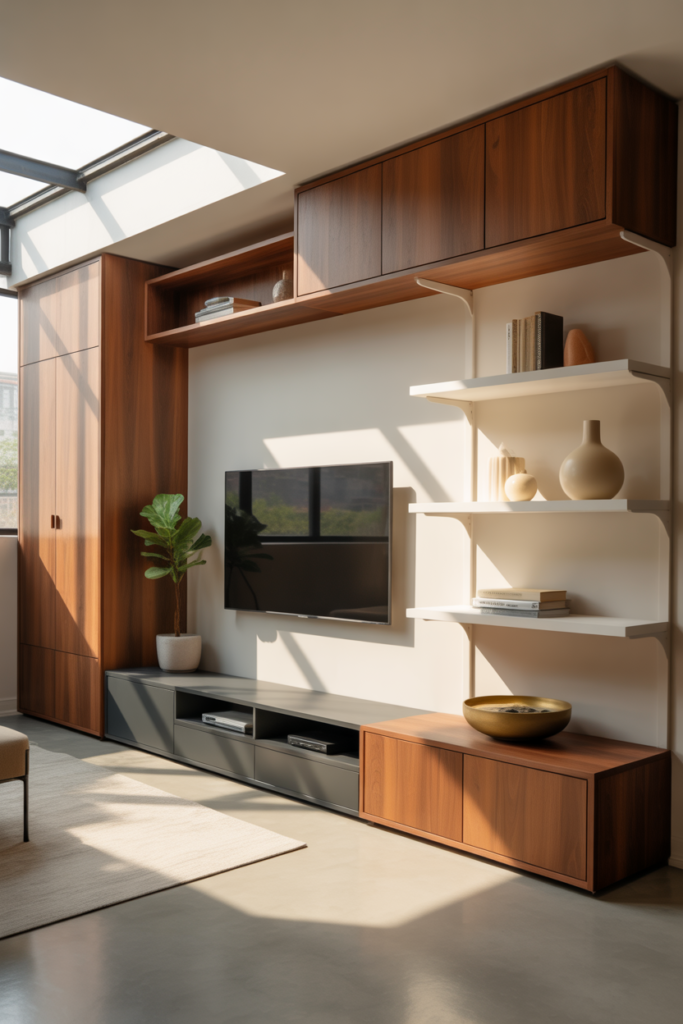
Clutter makes every room feel smaller.
Storage furniture around the TV helps solve this problem by keeping items organized and out of sight.
Built in cabinets, floating shelves, and storage consoles can hold electronics, books, games, and everyday items.
IKEA and many other furniture brands continue to emphasize concealed storage because it improves both appearance and function.
When clutter disappears, the room instantly feels larger and calmer.
Good storage is often more important than adding new furniture.
13. Define Zones with Rugs and Lighting
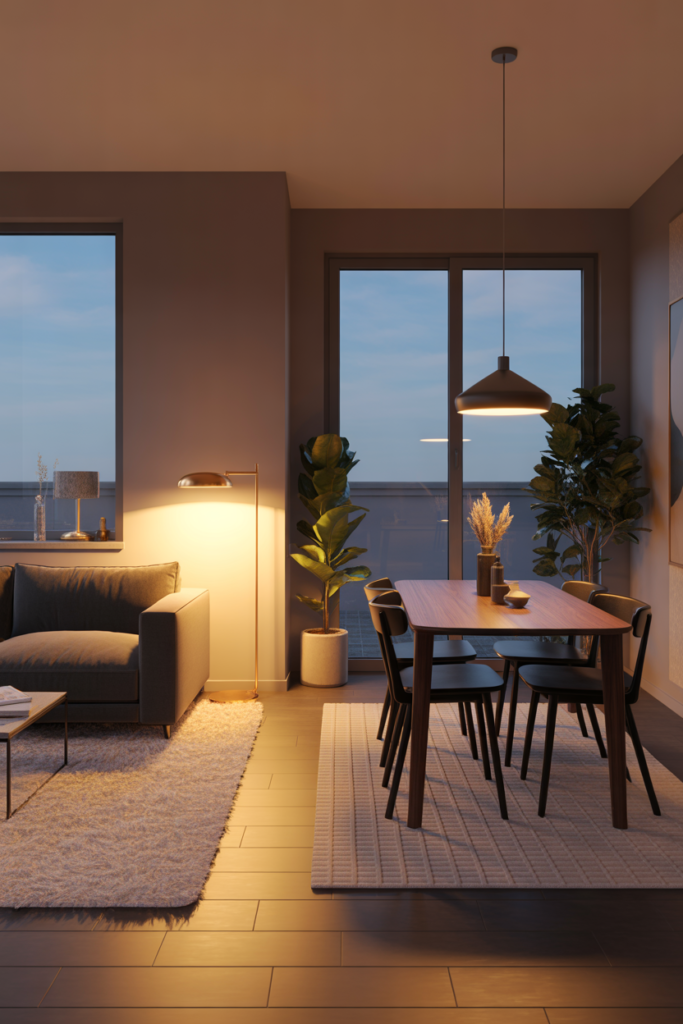
Small rooms still need separate spaces for different activities.
Area rugs and lighting help create those boundaries.
A rug under the sofa defines the living area. A different rug under the dining table helps separate the dining zone.
Lighting works the same way. A floor lamp near the sofa and a pendant light above the table visually divide the room.
These changes require very little floor space but have a big impact on how the room feels.
The result is a space that feels organized rather than crowded.
14. Use a Rotating TV Mount
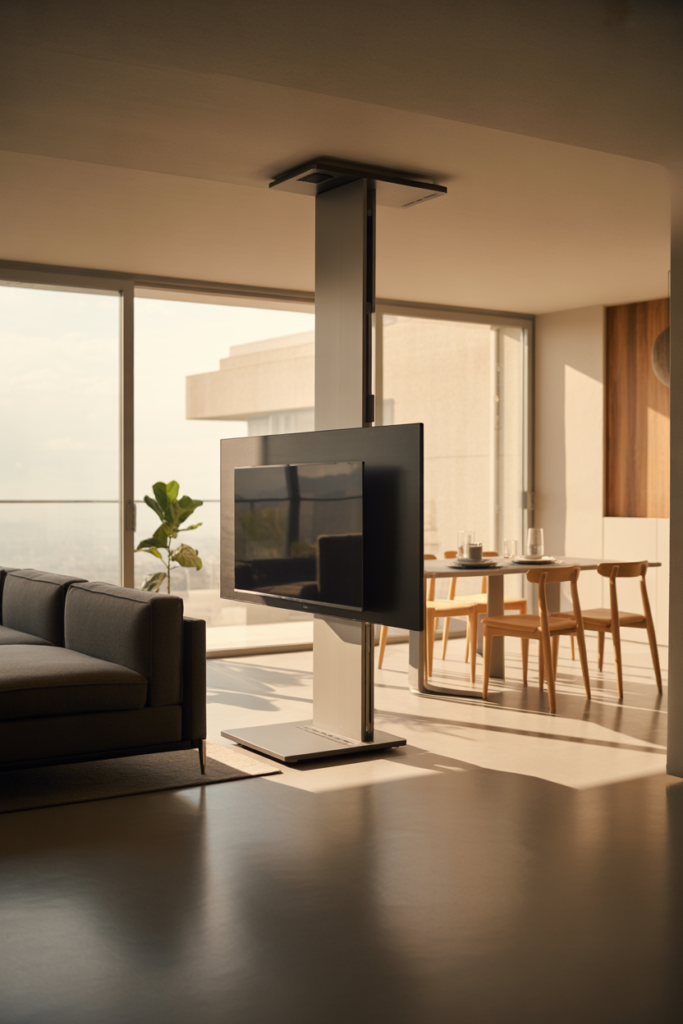
A rotating TV mount adds flexibility to compact rooms.
Instead of positioning furniture around one viewing angle, you can adjust the screen as needed.
Watch television from the sofa during movie night. Then rotate it toward the dining table while eating breakfast.
This solution is especially useful in studio apartments where one screen must serve multiple areas.
It also reduces the need for additional electronics, which helps keep the room simple and uncluttered.
Small changes like this can make a room work much harder for you.
15. Choose Multifunctional Furniture Throughout
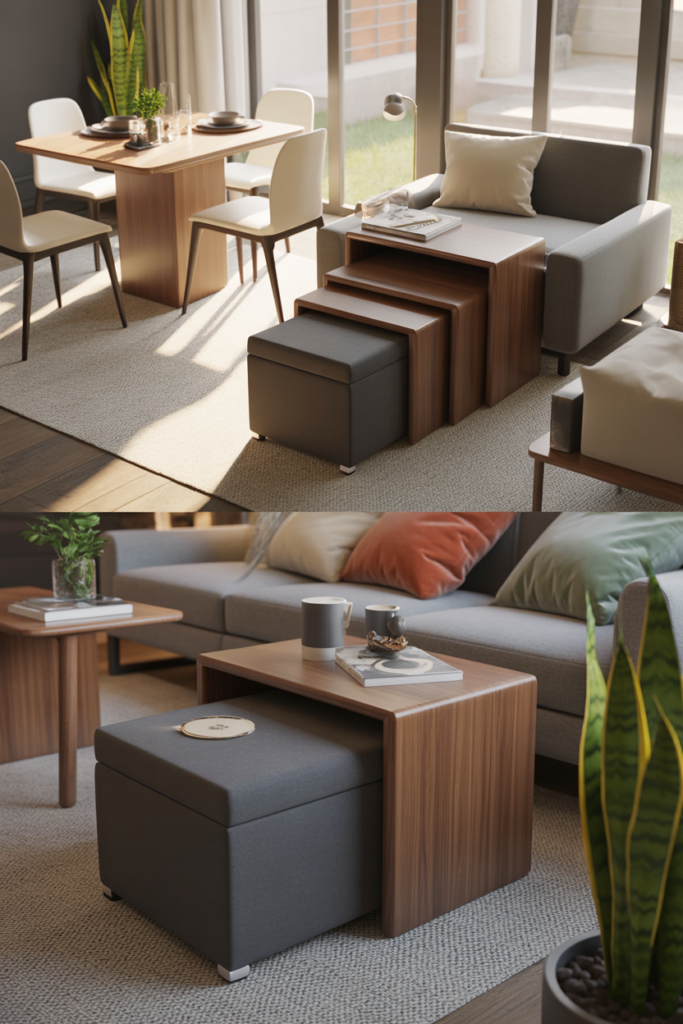
The best small spaces use furniture that performs more than one job.
Storage ottomans can hold blankets while providing extra seating.
Nesting tables offer additional surfaces when needed and tuck away when finished.
Sleeper sofas accommodate overnight guests without requiring a separate guest room.
Expandable dining furniture adapts to changing needs throughout the year.
According to IKEA’s small space design recommendations, multifunctional pieces remain one of the most effective ways to maximize limited square footage.
Every piece should earn its place in the room. When furniture serves multiple purposes, you need fewer pieces overall.
That creates a cleaner and more comfortable space.
Conclusion
A small room does not have to feel cramped. The right layout can make a huge difference.
These small living room ideas with TV and dining table setups focus on making every square foot work harder. From round dining tables and wall mounted TVs to multifunctional furniture and smart storage, each idea helps create a more comfortable home.
Start by measuring your space before buying anything new. Then choose one layout idea that fits your room and test it.
Small improvements often create the biggest results.