15 Creative Cutting Block Ideas for Stylish Kitchens
Introduction
A cutting block is no longer just a simple kitchen tool. In 2026, it has become part of kitchen style, food prep, and daily organization. Many homeowners now want cutting blocks that look good, save space, and make cooking easier at the same time.
The problem is that many kitchens still use thin plastic boards or bulky butcher blocks that create clutter and wear out fast. Some stain easily. Others dull knives or take up too much counter space. And with growing concerns about microplastics from plastic kitchen tools, more people are switching to wood and bamboo options for safer food prep.
That is why creative cutting block ideas are becoming more popular. People want practical designs that also fit modern kitchens. Some prefer farmhouse butcher blocks. Others want hidden pull out stations or compact over sink boards for small apartments.
In this guide, you will find 15 cutting block ideas that improve kitchen style, storage, and function. You will also learn which materials last longer, which styles work best for small kitchens, and how to keep your cutting block food safe for years.
Why Cutting Blocks Matter in Modern Kitchens
Many kitchens now focus on function just as much as appearance. People want tools that make cooking easier while keeping counters clean and organized. That is one reason cutting blocks have become more important in modern kitchen design.
Wood cutting blocks are becoming more popular again because they are durable and easier on knives. End grain wood surfaces help reduce blade damage because the wood fibers move slightly when cut. That matters if you cook often and want your knives to stay sharp longer.
Food safety is another reason people are moving away from cheap plastic boards. Studies and expert discussions about microplastics have made many homeowners rethink the materials they use daily in the kitchen.
The USDA also recommends using separate cutting boards for raw meat and vegetables to reduce cross contamination. Reversible wooden cutting blocks make this much easier because you can dedicate one side to produce and the other to proteins.
Modern kitchens also use cutting blocks as part of the design itself. Designers now place butcher block surfaces on kitchen islands, prep stations, and rolling carts to add warmth to white or neutral kitchens. This creates a softer and more natural look compared to cold stone counters.
And here is why that matters. A cutting block now does more than help you chop vegetables. It can save space, improve food prep, protect your knives, and make your kitchen feel more inviting.
End Grain Butcher Block Ideas
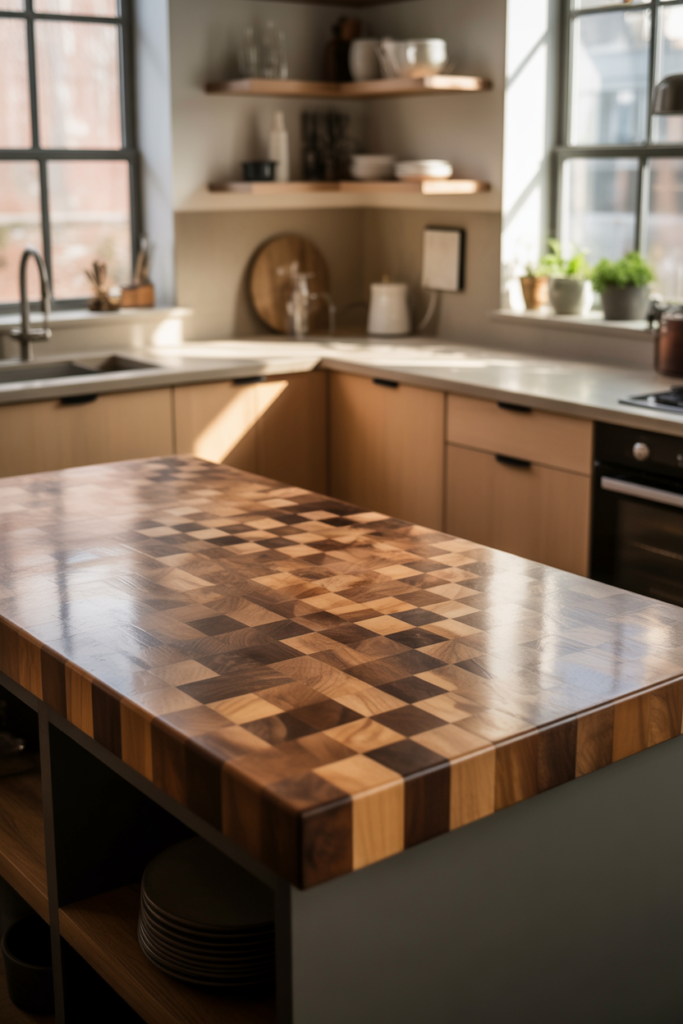
End grain butcher blocks are one of the best choices for people who cook often. Instead of cutting across wood fibers, your knife moves between them. This creates a softer landing for the blade and helps reduce wear over time.
Many chefs and woodworking experts prefer end grain cutting blocks because they last longer than standard flat grain boards. Small marks from knives can close back up over time. People often call this the self healing effect of wood.
Maple is one of the most common choices because it is hard, durable, and food safe. Walnut adds a darker and richer look that fits luxury kitchens. Cherry wood gives a warmer tone that works well in farmhouse or traditional spaces.
Large end grain butcher blocks also work well as statement pieces on kitchen islands. In smaller kitchens, a thick square cutting block can create a dedicated prep zone without taking over the entire counter.
The downside is that end grain boards usually cost more. They are heavier too. But if you cook daily, the longer lifespan often makes the extra cost worth it.
Experts interviewed by EatingWell noted that hardwood boards remain one of the safest and most durable options for home kitchens when maintained properly.
Waterfall Island Cutting Block Design
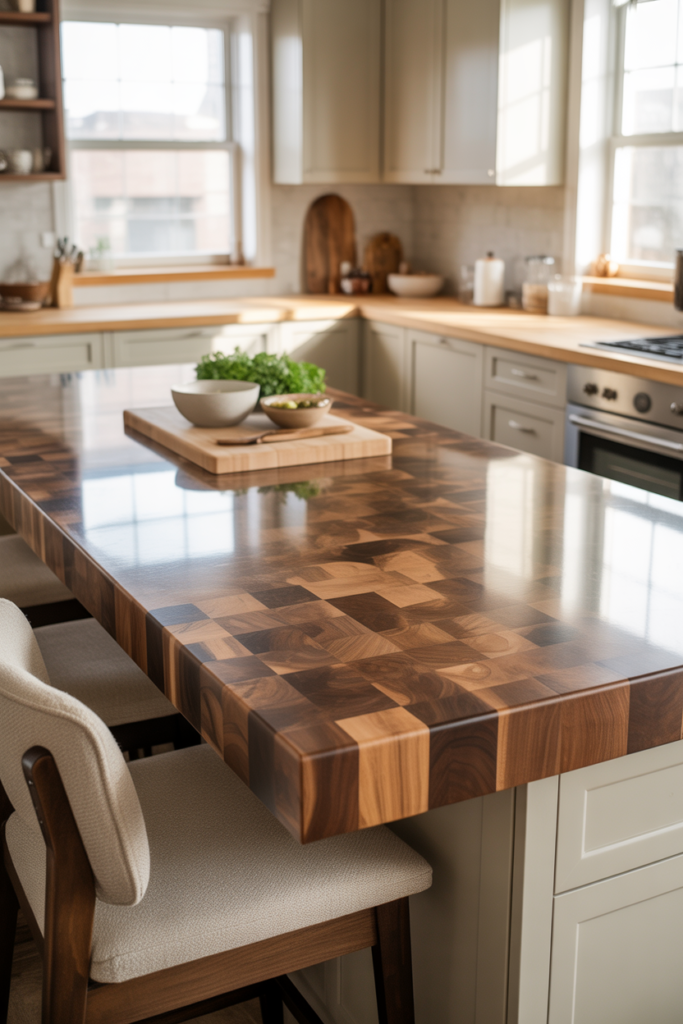
Waterfall cutting block islands are becoming more common in open kitchens. The wood surface continues down the sides of the island instead of stopping at the countertop edge. This creates a cleaner and more custom appearance.
This style works especially well in modern homes with white cabinets and simple color palettes. The natural wood adds warmth and keeps the kitchen from feeling cold or flat.
A large butcher block island also makes entertaining easier. You get extra prep space while guests gather nearby. Some homeowners even combine the cutting surface with hidden storage or built in trash pullouts to simplify cooking.
Designer trends show more people mixing wood with stone instead of using one material everywhere. Homes and Gardens highlighted how butcher block counters are returning in luxury kitchens because they feel warmer and more practical than fully marble surfaces.
This option does require maintenance. Water should not sit on the wood for long periods. Regular oiling also helps prevent drying and cracking.
Still, for homeowners who want a kitchen that feels modern but comfortable, this style offers both function and visual impact.
Pull Out Cutting Block Stations
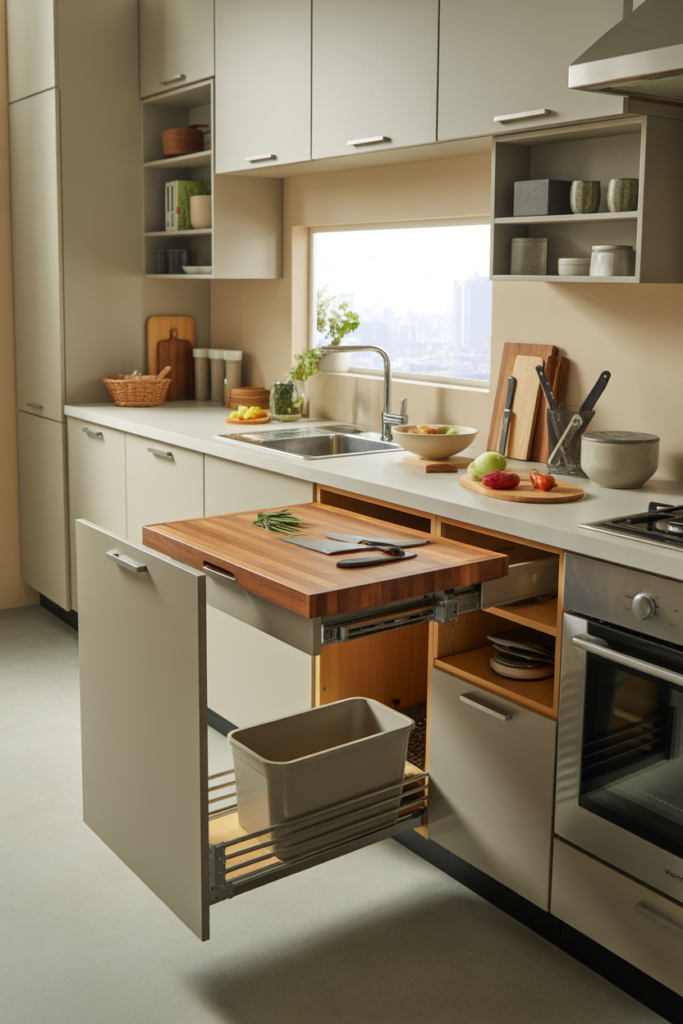
Small kitchens often run out of prep space quickly. That is why pull out cutting block stations have become one of the smartest kitchen upgrades in recent years.
These boards slide out from cabinets when needed and disappear when not in use. This keeps counters cleaner while giving you more room to cook.
Many apartment kitchens now use pull out butcher block trays beneath counters or near sinks. Some even include hidden waste bins below the board so food scraps can be swept directly into the trash.
IKEA inspired modular kitchens helped make this trend more common because people now expect furniture and kitchen storage to do more than one job.
Another advantage is flexibility. You can install a pull out cutting block near the stove for prep work or close to the sink for washing vegetables. And since the board stores inside cabinetry, it does not add visual clutter.
This works especially well in condos, apartments, and narrow galley kitchens where every inch matters.
Rustic Farmhouse Cutting Block Ideas
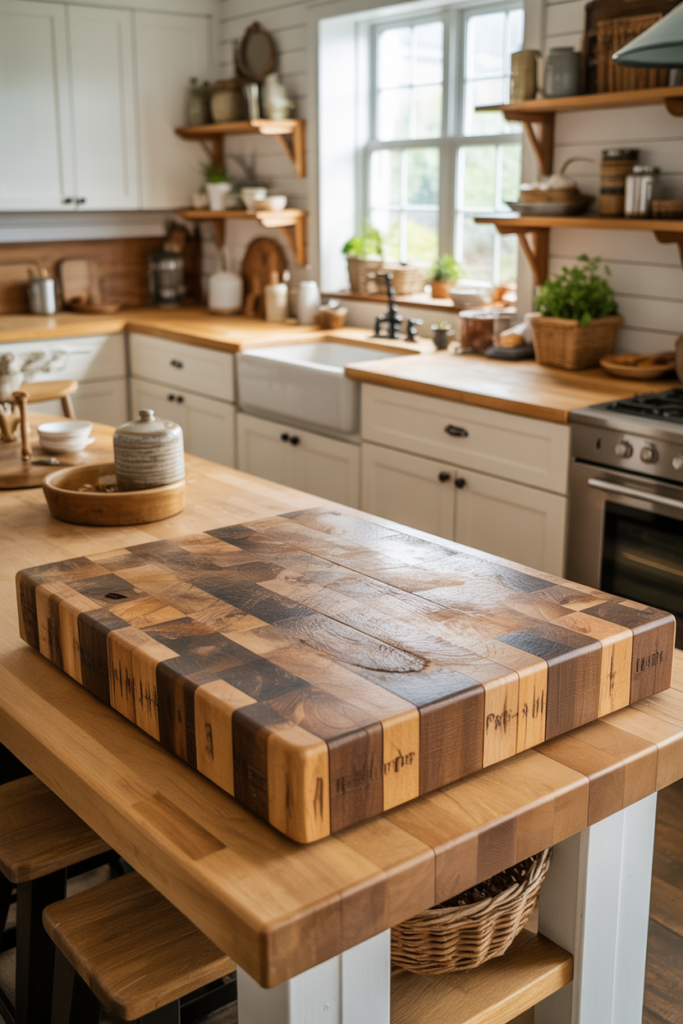
Farmhouse kitchens continue to stay popular because they feel warm and lived in. Rustic cutting blocks fit naturally into this style.
These cutting blocks are usually thick and made from reclaimed wood or distressed hardwood. Saw marks, uneven grain, and natural imperfections give them more character. Instead of looking factory made, they feel handmade and personal.
Large rustic butcher blocks pair well with open shelving, white cabinets, black fixtures, and vintage kitchen decor. Some homeowners even leave oversized cutting blocks permanently on the counter as decorative prep stations.
Reclaimed wood is also appealing for sustainability reasons. Many people want kitchen products made from reused materials instead of newly harvested wood.
Pinterest searches for farmhouse kitchen ideas continue to show strong engagement because the style feels cozy without looking outdated.
The downside is that reclaimed wood must be sealed correctly for food safety. Some older wood treatments may not be food safe. That is why buying from trusted woodworkers matters.
If you want a kitchen that feels relaxed and welcoming, rustic cutting blocks can add texture and warmth without requiring a full renovation.
Built In Sink Cutting Boards
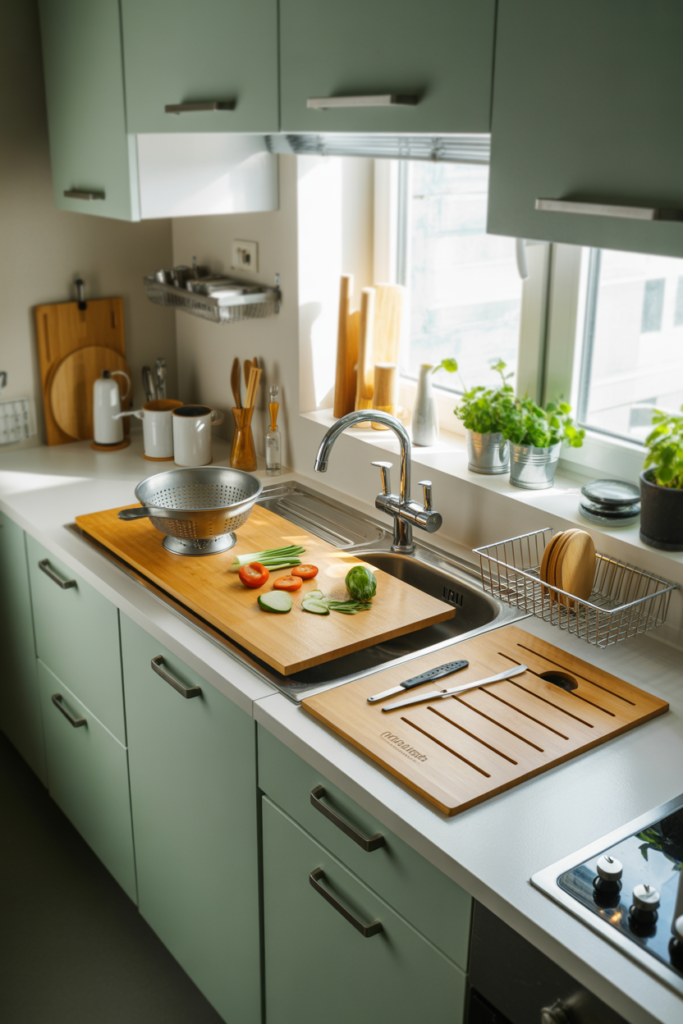
Small kitchens need smarter layouts. Built in sink cutting boards help solve that problem by turning unused sink space into a prep area.
These boards sit across the sink and create an instant workstation for chopping vegetables, trimming meat, or organizing ingredients. Some designs even include colanders and sliding trays.
This setup works well because cleanup becomes easier. Food scraps can go directly into the sink instead of onto counters or floors.
Bamboo is a common material for over sink cutting boards because it resists moisture better than many softer woods. It is also lighter, which makes the board easier to move and store.
Urban apartments and compact homes are driving demand for multifunctional kitchen products in 2026. People want fewer bulky appliances and more flexible workspaces.
Over sink cutting boards also help create cleaner kitchens visually. Instead of spreading prep work across the entire counter, you keep everything contained in one area.
For renters who cannot remodel their kitchen, this is one of the easiest upgrades with immediate results.
Personalized Engraved Cutting Blocks
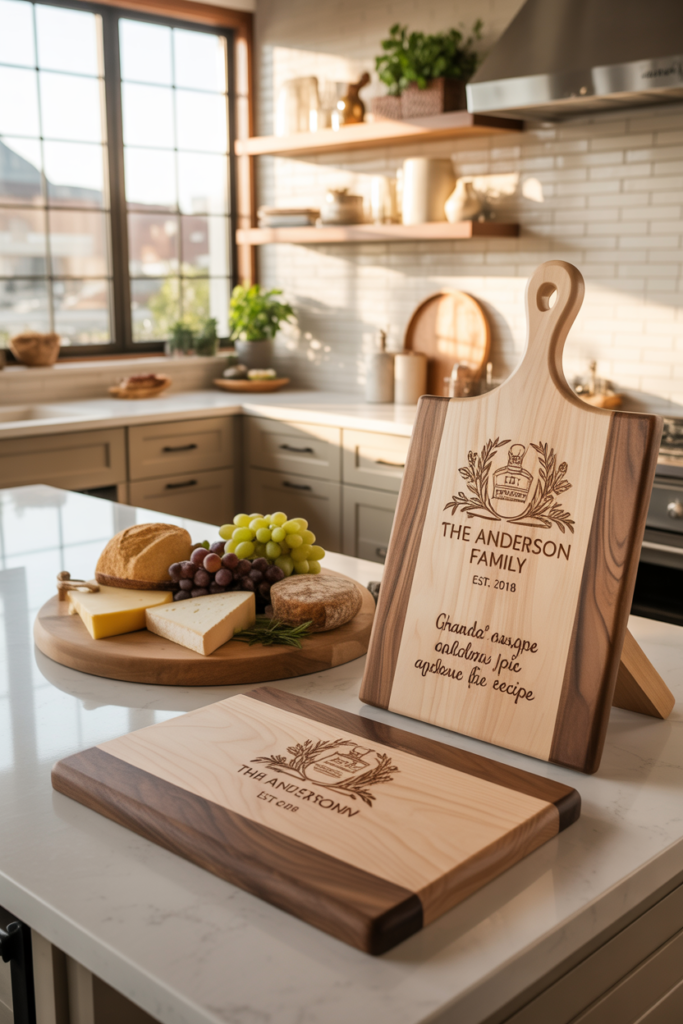
Cutting blocks are now used as decor pieces as much as cooking tools. Personalized engraved boards are a big part of that trend.
Family names, wedding dates, recipes, and monograms are common engraving choices. Some people display them on counters or open shelves when they are not in use.
Social media platforms and handmade marketplaces helped increase demand for custom kitchen products. Personalized boards are now popular gifts for weddings, housewarmings, and holidays because they feel more thoughtful than standard kitchen tools.
Many engraved cutting blocks also double as charcuterie serving boards. That crossover between food prep and presentation has become more common in modern kitchens.
Walnut and maple remain the most popular engraving woods because they show detail clearly while staying durable.
The main thing to remember is that deep engraving can trap moisture and food particles if the board is heavily used for cutting. Many people solve this by using engraved boards mostly for serving or display.
Reversible Cutting Block Designs
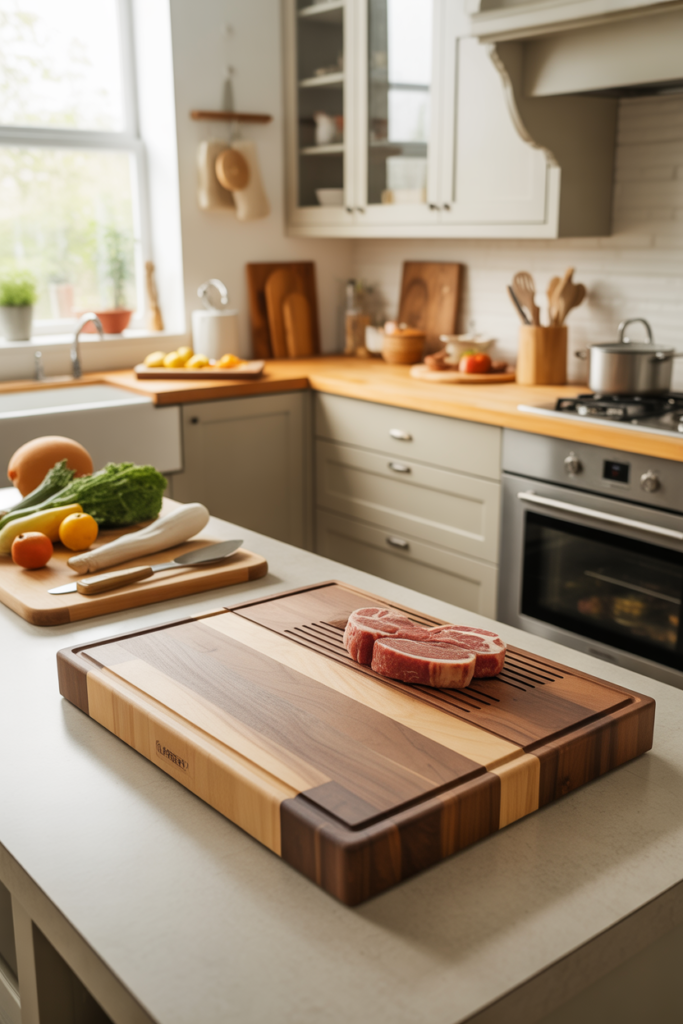
Reversible cutting blocks solve a simple but common kitchen problem. You need separate prep surfaces for different foods, but you may not have space for multiple boards.
One side usually stays flat while the other includes juice grooves for meat or fruit. This gives you more flexibility without adding clutter to the kitchen.
The USDA recommends separating raw meat from vegetables and ready to eat foods to help prevent cross contamination. Reversible boards make that easier because each side can have a dedicated use.
Another advantage is durability. Since both sides are usable, wear spreads across the board more evenly. This helps the cutting block last longer.
Large reversible boards are especially useful for family kitchens where multiple meals are prepared every day.
Some people even label the sides lightly underneath so everyone in the household knows which side should be used for meat and which side should stay for produce.
It is a simple idea. But it solves real kitchen problems without taking up extra storage space.
Bamboo Cutting Block Ideas
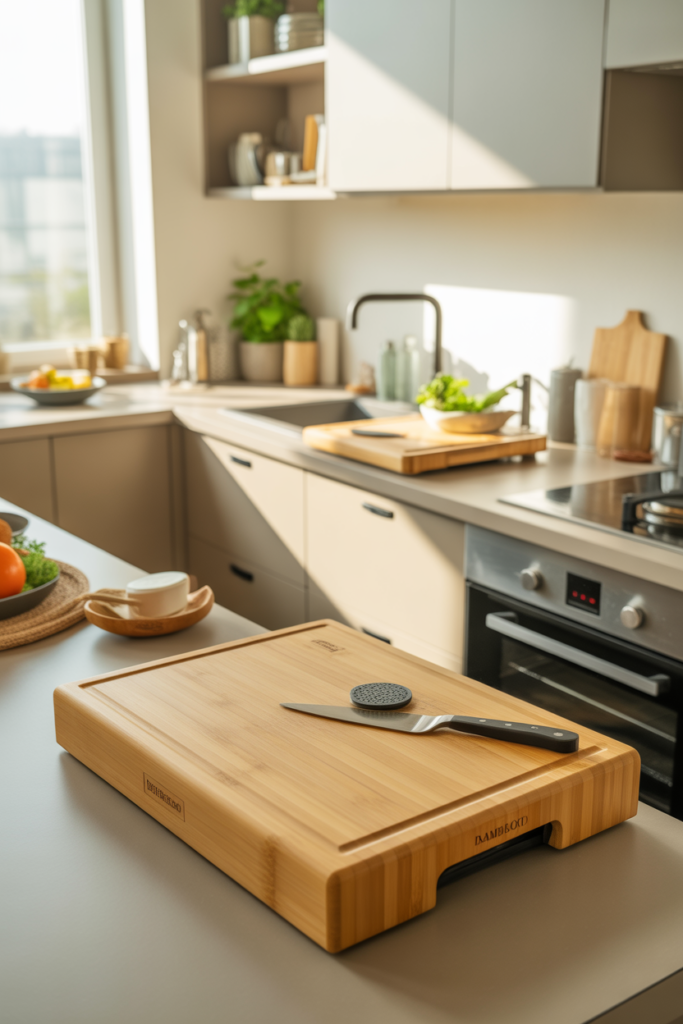
Bamboo cutting blocks continue to grow in popularity because they are affordable, lightweight, and marketed as eco friendly kitchen tools.
Bamboo absorbs less moisture than some softer woods, which helps reduce warping. The USDA also notes that bamboo surfaces resist moisture well when properly maintained.
Many homeowners like bamboo because it has a clean and modern appearance that fits minimalist kitchens. It also costs less than walnut or thick end grain maple boards.
But bamboo is not perfect. Since bamboo fibers are harder and denser, some chefs feel they can dull knives faster than softer hardwoods. Online cooking discussions and Reddit users often mention this tradeoff when comparing bamboo to maple cutting boards.
Still, bamboo works very well for lightweight prep stations, over sink cutting boards, and compact kitchens where portability matters.
For best results, choose a thicker bamboo board with non slip feet. Thin bamboo boards may crack or warp more easily over time.
If your budget is limited but you still want a modern and durable cutting surface, bamboo is one of the best value options available.
Black Walnut Luxury Cutting Blocks
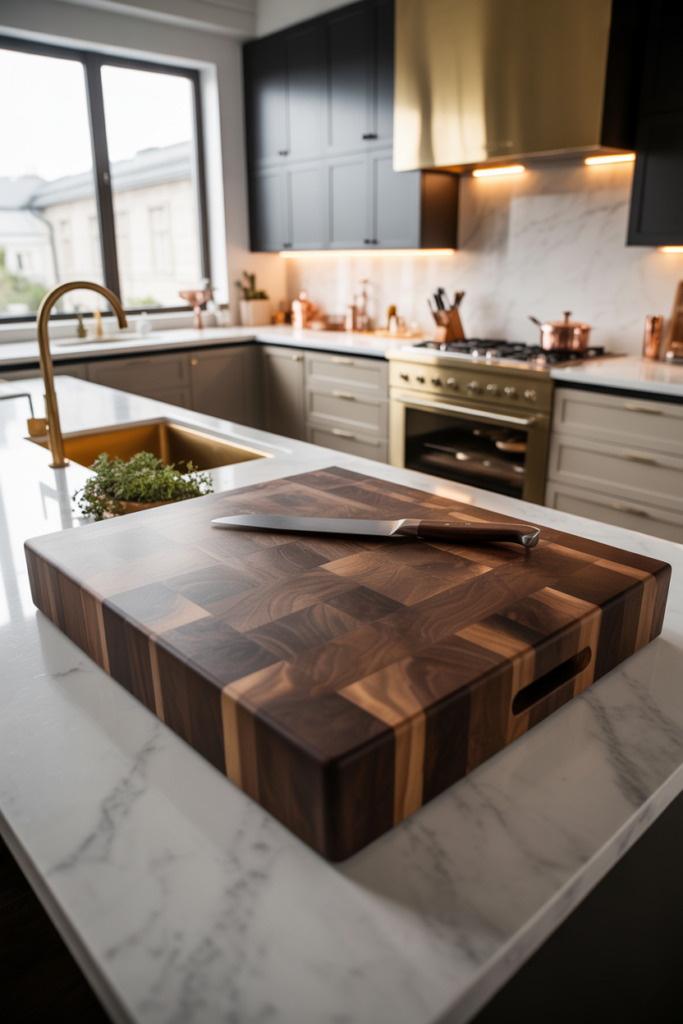
Black walnut cutting blocks bring a richer and more dramatic look to kitchens. The darker wood tone stands out against white cabinets, marble counters, and brass hardware.
This style feels more custom and high end compared to lighter woods. That is why walnut butcher blocks are common in luxury kitchen designs and chef inspired spaces.
Walnut also hides knife marks better than lighter woods. Small scratches blend naturally into the grain, which helps the board maintain its appearance longer.
Many homeowners pair walnut cutting blocks with matte black fixtures or warm lighting to create a softer and more upscale atmosphere.
The downside is cost. Walnut boards are usually more expensive than bamboo or maple. They also need regular oiling to maintain their deep color.
But if appearance matters just as much as function in your kitchen, walnut remains one of the most attractive cutting block materials you can choose.
DIY Epoxy Resin Cutting Block Ideas
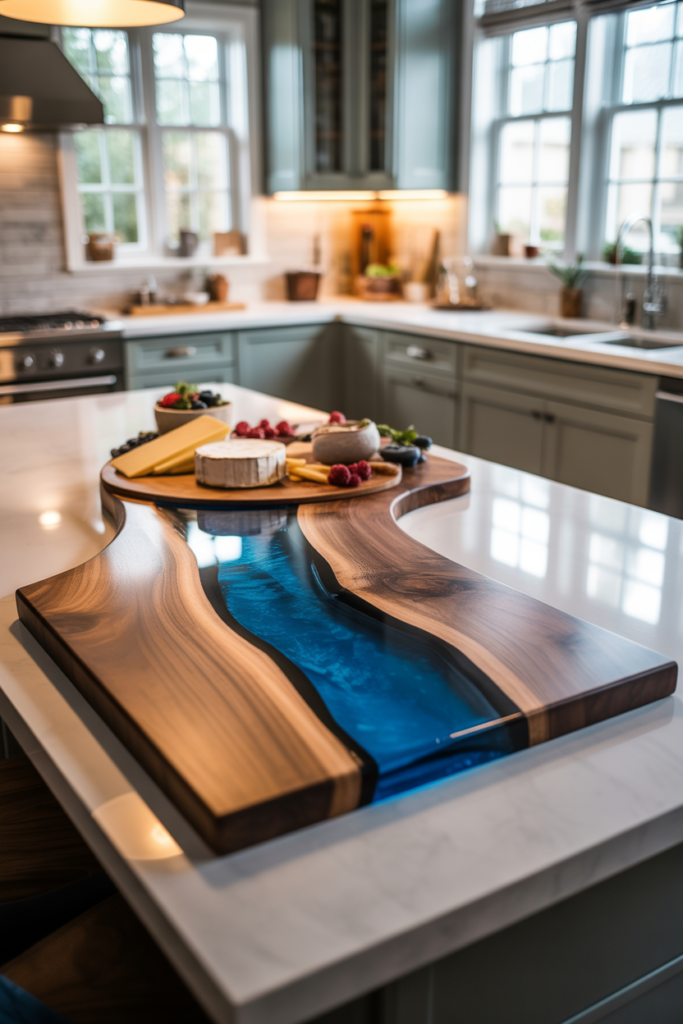
Epoxy resin cutting boards became popular through woodworking videos on TikTok and YouTube. River style designs with colored resin and natural wood create a bold and artistic look.
These boards often work best as serving trays or charcuterie boards instead of heavy duty cutting surfaces. And here is why that matters. Some epoxy surfaces can scratch over time with constant knife use.
If you want to make one yourself, always use food safe epoxy products designed for kitchen use. Cheap craft resin may not be safe for food contact.
Walnut and olive wood are common choices for epoxy boards because the natural grain contrasts well with colored resin.
DIY epoxy cutting blocks are popular because they let homeowners create custom patterns and colors that match their kitchens. Some people use blue river designs. Others choose black resin for a more modern appearance.
The process takes time though. Sanding, curing, and sealing properly are important if you want the board to last.
For people who enjoy woodworking or custom decor projects, epoxy cutting boards offer more creativity than traditional butcher blocks.
Mobile Rolling Butcher Block Carts
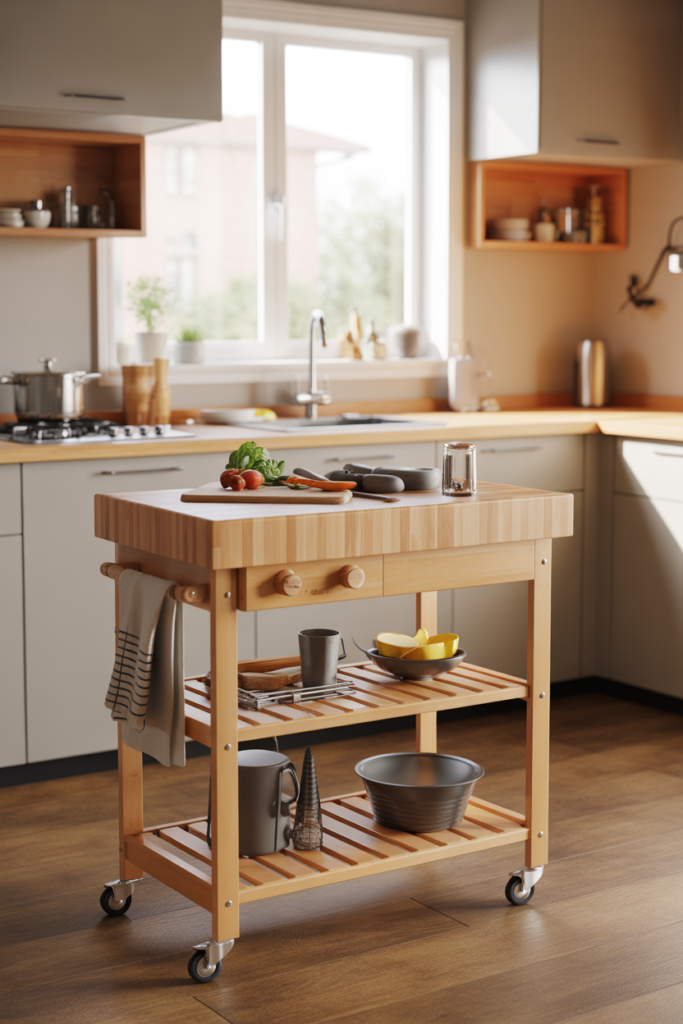
Rolling butcher block carts are useful because kitchens rarely have enough prep space. A mobile cart adds extra room exactly where you need it.
These carts usually combine a cutting surface with shelves, drawers, or towel racks underneath. Some also include locking wheels so the cart stays stable while chopping.
Renters especially like rolling butcher block carts because they add function without requiring permanent installation.
This trend also connects with the growing demand for multifunctional furniture. People want kitchen products that save space and serve more than one purpose.
A rolling butcher block cart can work as:
- a prep station
- coffee bar
- baking area
- serving cart
- portable island
Smaller kitchens benefit the most because the cart can move out of the way after cooking.
Maple tops remain popular because they are durable and easier to maintain than softer woods.
If your kitchen feels crowded but remodeling is not possible, a rolling butcher block cart is one of the simplest upgrades you can make.
Minimalist Scandinavian Cutting Blocks
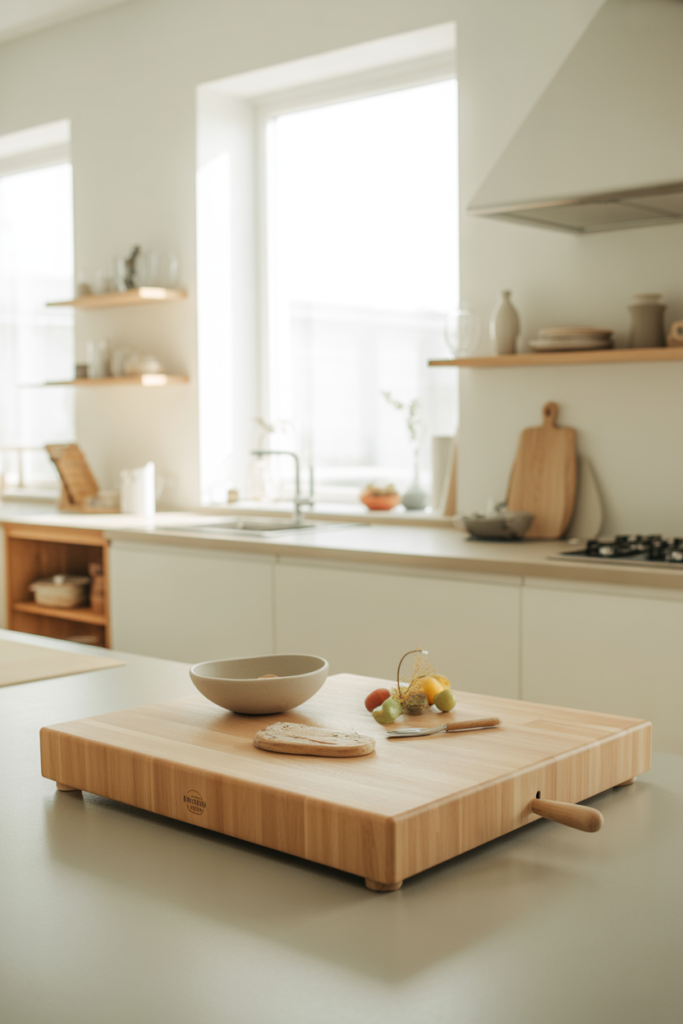
Scandinavian kitchen design focuses on simplicity, natural materials, and calm spaces. Minimalist cutting blocks fit perfectly into that style.
These boards usually feature light woods like ash, maple, or beech with clean edges and simple shapes. The goal is function without visual clutter.
Minimalist cutting blocks work well in kitchens with neutral colors, soft lighting, and open counters. Instead of becoming decorative centerpieces, they blend naturally into the space.
Many Scandinavian inspired kitchens also use fewer but better quality kitchen tools. A thick wooden cutting block can replace several cheap plastic boards and improve the overall appearance of the kitchen at the same time.
Another reason people like this style is versatility. A simple wood board can work for meal prep, serving bread, or displaying fruit on the counter.
This approach may feel plain to some homeowners. But for people who prefer calm and organized kitchens, minimalist cutting blocks offer a clean and timeless solution.
Food Safety and Maintenance Tips
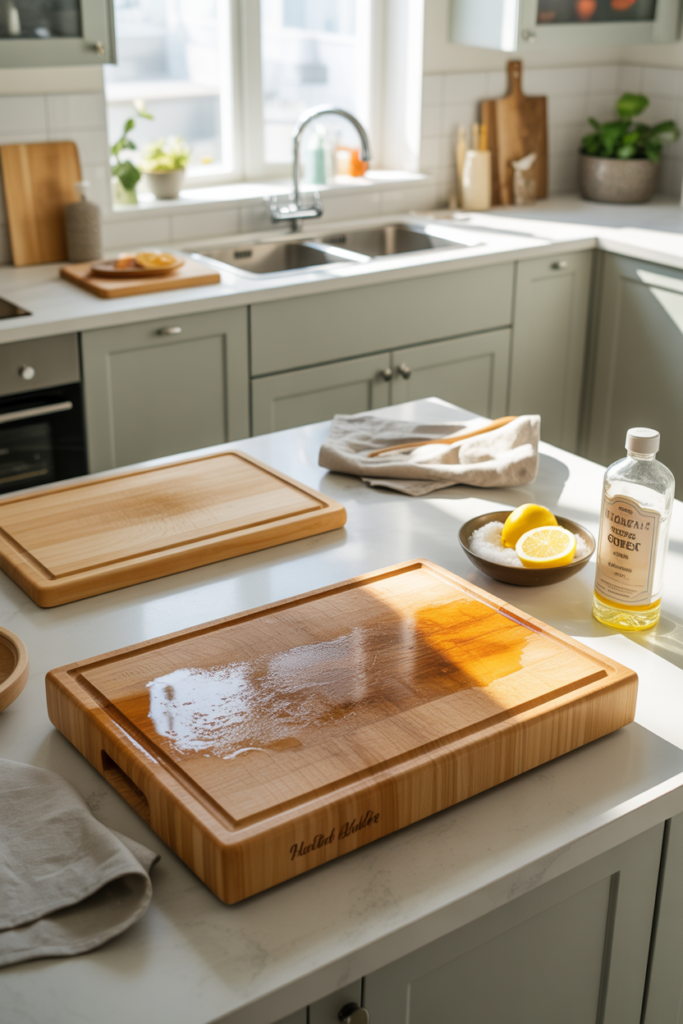
A good cutting block can last for years if you maintain it properly. Without care, even expensive boards can crack, stain, or collect bacteria.
The first rule is simple. Never let water sit on wood for long periods. Wash the board with mild soap and warm water, then dry it immediately with a towel.
The USDA recommends replacing cutting boards with deep grooves because bacteria can collect inside damaged areas. That matters especially for boards used with raw meat.
Regular oiling also helps prevent drying and splitting. Food safe mineral oil is the most common choice because it protects wood without becoming sticky. Many homeowners apply oil once every few weeks depending on usage.
Hard maple remains one of the most recommended woods for food prep surfaces because of its durability and closed grain structure. Legal Information Institute
Avoid putting wooden cutting blocks in dishwashers. High heat and moisture can warp the wood quickly.
For deeper cleaning, some people use diluted vinegar or lemon and salt scrubs. These methods help reduce odors from garlic, onions, or fish.
You should also rotate your cutting block occasionally so wear spreads more evenly across the surface.
And here is something many people forget. Maintenance affects appearance too. A well oiled butcher block develops a richer color and smoother finish over time.
How to Choose the Right Cutting Block for Your Kitchen
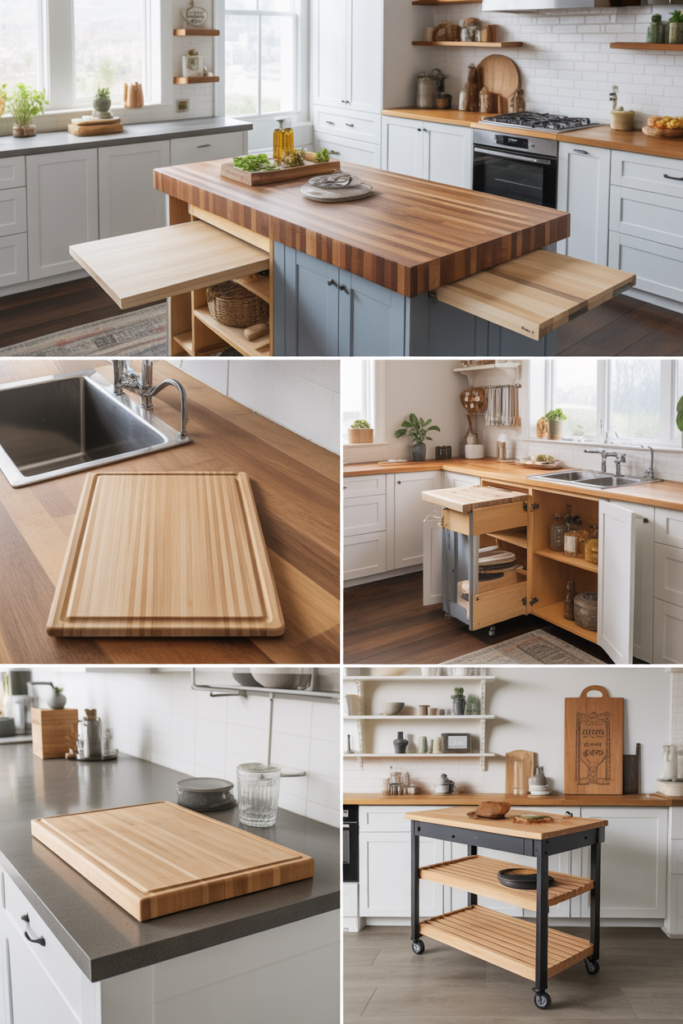
The best cutting block depends on how you cook and how much space you have.
If you cook daily and use sharp knives, end grain maple or walnut boards are worth considering because they last longer and feel gentler on blades.
Small kitchens benefit more from compact solutions like pull out stations, over sink boards, or rolling carts. Large farmhouse kitchens can handle oversized butcher blocks or island prep stations more easily.
Budget matters too. Bamboo offers good value for beginners. Walnut gives a more premium appearance but costs more. Reclaimed wood adds character but may require extra maintenance.
Think about storage before buying. Thick butcher blocks are heavy and difficult to move. Lightweight bamboo boards are easier to store in smaller homes.
You should also decide how the board will be used. Decorative serving boards need different features than daily prep stations. A charcuterie board may focus more on appearance, while a heavy duty chopping block needs durability first.
Families who cook large meals often benefit from reversible boards because they help separate foods safely without taking up more space.
There is no perfect cutting block for everyone. The best choice is the one that fits your cooking habits, kitchen size, and maintenance routine.
Conclusion
Cutting blocks have changed a lot in recent years. They are no longer simple kitchen accessories hidden inside cabinets. Today, they help shape how kitchens look, feel, and function.
Some people need compact prep stations for small apartments. Others want large butcher block islands that become the center of the kitchen. And many homeowners now care more about food safety, sustainability, and long lasting materials than ever before.
The good news is that there are cutting block ideas for every type of kitchen and budget. From rustic farmhouse styles to sleek Scandinavian designs, the right board can improve both cooking and organization.
Start with the problems in your kitchen first. Then choose a cutting block that solves them while fitting your style and cooking habits.