15 Extension Patio Roof Ideas | Stylish Outdoor Roof Designs
Introduction
Your patio should not sit empty every time it rains. But for many homes, that is exactly what happens. You step outside, see the weather, and go right back in. The space feels wasted.
Most people struggle with two things. First, they want protection from rain or harsh sun. Second, they still want the space to look good and feel open. Choosing the wrong roof can block light, trap heat, or cost more than expected.
This guide fixes that. You will see 15 extension patio roof ideas that actually work in real homes. You will learn which materials last longer, which designs fit small spaces, and where you can save money without regret. You will also see what mistakes to avoid before you build anything.
If you are searching for extension patio roof ideas, covered patio ideas, or outdoor roof designs, you are in the right place. By the end, you will know exactly what fits your space and budget.
1. Lean To Patio Roof
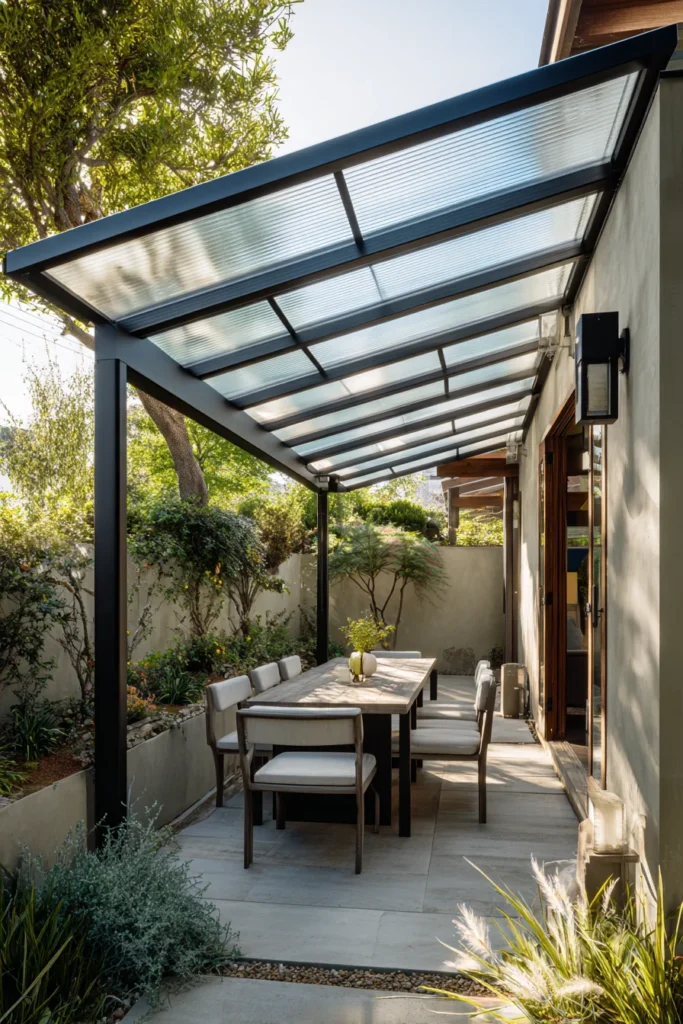
A lean to patio roof is one of the most practical and widely used options. It connects directly to the wall of your house and slopes downward, which helps rainwater flow off instead of collecting on top. This matters a lot in places where rain is frequent. The structure is simple, so installation is faster and costs stay lower compared to complex designs. Many homeowners choose this when they want quick results without dealing with heavy construction.
This design also works well for small patios or narrow garden spaces. You can cover the area without making it feel closed in. Materials like polycarbonate or metal sheets are often used on top to improve durability. If you are starting from scratch and want something low risk, this is often the safest choice.
2. Pergola Roof with Polycarbonate Cover
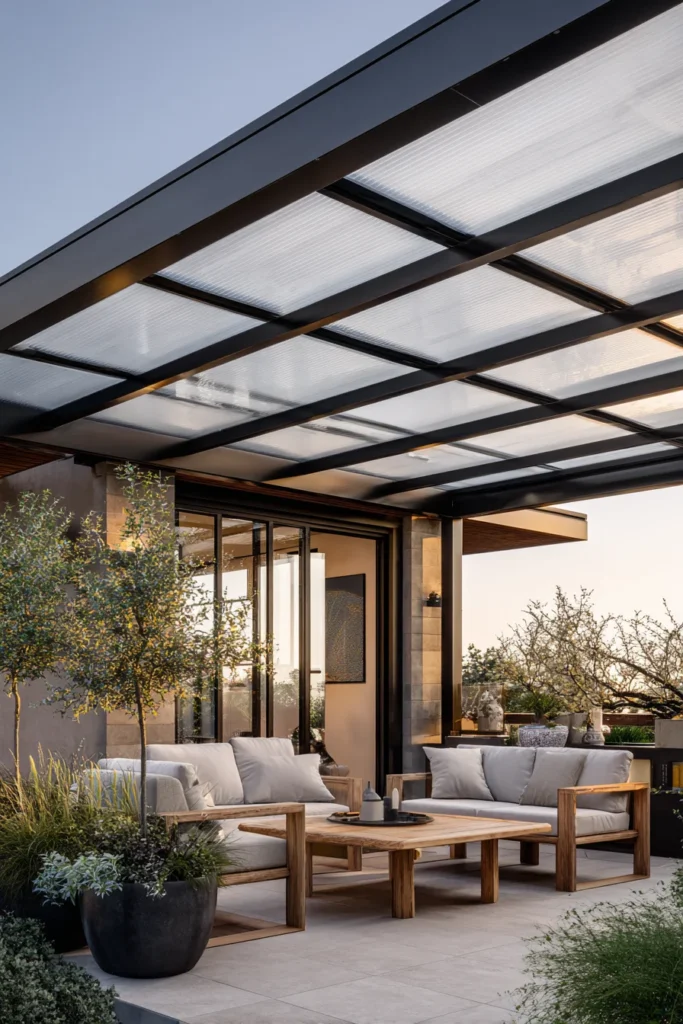
A pergola on its own looks nice but does not protect you from rain. Adding a polycarbonate cover changes how the space works. You still get sunlight, but rain stays out. That means you can sit outside even during light showers. Polycarbonate sheets are also lightweight and easy to install, which helps reduce labor costs.
Another benefit is UV protection. Many manufacturers state that polycarbonate can block a large percentage of harmful rays, which helps protect furniture and skin. This setup is great if you want a modern outdoor space that stays bright during the day without feeling exposed.
3. Glass Roof Extension
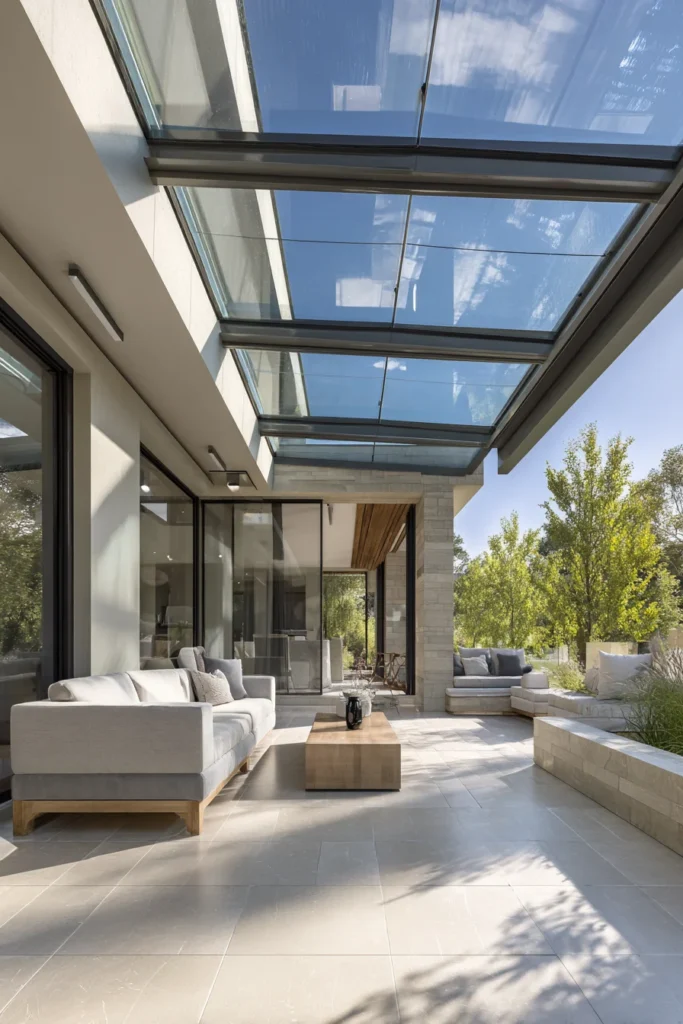
A glass roof extension creates a clean and high end look. It lets in the most natural light, which makes your patio feel larger and more open. This is a popular choice for people who want an indoor outdoor feel. You often see this design in modern homes or conservatory style builds.
However, there are trade offs. Glass can trap heat during summer, which may make the space uncomfortable without proper ventilation. It also costs more than most other materials. Even with these downsides, many homeowners choose glass because it improves the overall look of the property and increases perceived value.
4. Solid Timber Roof
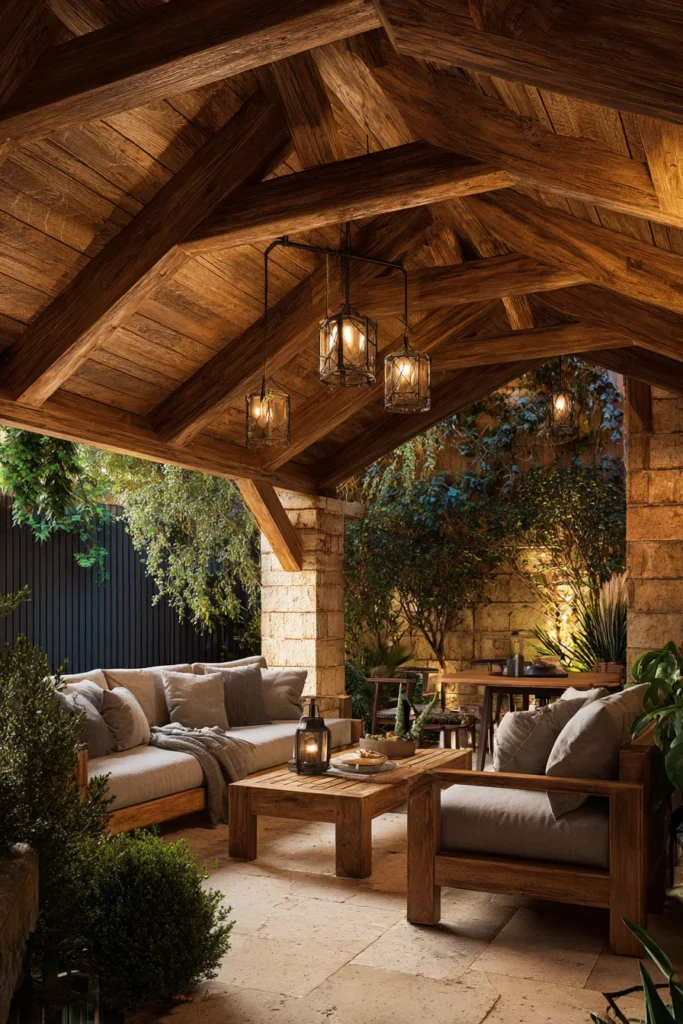
A solid timber roof gives your patio a warm and cozy feel. It blocks sunlight completely, which helps keep the area cool during hot days. It also provides better insulation compared to lighter materials. This makes it a good choice if you want your patio to feel like an extra living space.
Timber does need care. You will have to treat it regularly to protect it from moisture and insects. But if maintained well, it can last for many years. This option works best for people who like natural materials and do not mind some upkeep.
5. Aluminium Patio Roof
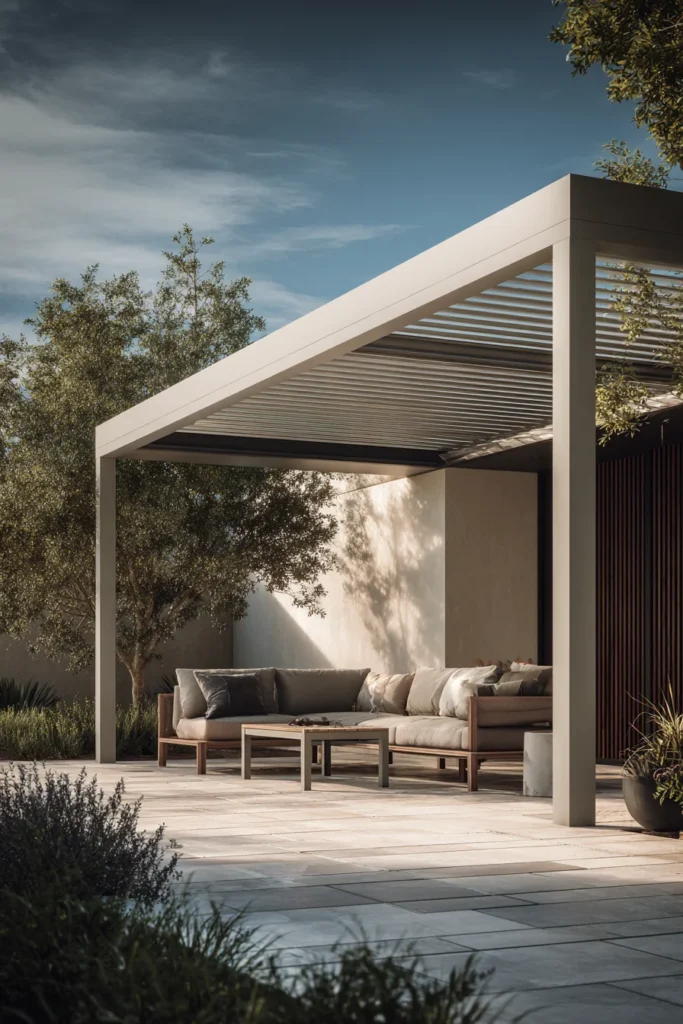
Aluminium patio roofs are built for long term use. They do not rust and can handle different weather conditions without much damage. This makes them a strong option for both rainy and sunny climates. They are also lightweight, which helps during installation.
Another advantage is low maintenance. You do not need to paint or treat aluminium often. A simple clean now and then is enough. This makes it ideal for homeowners who want durability without ongoing effort. Over time, the higher upfront cost can balance out because you spend less on repairs.
6. Retractable Awning Roof
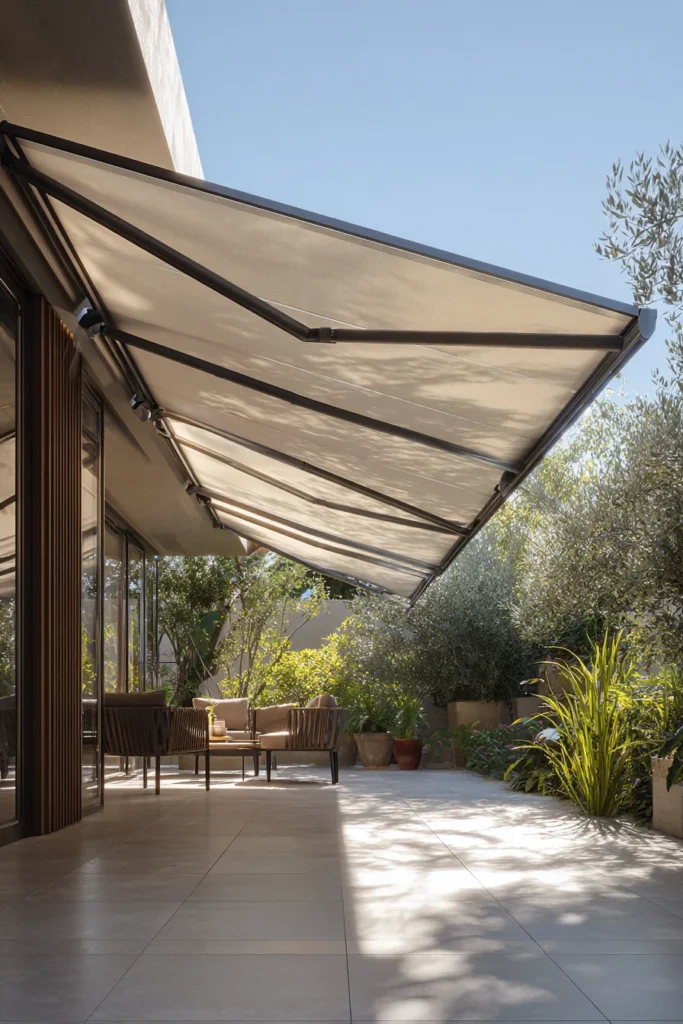
A retractable awning gives you flexibility that fixed roofs cannot offer. You can open it when you want sunlight and close it when you need shade or protection from rain. This is especially useful in areas where the weather changes quickly throughout the day.
It is also easier to install compared to permanent structures. Many systems can be mounted directly onto walls. However, it is not as strong as solid roofs, especially in heavy wind or storms. This option is best for those who value convenience and control over long term durability.
7. Louvered Roof System
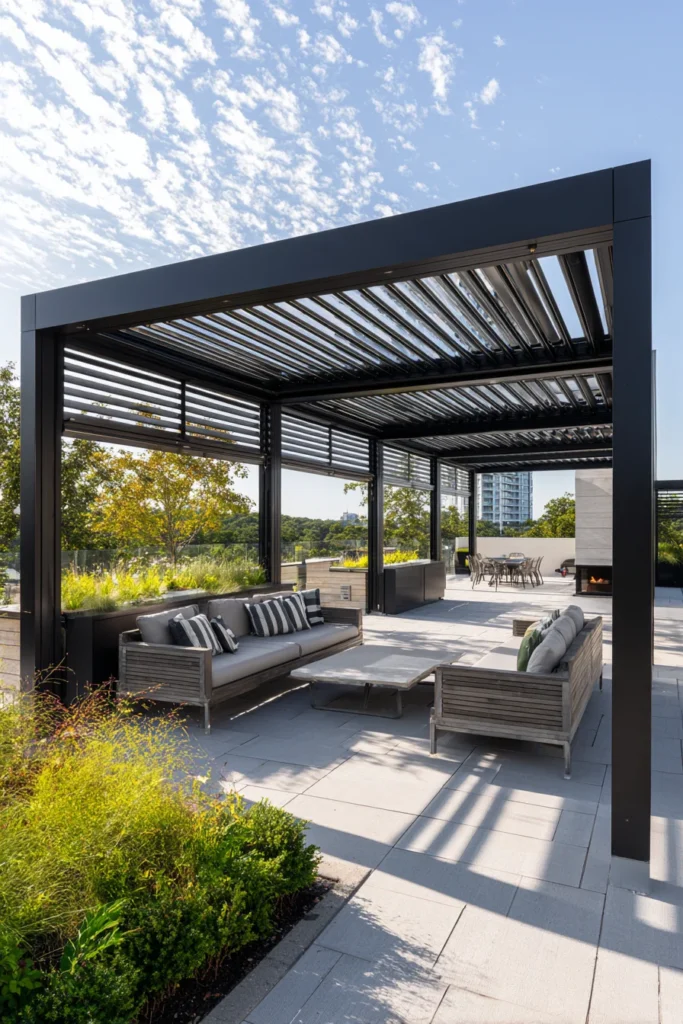
A louvered roof system is a more advanced option. It features slats that can be adjusted to control light, shade, and airflow. Some systems are manual, while others use motors and remote controls. This allows you to adapt the space based on the weather at any moment.
This type of roof is often used in modern outdoor designs. It creates a sleek and functional space that feels high end. The main drawback is cost, as it is one of the more expensive options. But for those who want both comfort and technology, it offers a strong solution.
8. Gable Roof Extension
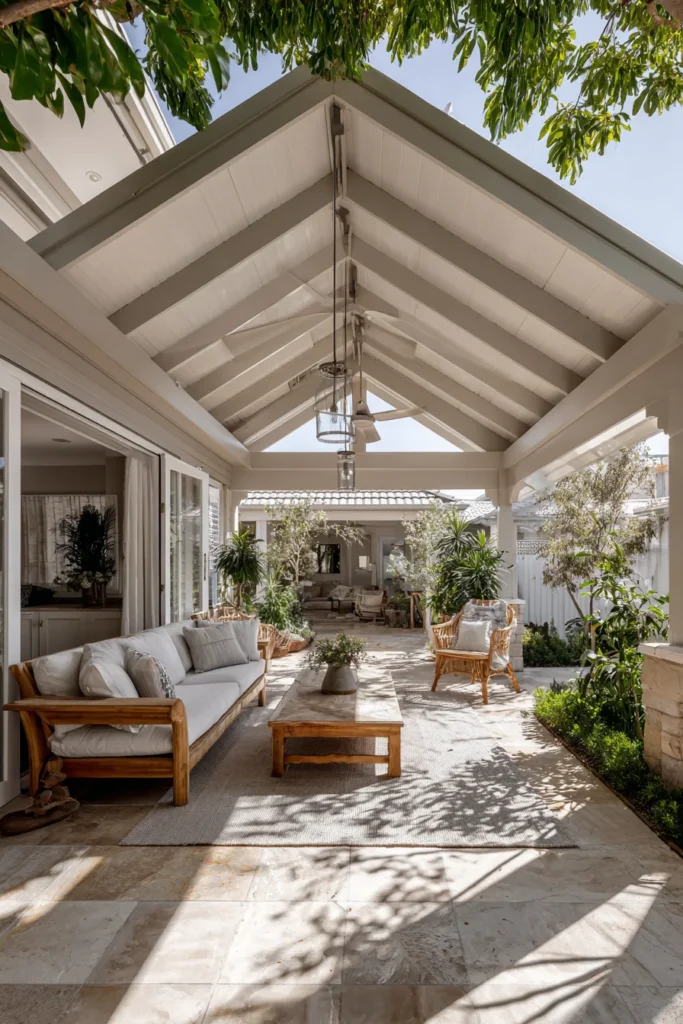
A gable roof has a pitched shape with a peak in the center. This creates more vertical space, which makes the patio feel open and less crowded. It also allows better airflow, which helps during warmer days.
This design is often used for larger patios or outdoor living areas. It works well if you plan to add lighting or fans, since the extra height gives more room. It may cost more than simpler designs, but the added comfort and visual impact make it worth considering.
9. Fabric Canopy Roof
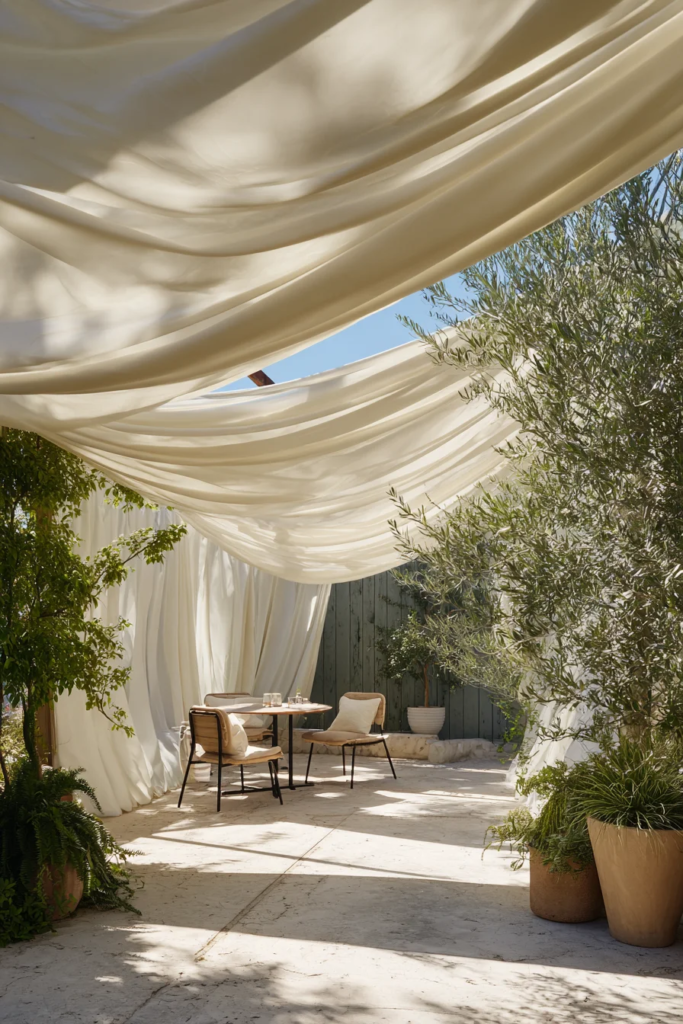
A fabric canopy is one of the easiest ways to cover a patio. It is lightweight, affordable, and simple to install. Many options are available in different colors and styles, which helps match your outdoor design.
However, fabric does not last as long as solid materials. It can wear out due to sun exposure or heavy rain. This means you may need to replace it after a few years. It works best as a temporary or budget friendly solution rather than a permanent one.
10. Green Roof
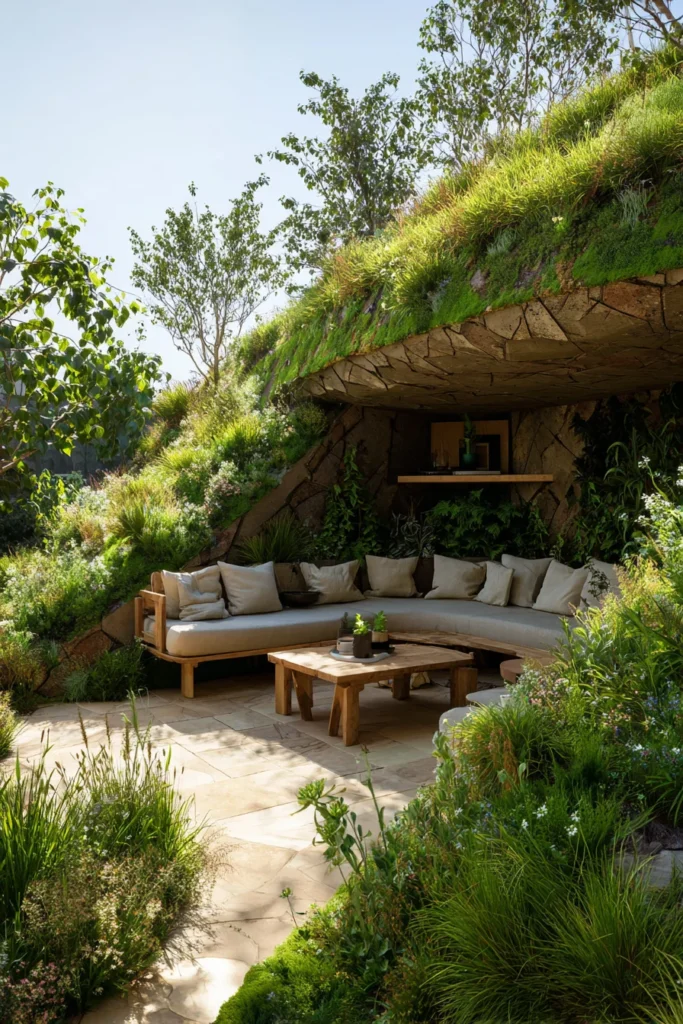
A green roof uses plants and vegetation on top of the structure. This adds insulation and helps reduce heat. It can also improve air quality and create a more natural look in your garden.
This type of roof needs proper support and waterproofing. It also requires regular maintenance to keep the plants healthy. While it may not be the easiest option, it stands out for its environmental benefits and unique appearance.
11. Bamboo Roof Design
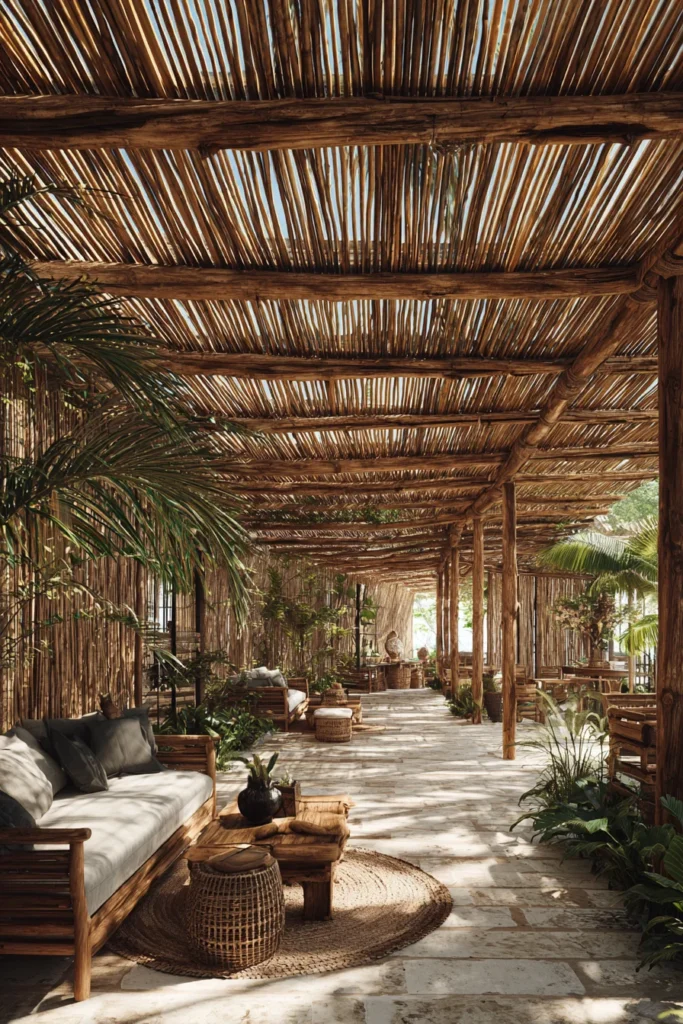
A bamboo roof gives your patio a relaxed and natural feel. It is often used in tropical style designs and works well in casual outdoor spaces. The material is lightweight and easy to work with.
Bamboo is not as strong as metal or wood, so it is better suited for areas with mild weather. It is a good choice if your main goal is style rather than long term durability. Pairing it with another layer can improve its performance.
12. Metal Sheet Roofing
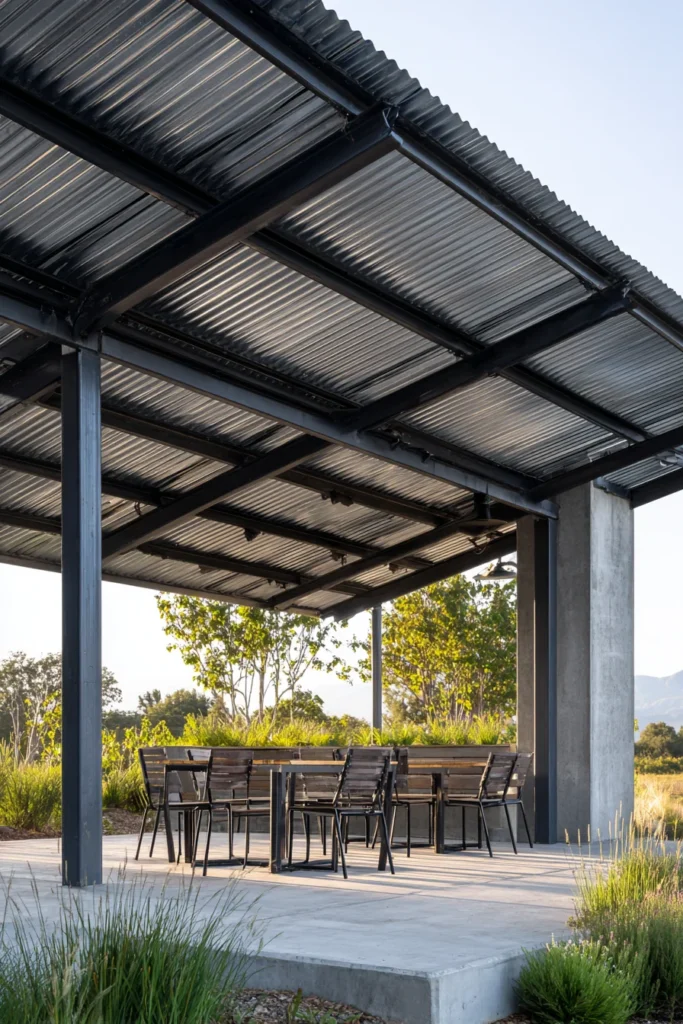
Metal sheet roofing is a strong and cost effective option. It handles rain very well and lasts for many years. This makes it a good fit for climates where weather protection is the main concern.
It does have one drawback. Rain hitting metal can create noise, which some people find annoying. You can reduce this by adding insulation underneath. Overall, it is a practical choice that focuses on function over style.
13. Thatched Roof Extension
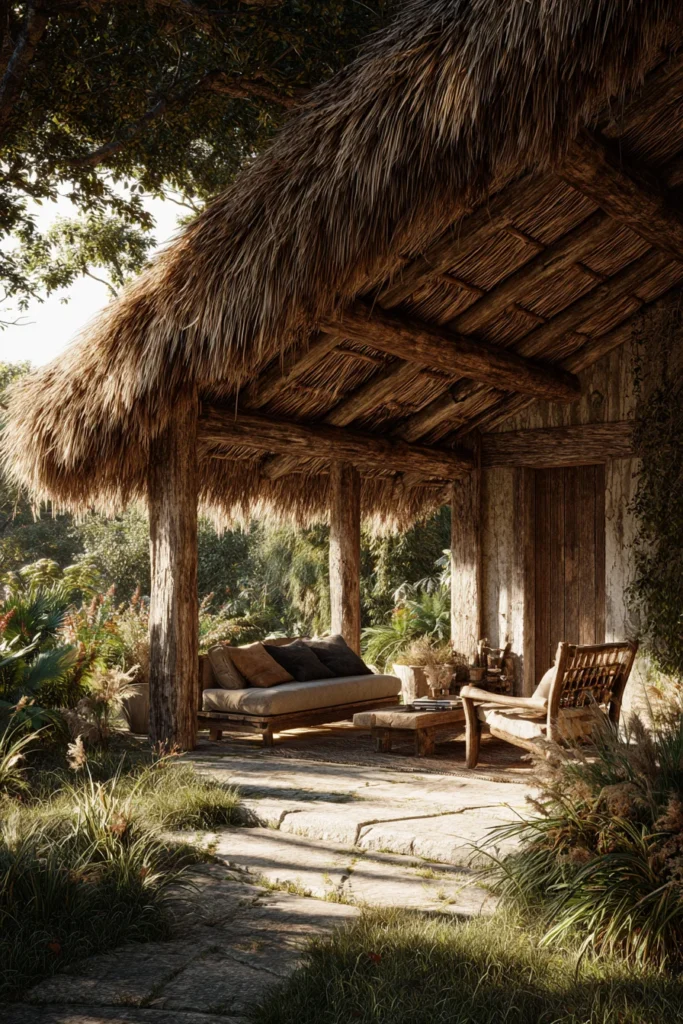
A thatched roof gives a traditional and rustic look. It is often seen in countryside homes and adds a unique touch to outdoor spaces. The natural materials create a soft and warm appearance.
However, it requires regular maintenance to stay in good condition. It is also less common in modern homes. This option works best if you want a distinct style and are willing to maintain it properly.
14. Solar Panel Patio Roof
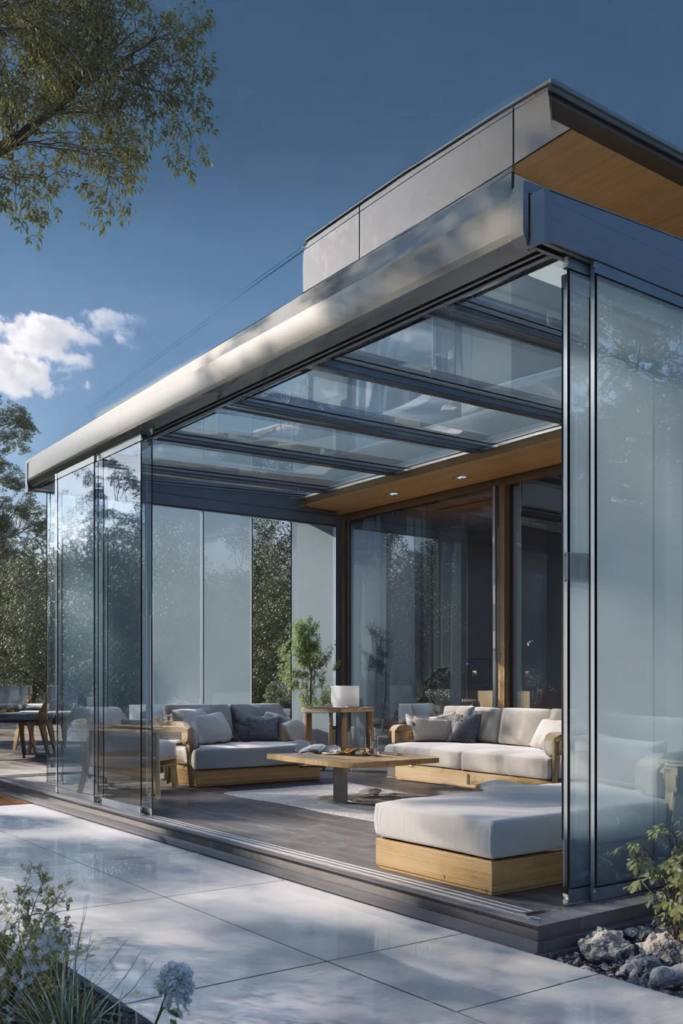
A solar panel roof does more than provide shade. It also generates electricity for your home. This can help reduce energy bills over time. It turns your patio into a functional and eco friendly space.
The upfront cost is higher, but the long term savings can make up for it. It is a smart option if you are already thinking about renewable energy. It adds both value and purpose to your outdoor area.
15. Combination Roof Design
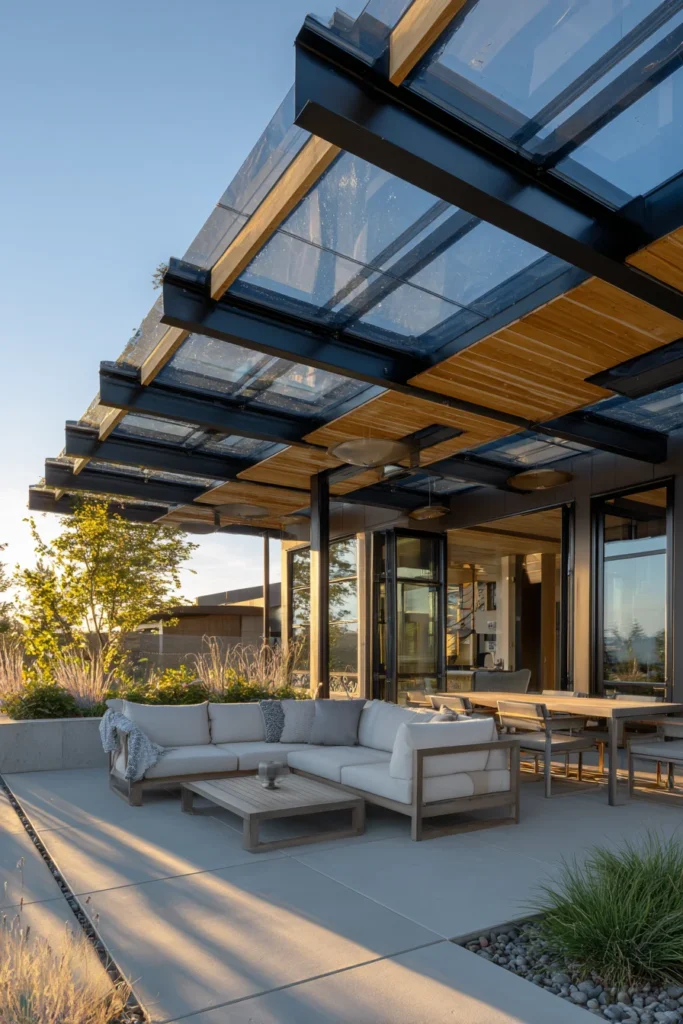
A combination roof uses two or more materials together. For example, you might use glass panels with a metal frame or wood with polycarbonate sections. This allows you to balance light and shade while creating a custom look.
This option gives you more freedom in design. You can adjust it based on your needs and preferences. It may require more planning, but the result is often more functional and visually appealing than single material designs.
Conclusion
A patio roof is not just about covering a space. It changes how you use your home. The right design can give you shade, protection, and a place to relax in any season.
You have seen a range of extension patio roof ideas, from simple and budget friendly to more advanced and long lasting options. Each one has its strengths and limits. The key is to match the design with your climate, budget, and daily needs.
Take your time before making a decision. Think about how often you will use the space and what kind of comfort you want. A well planned patio roof can turn an unused area into one of the best parts of your home.