16 Decor Ideas for Small Bedroom With No Windows
Living in a small bedroom with no windows can feel heavy. The room stays dark all day. It can feel closed in even when it is clean and organized. You may also notice your mood drops in spaces like this.
The good news is that design can fix a lot of this. You do not need a full renovation. Small changes in light, color, and layout can completely shift how the room feels.
In this guide, you will learn 16 decor ideas for small bedroom with no windows. These ideas focus on lighting, space tricks, and simple styling that works in real homes in 2026. You can apply them in rentals, studios, or basement rooms without major cost.
You will see how to make your room feel brighter, bigger, and more comfortable using smart design choices.
Why a Small Bedroom With No Windows Feels Dark
A room without windows feels different because your brain expects natural light. Light helps your mind understand space. When it is missing, the room feels smaller than it really is.
This effect is linked to how humans read depth and brightness. Brighter spaces feel open. Dark spaces feel closer and tighter. That is why even a clean room can feel uncomfortable without lighting balance.
Designers often fix this using artificial light, color choice, and reflection. These tools replace what natural light normally does. They help your eyes “build” the room in a better way.
This is why small design changes can make a big difference. It is not just decoration. It changes how you feel inside the space.
1. Use layered lighting to replace natural light
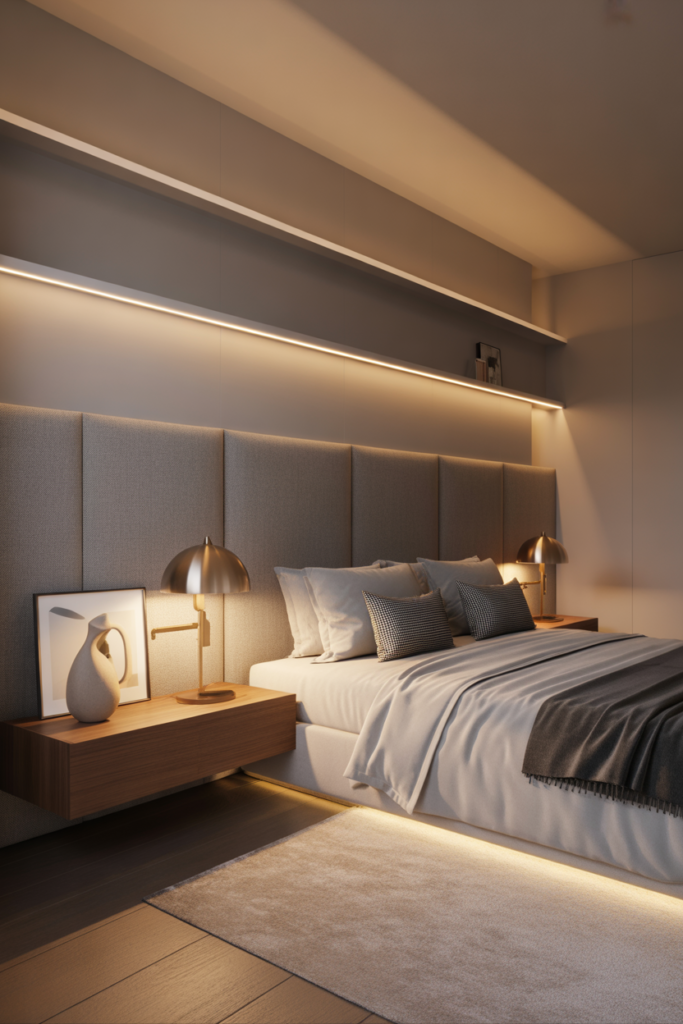
Lighting is the most important fix for a windowless bedroom. One light in the ceiling is not enough. It creates shadows and makes corners look darker.
You need layers of light. Use a main ceiling light for general brightness. Add side lamps near the bed. Add soft accent lights behind furniture.
This creates depth. It makes the room feel active instead of flat. Warm white light works best for comfort. Cooler light can feel too harsh at night.
Many modern rooms use LED strips behind headboards or shelves. This is common in small apartment design and works well in 2026 setups.
2. Choose light colors that reflect brightness
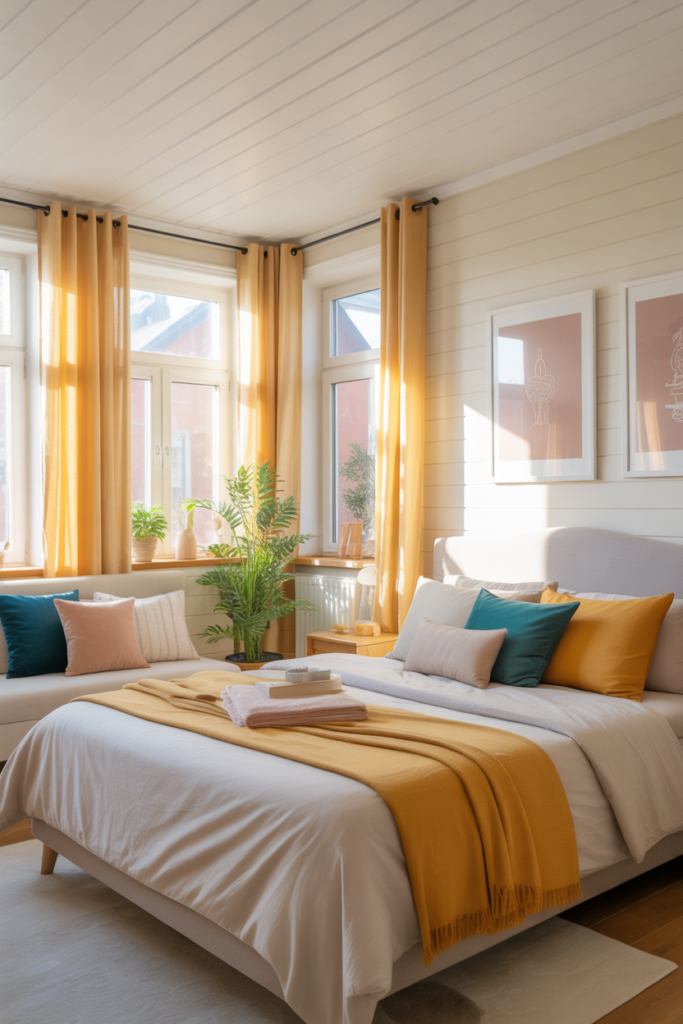
Color changes how light behaves in a room. Dark colors absorb light. Light colors reflect it back into the space.
White, cream, soft beige, and light gray help small rooms feel larger. They bounce light around the walls and ceiling.
A matte finish gives a soft look. A slight satin finish can reflect more light without looking shiny.
Ceiling color also matters. A lighter ceiling can make the room feel taller. This helps reduce that closed in feeling.
This idea is often used in Scandinavian style interiors because it keeps rooms calm and bright even with minimal space.
3. Add mirrors to create visual depth
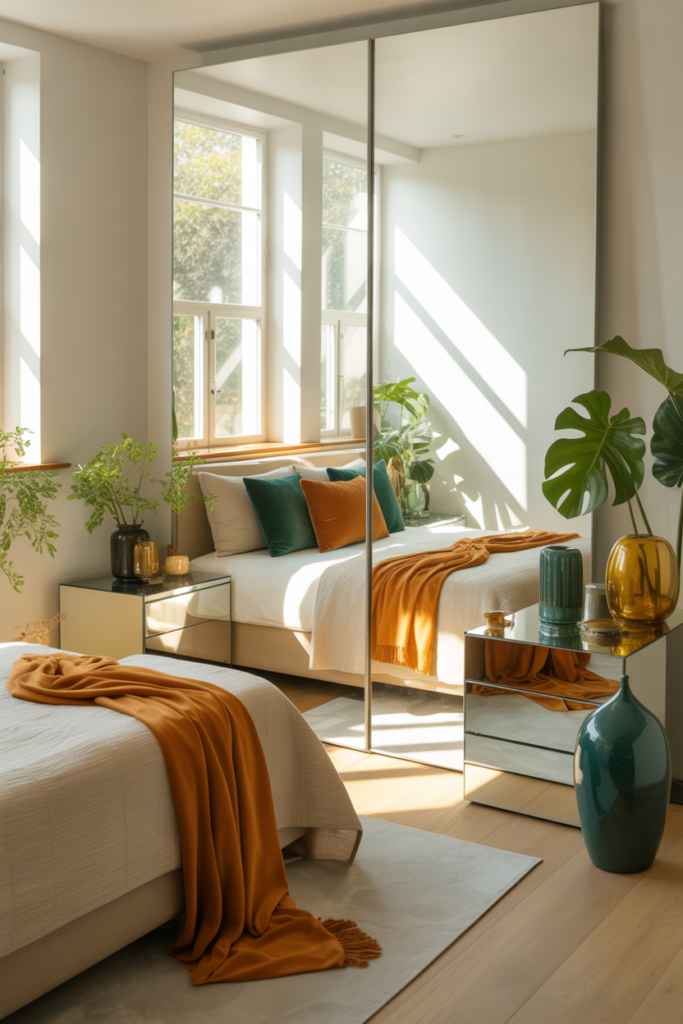
Mirrors are one of the easiest ways to open up a small dark room. They reflect light and create the feeling of extra space.
A large mirror placed near a light source works best. It doubles brightness in a simple way.
You can also use mirrored furniture or glossy surfaces. These small reflections add movement to the room.
Many small apartments use full height mirrors behind doors or next to beds. This creates a wider visual field even in tight spaces.
The goal is not decoration only. It is to trick the eye into seeing more space than there is.
4. Choose furniture that does not block space
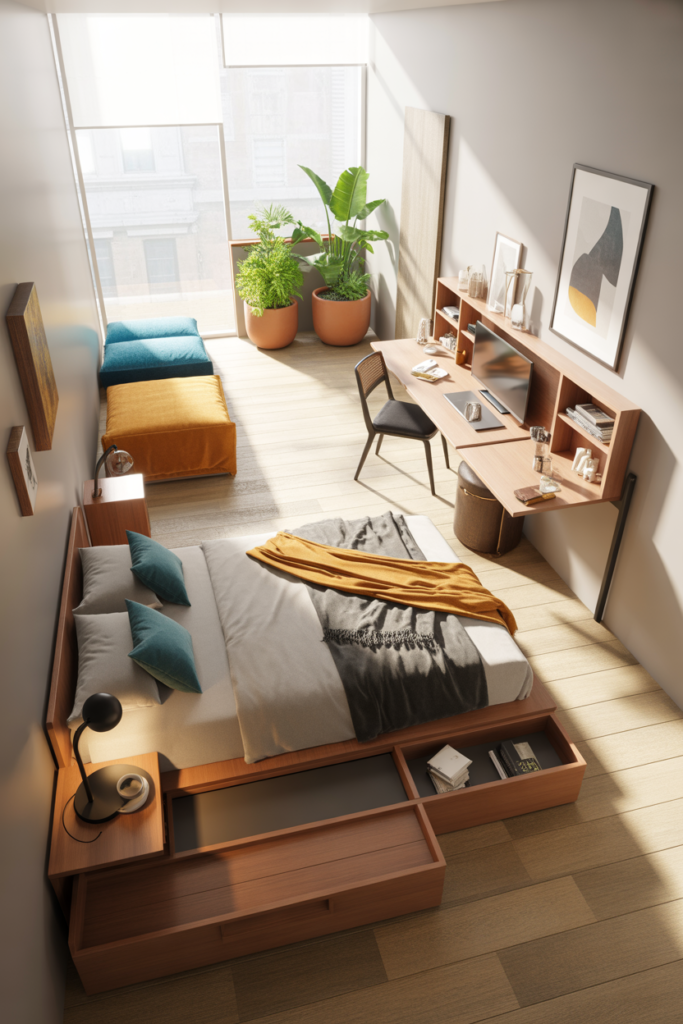
Furniture can make a small room feel even tighter if it is heavy or bulky. That is why simple shapes work better.
Low beds help the room feel taller. Floating shelves keep floor space open. Storage beds help reduce clutter in small rooms.
Avoid large furniture with thick frames. It blocks visual flow and makes the room feel crowded.
Many small city apartments use multi use furniture. A bed with drawers or a small desk that folds into the wall helps save space.
When the floor looks open, the room already feels bigger.
5. Use fake window lighting for natural feel
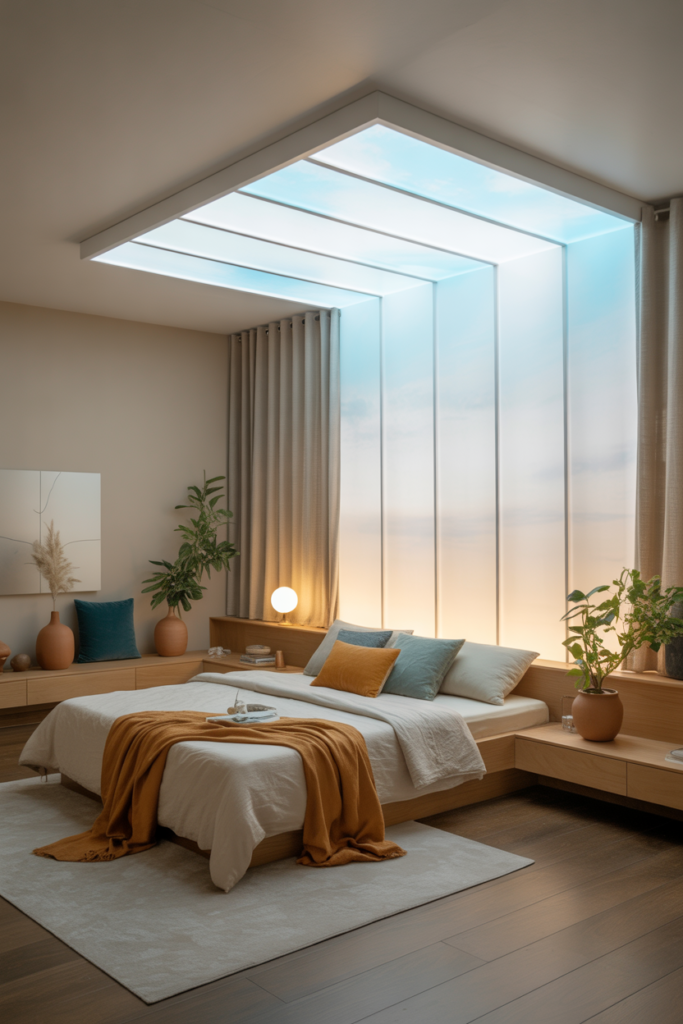
A windowless room can feel more natural if you add the illusion of daylight. This is where fake window lighting helps.
LED panels shaped like windows can create a soft daylight effect. Some lights even change color during the day cycle.
You can also use light curtains on a blank wall. When light shines behind them, it creates the feeling of a real window.
This idea is often used in wellness rooms and basement bedrooms. It helps reduce the closed in feeling and adds calmness.
It is not about copying a window. It is about giving your brain a familiar light pattern.
6. Keep decor simple but warm
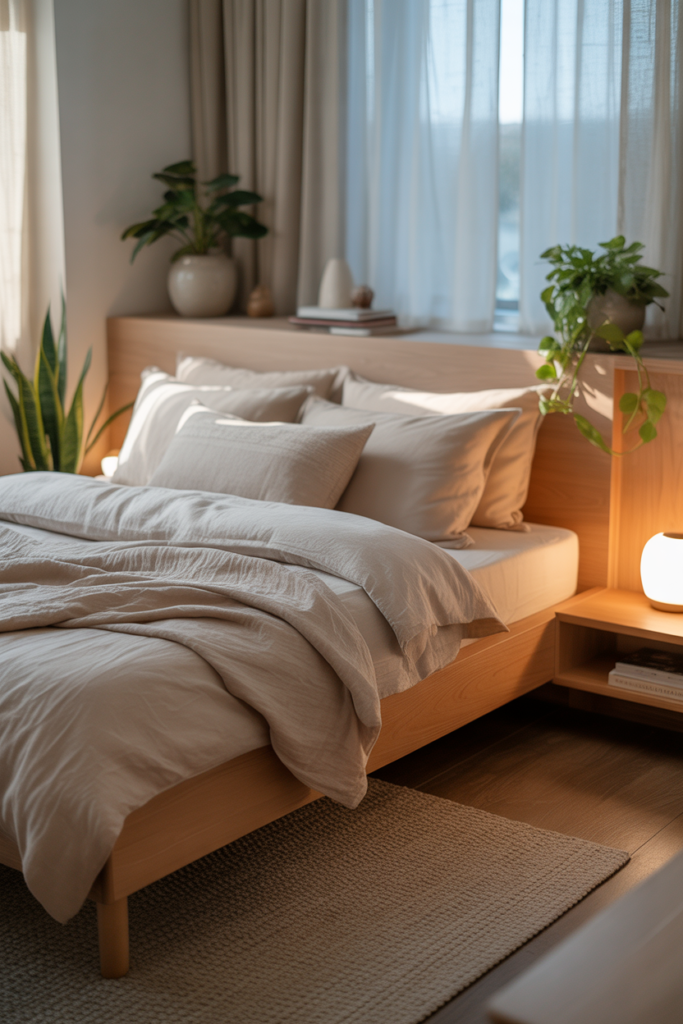
Too many items in a small room can make it feel crowded. But a completely empty room can feel cold.
The balance is simple decor with warm texture. Use soft bedding, cotton sheets, and light curtains.
Add one or two plants that can survive low light. Snake plants and pothos are often used in indoor rooms because they need less sunlight.
A soft rug also helps make the room feel more comfortable. It adds warmth under your feet and reduces the hard look of flooring.
Small changes like this make the room feel lived in without feeling full.
7. Create contrast with soft accents
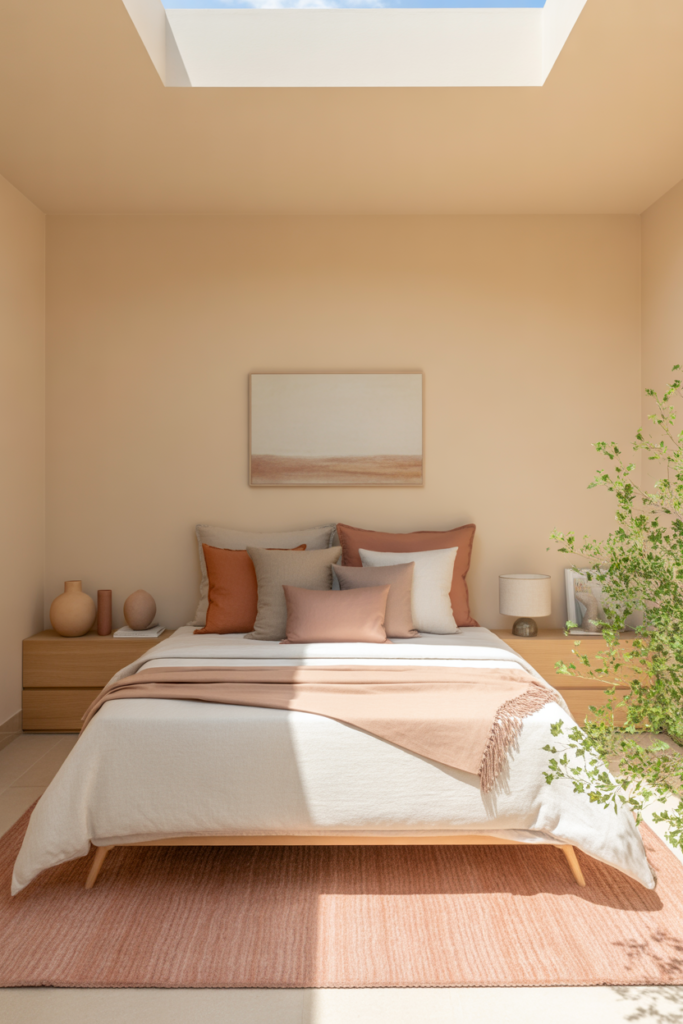
Even in a light room, you need small contrast. Without it, the space can look flat.
You can add contrast using pillows, wall art, or small decor pieces. Keep colors soft but slightly different from the walls.
This helps the eye focus and gives structure to the room.
For example, a beige room with light brown accents feels more layered than plain white alone.
Designers often use this trick to keep small rooms from looking too plain.
8. Use ceiling lighting that spreads evenly
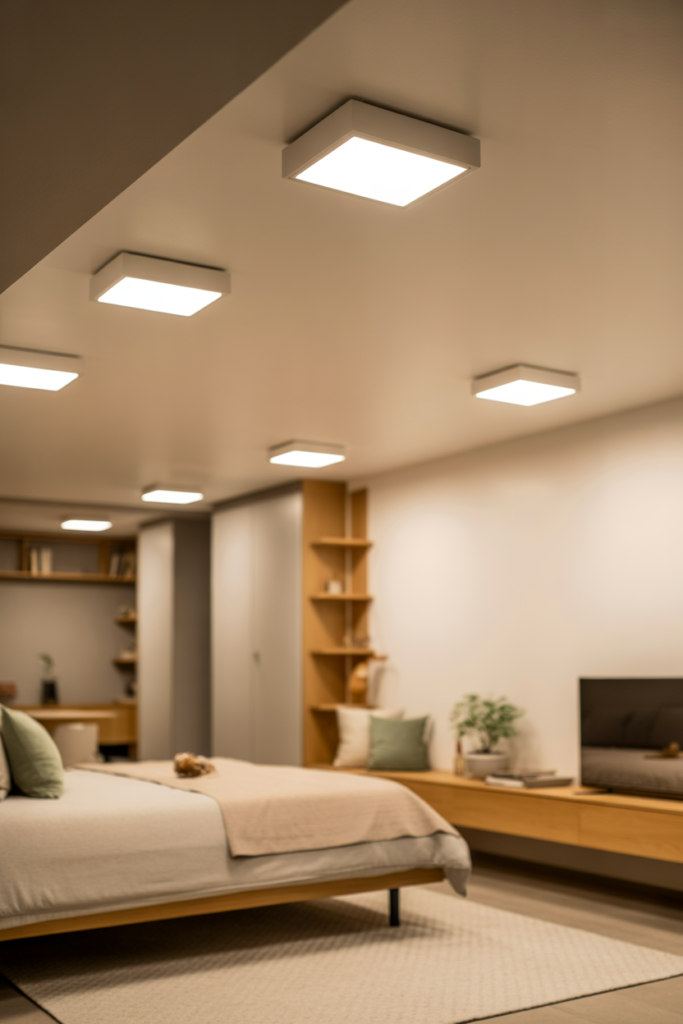
Ceiling lights should spread light across the room, not focus on one spot.
A wide light source reduces shadows. This makes the room feel smoother and more open.
Avoid single harsh bulbs in the center. They create dark corners.
Instead, use panel lights or multiple small ceiling lights. These spread brightness better across small spaces.
This method is common in modern apartments where rooms do not get natural light.
9. Place lights at different heights
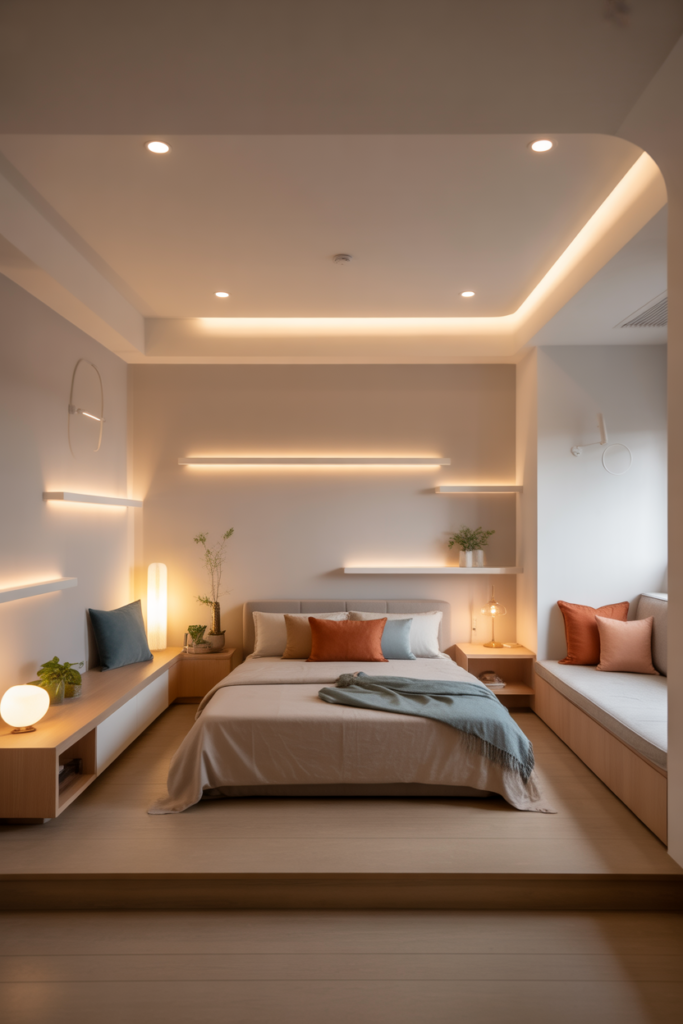
Light at only one level makes a room feel flat. You need height variation.
Place lamps on the floor, on tables, and on walls. This builds layers of brightness.
It also removes dark corners. Shadows make small rooms feel smaller.
When light comes from different levels, the room feels more balanced and open.
This is one of the simplest ways to improve a windowless room without changing furniture.
10. Keep the floor as open as possible
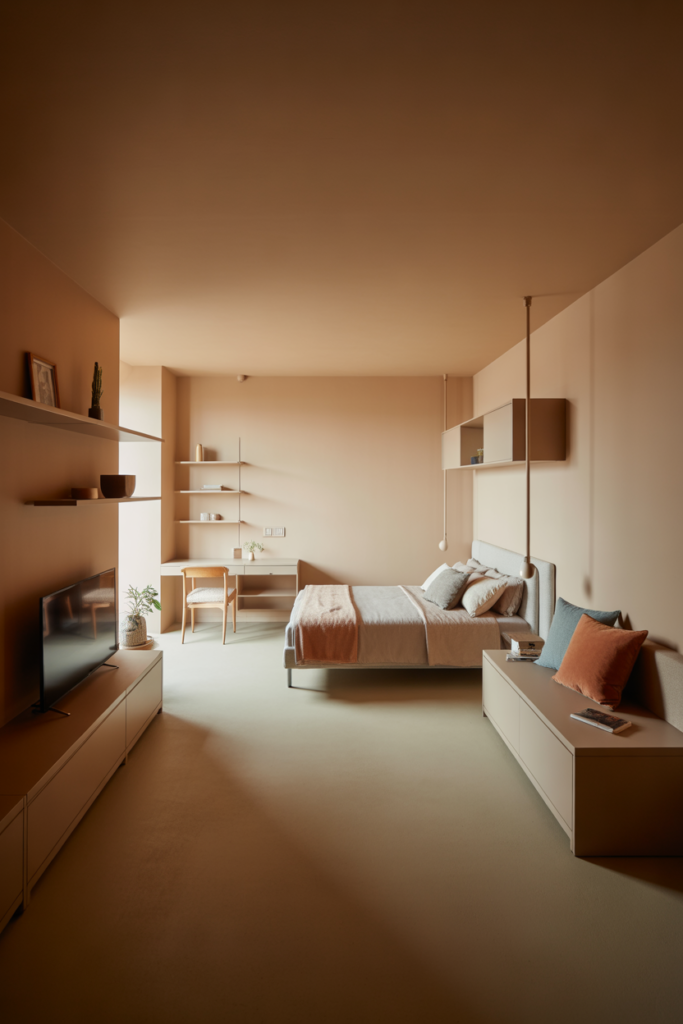
The floor area affects how big a room feels. When the floor is full, the room feels tight.
Try to keep walking space clear. Avoid too many small items on the floor.
Use wall mounted storage instead of standing shelves when possible.
This creates visual space. Your eyes move freely across the room.
Small studios often use this trick to make tight spaces feel usable.
11. Use glossy and reflective surfaces
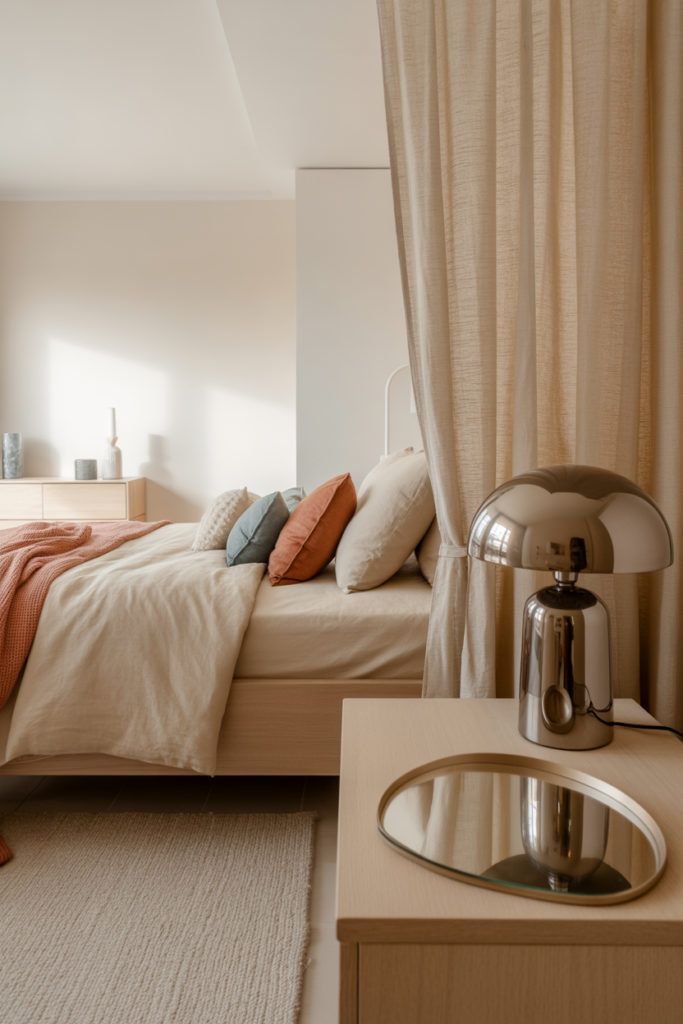
Shiny surfaces reflect light. This helps brighten dark rooms.
You can use glossy tables, glass decor, or metallic accents.
Even small items like lamps with metal bases help reflect light around the room.
But do not overdo it. Too many reflective surfaces can feel cold.
A mix of matte and glossy works best for comfort and brightness.
12. Add soft wall lighting instead of overhead glare
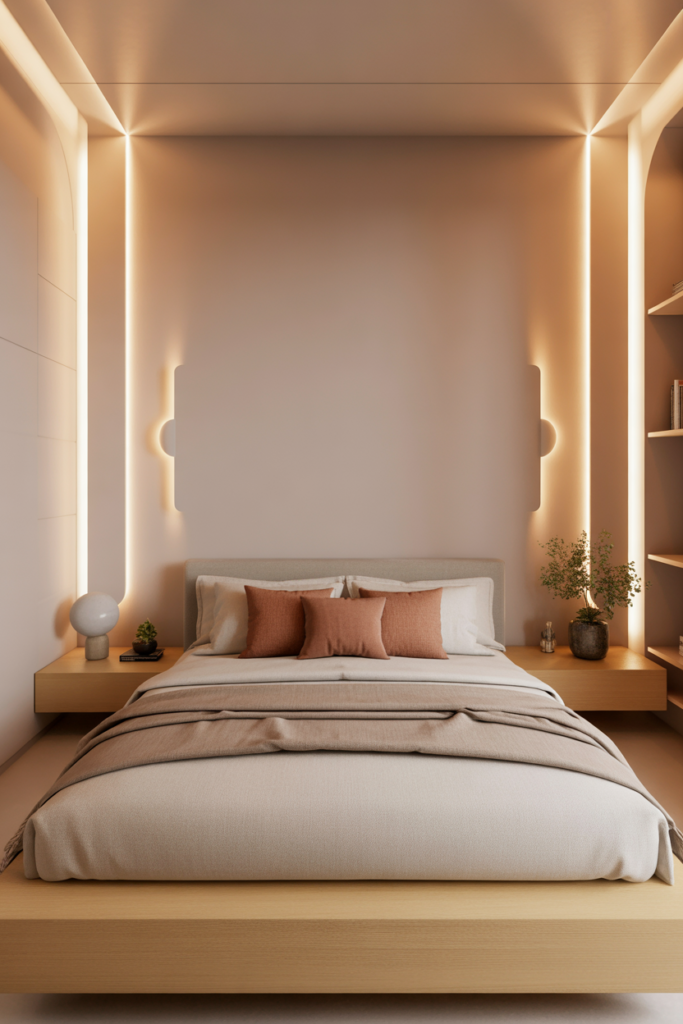
Wall lighting is softer than direct ceiling light. It reduces harsh shadows.
Sconces or LED wall strips can make walls glow gently.
This adds depth and makes the room feel layered.
It also helps you relax at night because the light feels softer on your eyes.
This method is often used in hotel room design for comfort and mood.
13. Use warm tone lighting for comfort
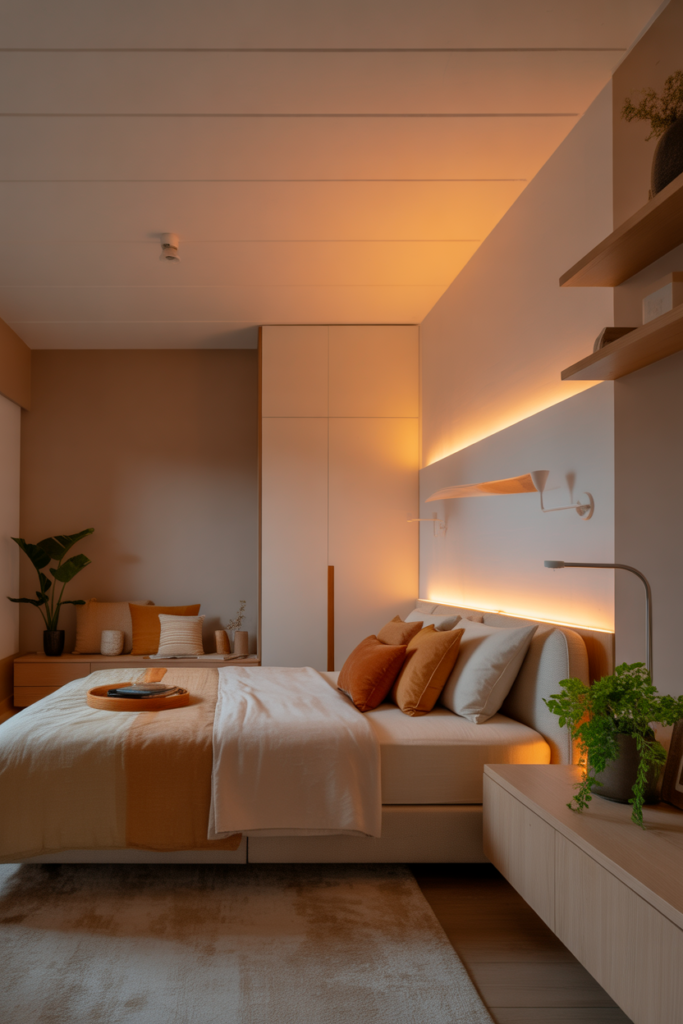
Light color affects how a room feels. Warm light feels calm. Cool light feels sharp.
For bedrooms, warm white is usually better. It creates a soft and cozy feeling.
Cool white light can feel too bright and unnatural in small dark rooms.
Many smart bulbs now allow you to adjust light tone throughout the day.
This helps you change the mood of the room easily.
14. Add wall art that brings depth
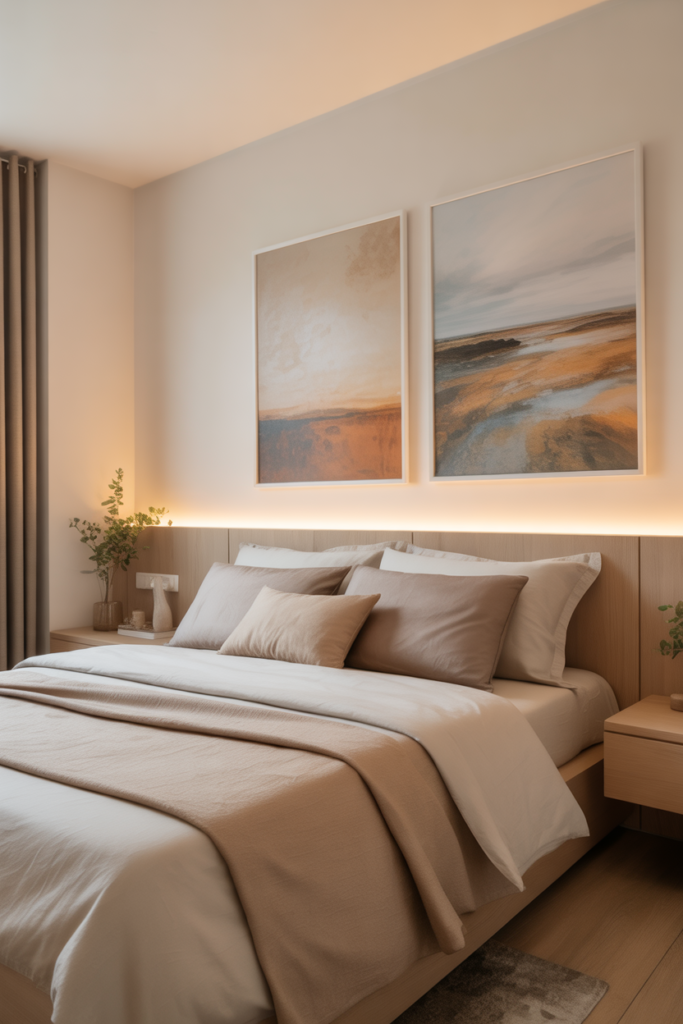
Wall art can make a small room feel more alive. Choose simple pieces that do not crowd the wall.
Landscape art or abstract shapes work well because they add visual depth.
Avoid too many small frames. They can make the wall feel busy.
One or two larger pieces create a cleaner look.
This helps guide the eye and makes the room feel more structured.
15. Use soft curtains even without windows
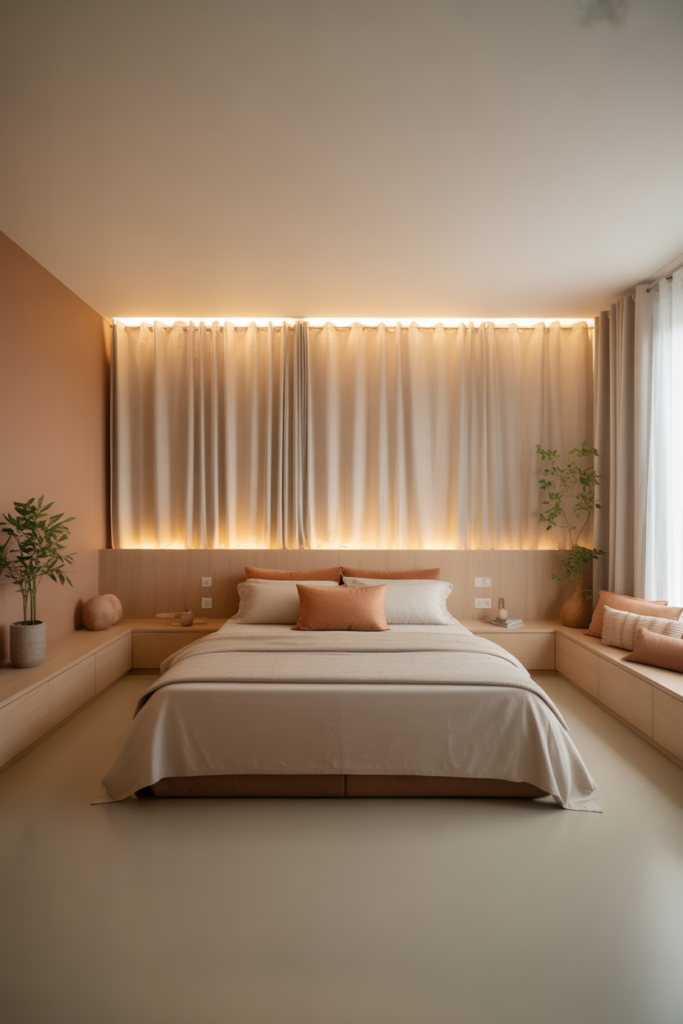
Curtains are not only for windows. They can also be used for design balance.
A curtain wall behind lighting can create a soft glow effect.
This makes the room feel layered and less flat.
It also adds softness to hard walls.
Many modern interior setups use this trick in studio bedrooms.
16. Add personal comfort details
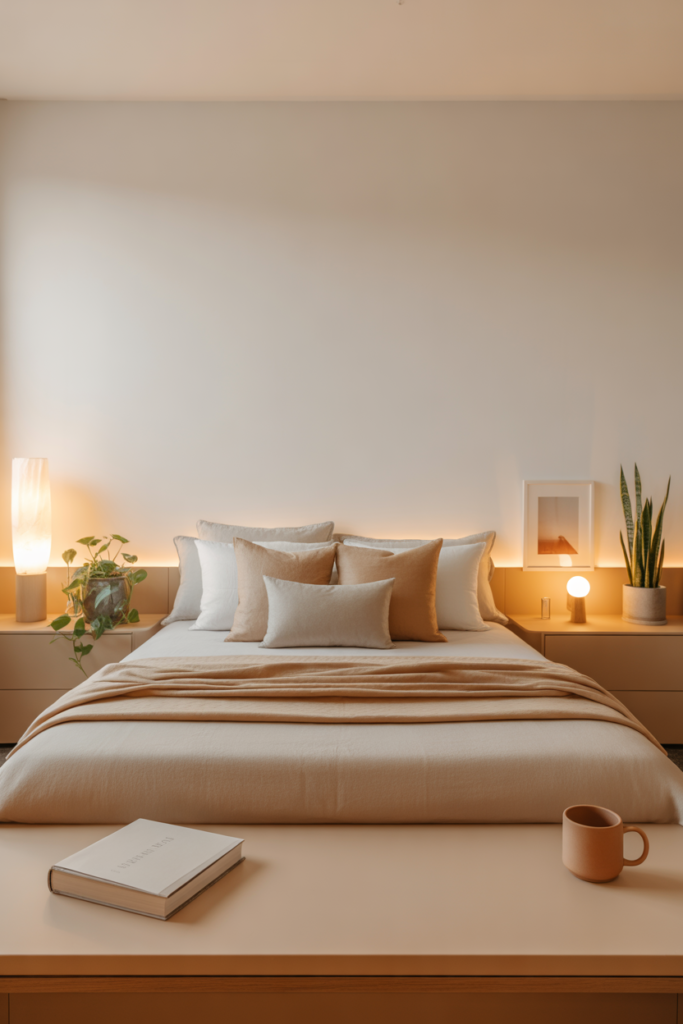
The final step is comfort. A room should feel like yours.
Use items that make you feel relaxed. Soft lighting, favorite colors, or simple personal objects help.
Keep it simple. Too many items can undo the clean look.
The goal is comfort without clutter.
When the room feels personal, it feels better even without windows.
Conclusion
A small bedroom with no windows does not have to feel dark or closed in. The right lighting, colors, and furniture choices can change everything.
Start with lighting first. Then adjust color and layout. Add mirrors and soft textures for balance.
Even a few changes can make the room feel brighter and more open.
Try 2 or 3 ideas first and build from there. With the right setup, a windowless room can still feel calm, modern, and comfortable.
These small bedroom with no windows decor ideas can help you turn a difficult space into a room you actually enjoy spending time in.